THE ADVENTURE COLLECTIVE® · Independent discovery and booking for outdoor travel

Ride the Hatsvali cable car above Mestia, hike to the Chalaadi Glacier and walk the medieval streets of Ushguli. This two-day excursion blends accessible alpine hiking with UNESCO-listed village visits and Svanetian food.
Ride the Hatsvali cable car above Mestia, hike to the Chalaadi Glacier and walk the medieval streets of Ushguli. This two-day excursion blends accessible alpine hiking with UNESCO-listed village visits and Svanetian food.
A cold wind climbs with the cable car as it lifts over Mestia’s rooftops; below, the valley’s stone watchtowers stand like ancient sentries and the peaks — Ushba’s twin spires and the sweeping flanks of Tetnuldi — dominate the horizon. By the time the car docks at Hatsvali (2,347 m), the air smells of pine and distant snow, and the restaurant windows frame whole mountain ranges.
Verified experiences and guided adventures in the surrounding area.
Operated by Geographic Travel Georgia · Mestia, Samegrelo-Zemo Svaneti
A cold wind climbs with the cable car as it lifts over Mestia’s rooftops; below, the valley’s stone watchtowers stand like ancient sentries and the peaks — Ushba’s twin spires and the sweeping flanks of Tetnuldi — dominate the horizon. By the time the car docks at Hatsvali (2,347 m), the air smells of pine and distant snow, and the restaurant windows frame whole mountain ranges.
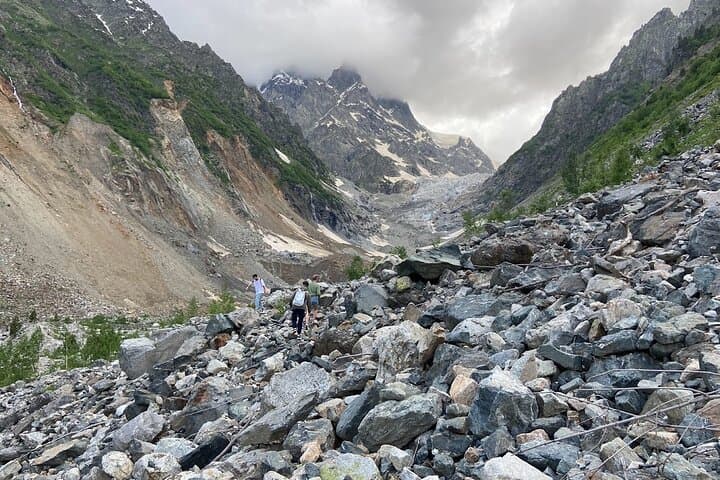
This two-day loop threads human history through sharp geology. Svaneti’s medieval machubi—stone tower-houses—were built for defense in a landscape carved by glacial ice and rivers. The Chalaadi Glacier is a modern remnant of that glacial sculpting: moraine-strewn approaches, creaking meltwater channels and close-up seracs give a clear lesson in alpine processes. Cultural stops—Lamaria Monastery, Ushguli’s UNESCO village and the Margiani machubi—reveal frescoes, highland building techniques and a cuisine steeped in corn, cheese and local wines.
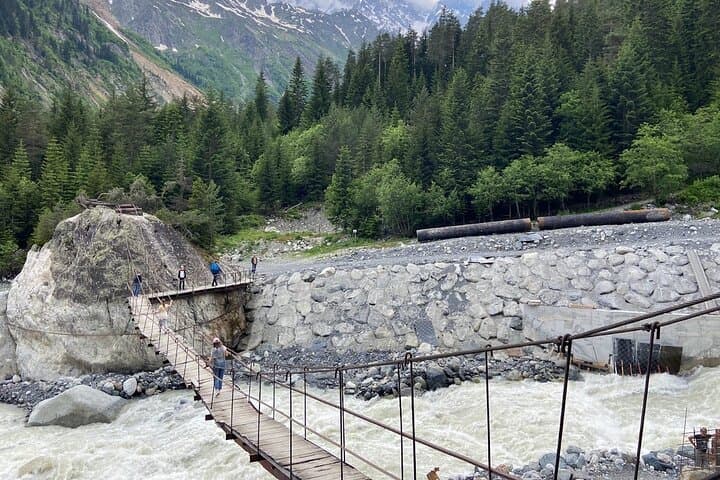
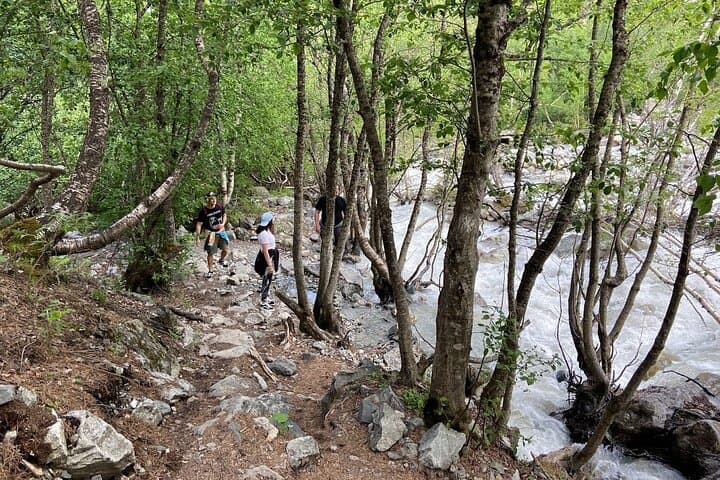
On the trail to Chalaadi expect 8 km round-trip with ~520 m of ascent over mixed forest, rocky riverbanks and open moraines; rated easy but requiring steady footing. Plan for rapid weather shifts: afternoons can cloud in, nights freeze above 2,000 m. Bring layered clothing, waterproofs, sturdy boots and a headlamp if you’re moving near dusk. Hydrate and pace on gains; altitude is mild but notable between Mestia and Ushguli.
Logistics are straightforward: the tour includes transport, a cable-car ticket, one hotel night in Mestia and guided cultural stops. For a compact immersion into the Greater Caucasus, this route pairs accessible hiking with high-mountain scenery and living medieval architecture.
moderate.
2 days.
Suitable for travelers with decent aerobic fitness and the ability to handle sustained walking with short climbs; regular walkers will be comfortable.
The trail is rated easy-to-moderate: about 8 km with ~520 m gain and rough, rocky sections—no technical gear required but good boots and steady pace help.
Tours run in most seasons but accessibility varies; heavy snow can affect roads in winter and spring, while summer offers the most stable conditions.
Altitudes here are moderate (up to ~2,347 m); most travelers acclimatize quickly but those sensitive to altitude should ascend slowly and stay hydrated.
Card acceptance is limited in remote villages—carry cash in Georgian lari for local meals, small purchases and tips.
Svaneti’s stone watchtowers date to the Middle Ages and reflect a history of community defense and clan identity; Ushguli remains one of Europe’s highest continuously inhabited settlements.
Alpine meadows and glacier forefields are fragile—stick to trails, pack out waste and support local guides to minimize erosion and cultural impacts.
Geographic Travel Georgia operates guided outdoor trips and adventures with an emphasis on safety, stewardship, and memorable experiences.
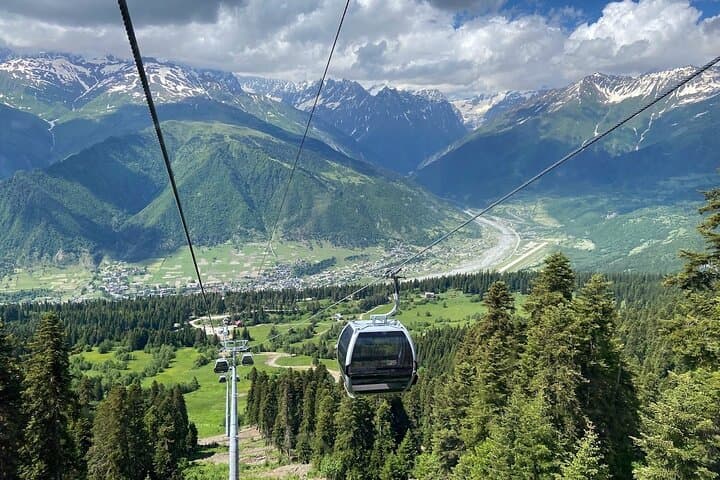
A cold wind climbs with the cable car as it lifts over Mestia’s rooftops; below, the valley’s stone watchtowers stand like ancient sentries and the peaks — Ushba’s twin spires and the sweeping flanks of Tetnuldi — dominate the horizon. By the time the car docks at Hatsvali (2,347 m), the air smells of pine and distant snow, and the restaurant windows frame whole mountain ranges.
A cold wind climbs with the cable car as it lifts over Mestia’s rooftops; below, the valley’s stone watchtowers stand like ancient sentries and the peaks — Ushba’s twin spires and the sweeping flanks of Tetnuldi — dominate the horizon. By the time the car docks at Hatsvali (2,347 m), the air smells of pine and distant snow, and the restaurant windows frame whole mountain ranges.
This two-day loop threads human history through sharp geology. Svaneti’s medieval machubi—stone tower-houses—were built for defense in a landscape carved by glacial ice and rivers. The Chalaadi Glacier is a modern remnant of that glacial sculpting: moraine-strewn approaches, creaking meltwater channels and close-up seracs give a clear lesson in alpine processes. Cultural stops—Lamaria Monastery, Ushguli’s UNESCO village and the Margiani machubi—reveal frescoes, highland building techniques and a cuisine steeped in corn, cheese and local wines.
On the trail to Chalaadi expect 8 km round-trip with ~520 m of ascent over mixed forest, rocky riverbanks and open moraines; rated easy but requiring steady footing. Plan for rapid weather shifts: afternoons can cloud in, nights freeze above 2,000 m. Bring layered clothing, waterproofs, sturdy boots and a headlamp if you’re moving near dusk. Hydrate and pace on gains; altitude is mild but notable between Mestia and Ushguli.
Logistics are straightforward: the tour includes transport, a cable-car ticket, one hotel night in Mestia and guided cultural stops. For a compact immersion into the Greater Caucasus, this route pairs accessible hiking with high-mountain scenery and living medieval architecture.