THE ADVENTURE COLLECTIVE® · Independent discovery and booking for outdoor travel

Drop into the Upper Pastaza for a half-day of Class III–IV whitewater near Baños de Agua Santa. Expect 1–2 hours of rafting through volcanic gorges, a riverside lunch, photos and a viewpoint stop.
Drop into the Upper Pastaza for a half-day of Class III–IV whitewater near Baños de Agua Santa. Expect 1–2 hours of rafting through volcanic gorges, a riverside lunch, photos and a viewpoint stop.
The river hits like a bright pulse against the green slopes as your raft drops into the Upper Pastaza. Spray lifts and droplets catch the light while guides call commands—paddle, brace, pull—turning five people into a single, moving unit. The current pushes; the gorge narrows; stones and standing waves test timing.
Verified experiences and guided adventures in the surrounding area.
Operated by Special holiday offer. Best of Ecuador | Tour Operator - Explorjungle · Baños de Agua Santa, Tungurahua
The river hits like a bright pulse against the green slopes as your raft drops into the Upper Pastaza. Spray lifts and droplets catch the light while guides call commands—paddle, brace, pull—turning five people into a single, moving unit. The current pushes; the gorge narrows; stones and standing waves test timing.
The Pastaza drains the eastern Andes into the Amazon basin; sections near Baños cut through volcanic highlands and young, uplifted Andean rock. Local towns grew around the hot springs of Baños de Agua Santa, a 19th-century pilgrimage and now a base for river trips and canyon viewing. The river corridor supports cloud-forest edges, hummingbirds and toucans, and farms clinging to steep terraces.
Expect 18 km of managed river with sustained Class III and IV rapids — one to two hours of continuous whitewater within a half-day tour (total 3–5 hours including transport, lunch and photos). Guides outfit rafters with helmets, PFDs, and wet suits when needed; lunch and a CD of photos/videos are typically included. The viewpoint above the drop offers a calm counterpoint: a chance to dry off, scan the valley and learn about local hydrology and volcanic influences.
Practical edge: come with closed-toe water shoes, layered quick-dry clothing, and a small waterproof bag for essentials. Hydrate before you start, and be forthcoming about injuries—this trip is not recommended for people with serious back issues. Morning departures offer cooler water and steadier light for photographs; afternoons can bring warmer air but more variable weather.
The Upper Pastaza is loud, fast and precise—an afternoon that demands attention and pays out in adrenaline and landscape.
challenging.
3–5 hours.
Moderate cardiovascular fitness and the ability to follow paddling commands and lean into quick movements; suitable for most active travelers.
The river run lasts about 1–2 hours over approximately 18 km; the full outing including transport, lunch and photos is roughly 3–5 hours.
Rapids are Class III–IV; basic paddling ability and willingness to follow guide commands are required, but guides provide instruction suitable for first-time rafters.
Infants must sit on laps and the tour is not recommended for people with spinal injuries; operators typically ask about medical conditions during booking.
Most operators include guide services, safety gear (helmet, PFD), lunch, and photos/videos from the trip; confirm specifics when booking.
Baños grew around thermal springs and became a colonial-era pilgrimage site; the Pastaza corridor has long connected Andean communities with Amazon foothills.
River health is sensitive to upstream land use and tourism; choose operators who follow leave-no-trace practices and respect local watershed rules.
Special holiday offer. Best of Ecuador | Tour Operator - Explorjungle operates guided outdoor trips and adventures with an emphasis on safety, stewardship, and memorable experiences.
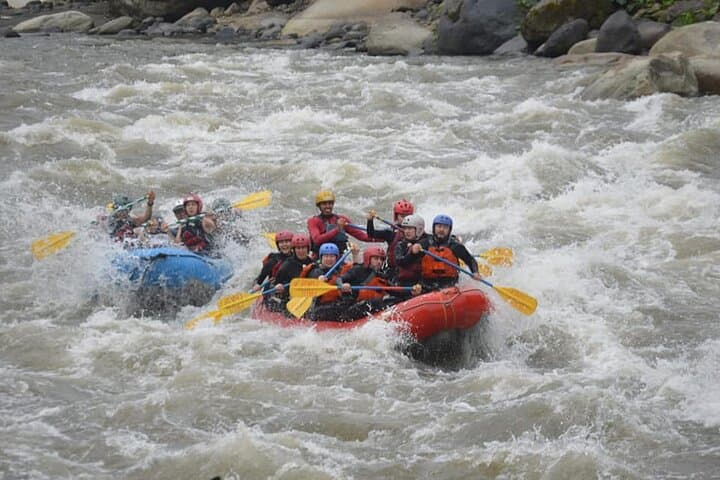
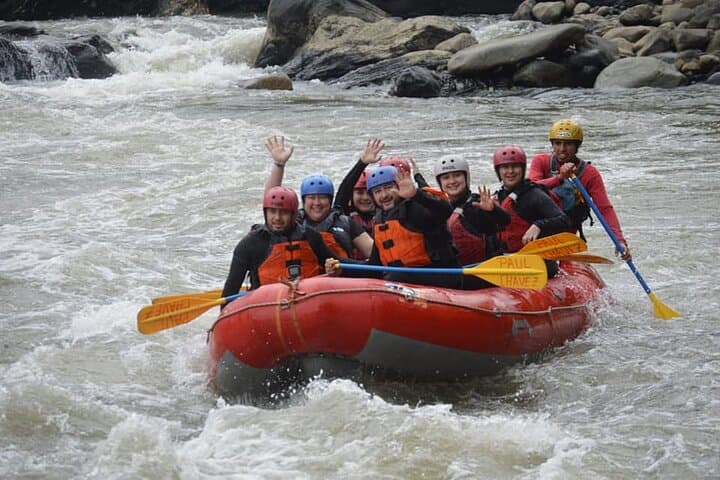
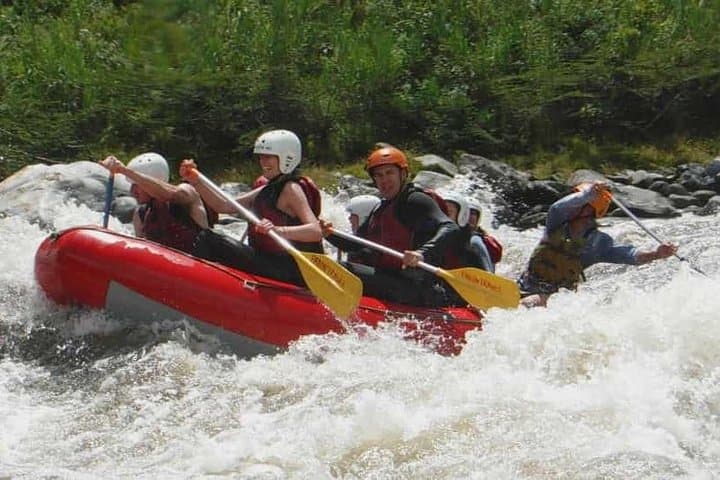
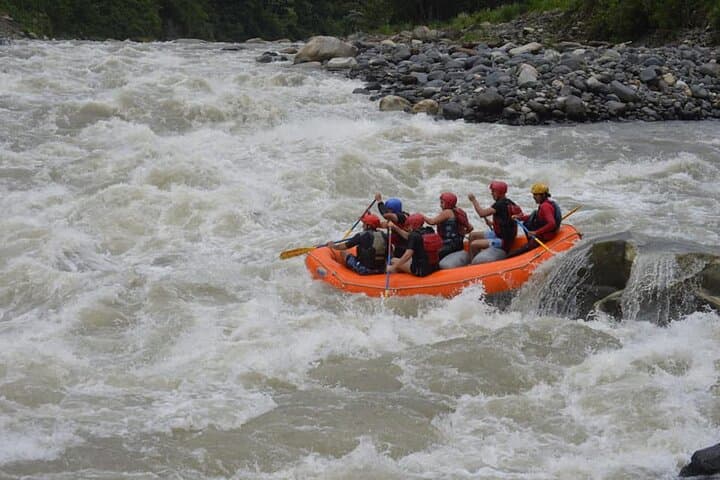
The river hits like a bright pulse against the green slopes as your raft drops into the Upper Pastaza. Spray lifts and droplets catch the light while guides call commands—paddle, brace, pull—turning five people into a single, moving unit. The current pushes; the gorge narrows; stones and standing waves test timing.
The river hits like a bright pulse against the green slopes as your raft drops into the Upper Pastaza. Spray lifts and droplets catch the light while guides call commands—paddle, brace, pull—turning five people into a single, moving unit. The current pushes; the gorge narrows; stones and standing waves test timing.
The Pastaza drains the eastern Andes into the Amazon basin; sections near Baños cut through volcanic highlands and young, uplifted Andean rock. Local towns grew around the hot springs of Baños de Agua Santa, a 19th-century pilgrimage and now a base for river trips and canyon viewing. The river corridor supports cloud-forest edges, hummingbirds and toucans, and farms clinging to steep terraces.
Expect 18 km of managed river with sustained Class III and IV rapids — one to two hours of continuous whitewater within a half-day tour (total 3–5 hours including transport, lunch and photos). Guides outfit rafters with helmets, PFDs, and wet suits when needed; lunch and a CD of photos/videos are typically included. The viewpoint above the drop offers a calm counterpoint: a chance to dry off, scan the valley and learn about local hydrology and volcanic influences.
Practical edge: come with closed-toe water shoes, layered quick-dry clothing, and a small waterproof bag for essentials. Hydrate before you start, and be forthcoming about injuries—this trip is not recommended for people with serious back issues. Morning departures offer cooler water and steadier light for photographs; afternoons can bring warmer air but more variable weather.
The Upper Pastaza is loud, fast and precise—an afternoon that demands attention and pays out in adrenaline and landscape.