THE ADVENTURE COLLECTIVE® · Independent discovery and booking for outdoor travel

Cross the high, arid canyons to Lo-Manthang and walk a landscape shaped by wind, faith and time. This trek into Upper Mustang pairs Tibetan Buddhist culture with badland geology and requires special permits, slow acclimatization and a readiness for remote, high-elevation travel.
Cross the high, arid canyons to Lo-Manthang and walk a landscape shaped by wind, faith and time. This trek into Upper Mustang pairs Tibetan Buddhist culture with badland geology and requires special permits, slow acclimatization and a readiness for remote, high-elevation travel.
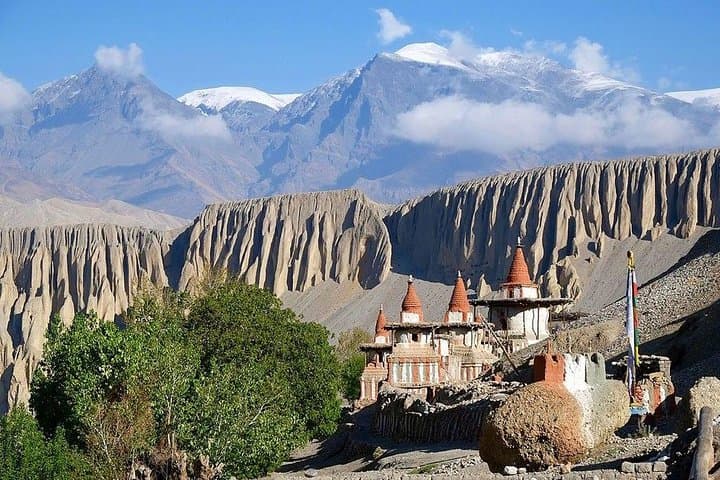
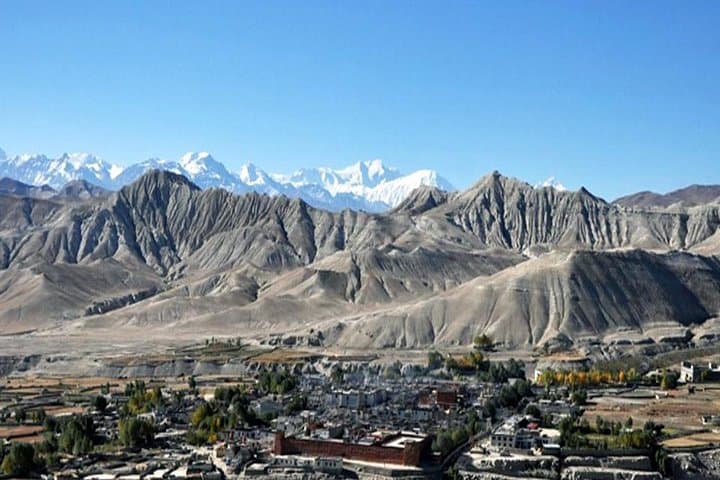
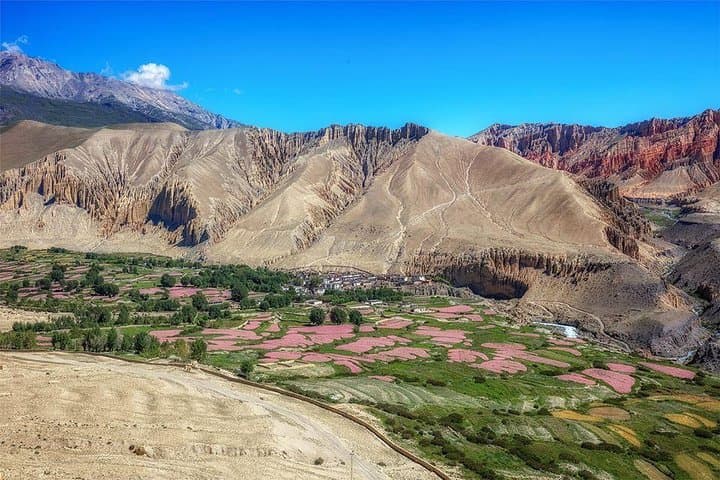
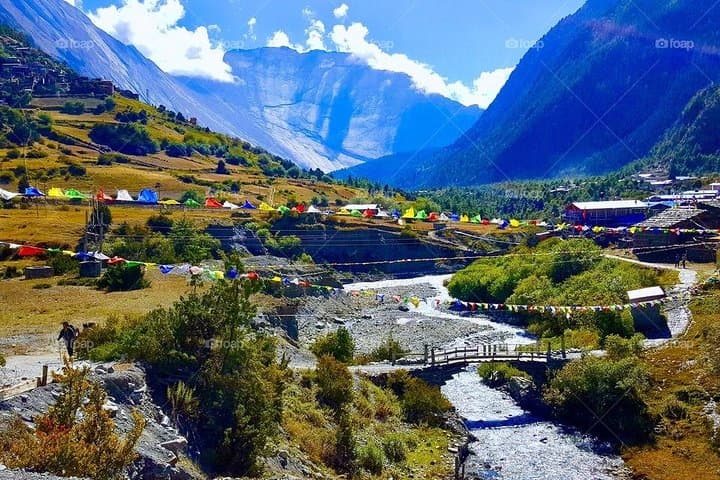
You step out of the tiny plane and the wind of Mustang meets you—thin, cold, insistent—carrying grit and prayer flags. The valley opens in ochre folds, sheer cliffs scored by wind and time, and a walled town—Lo-Manthang—sits like an outpost of Tibet under a high, dry sky.
Verified experiences and guided adventures in the surrounding area.
Operated by Sherpa Expedition & Trekking · Lo-Manthang, Gandaki Province
You step out of the tiny plane and the wind of Mustang meets you—thin, cold, insistent—carrying grit and prayer flags. The valley opens in ochre folds, sheer cliffs scored by wind and time, and a walled town—Lo-Manthang—sits like an outpost of Tibet under a high, dry sky.
The region was long part of the Tibetan kingdom of Gungthang; its walled capital retains monasteries, palaces and the annual Tiji festival, a three-day ritual that plays for peace and the expulsion of evil. Geologically, Upper Mustang sits in the rain shadow of the Annapurnas: erosion has carved badlands, slot canyons and exposed sedimentary layers that read like a slow-motion clock. Cultural landmarks include ancient cave temples and gompas holding thankas and centuries of devotion.
Practically, this is a high, remote trek. The route requires an Upper Mustang special permit and ACAP TIMS; travel typically begins from Pokhara with a flight to Jomsom or by jeep and continues over multi-day camps or teahouses toward Lo-Manthang at roughly 3,800–4,000 m. Expect long, dry days, strong sun, cold nights and limited services—lodging is basic and food is hearty but simple. Acclimatize slowly, carry a warm sleeping bag, and plan buffer days for weather or altitude delays.
Timing matters: spring and autumn offer stable weather and clearer views; winter is severe, summer monsoon brings dustless green lower down but clouds at higher elevations. Respect local customs—ask before photographing people and follow monastery etiquette. For experienced trekkers who prepare for altitude and remoteness, Upper Mustang delivers stark landscapes, ritual culture, and a sense of crossing into a place that still guards its borders.
challenging.
10–14 days (typical organized itineraries).
Good aerobic fitness and experience with multi-day trekking at altitude; able to walk 5–7 hours daily on uneven terrain
Yes—Upper Mustang requires a special restricted-area permit in addition to ACAP TIMS; these are arranged before travel and often included by operators.
Spring (April–May) and autumn (September–November) offer the most stable weather and clear skies; winters are cold and summers bring occasional cloud and local monsoon effects.
The terrain isn’t technical, but altitude and remoteness make it challenging; newcomers should have prior multi-day trekking experience or allow extra acclimatization days.
Accommodations range from basic teahouses with shared facilities to tented camps; expect simple meals and limited hot water as you approach Lo-Manthang.
Lo-Manthang was the capital of the former Kingdom of Mustang and remained culturally linked to Tibet; many monasteries and palace structures date back centuries.
Upper Mustang is regulated by ACAP and strict permit controls to limit visitor impact; stick to trails, pack out waste and support local teahouses to keep tourism sustainable.
Sherpa Expedition & Trekking operates guided outdoor trips and adventures with an emphasis on safety, stewardship, and memorable experiences.
You step out of the tiny plane and the wind of Mustang meets you—thin, cold, insistent—carrying grit and prayer flags. The valley opens in ochre folds, sheer cliffs scored by wind and time, and a walled town—Lo-Manthang—sits like an outpost of Tibet under a high, dry sky.
You step out of the tiny plane and the wind of Mustang meets you—thin, cold, insistent—carrying grit and prayer flags. The valley opens in ochre folds, sheer cliffs scored by wind and time, and a walled town—Lo-Manthang—sits like an outpost of Tibet under a high, dry sky.
The region was long part of the Tibetan kingdom of Gungthang; its walled capital retains monasteries, palaces and the annual Tiji festival, a three-day ritual that plays for peace and the expulsion of evil. Geologically, Upper Mustang sits in the rain shadow of the Annapurnas: erosion has carved badlands, slot canyons and exposed sedimentary layers that read like a slow-motion clock. Cultural landmarks include ancient cave temples and gompas holding thankas and centuries of devotion.
Practically, this is a high, remote trek. The route requires an Upper Mustang special permit and ACAP TIMS; travel typically begins from Pokhara with a flight to Jomsom or by jeep and continues over multi-day camps or teahouses toward Lo-Manthang at roughly 3,800–4,000 m. Expect long, dry days, strong sun, cold nights and limited services—lodging is basic and food is hearty but simple. Acclimatize slowly, carry a warm sleeping bag, and plan buffer days for weather or altitude delays.
Timing matters: spring and autumn offer stable weather and clearer views; winter is severe, summer monsoon brings dustless green lower down but clouds at higher elevations. Respect local customs—ask before photographing people and follow monastery etiquette. For experienced trekkers who prepare for altitude and remoteness, Upper Mustang delivers stark landscapes, ritual culture, and a sense of crossing into a place that still guards its borders.