THE ADVENTURE COLLECTIVE® · Independent discovery and booking for outdoor travel

A high desert trek behind the Annapurna curtain, the Upper Mustang route leads to Lo Manthang’s walled city, ancient monasteries and wind-swept canyons. This multi-day journey demands acclimatization, sturdy boots and a taste for remote Himalayan culture.
A high desert trek behind the Annapurna curtain, the Upper Mustang route leads to Lo Manthang’s walled city, ancient monasteries and wind-swept canyons. This multi-day journey demands acclimatization, sturdy boots and a taste for remote Himalayan culture.
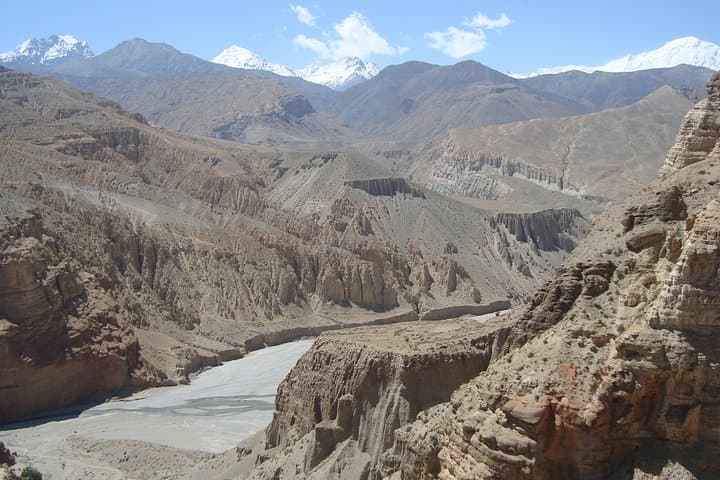
You step out of the morning light at Jomsom and the wind immediately begins to test your resolve; the Kali Gandaki river dares you to look down into its canyon while the ridgelines push the sky aside.
Verified experiences and guided adventures in the surrounding area.
Operated by Nepal Kailash Trekking · Jomsom, Gandaki Province
You step out of the morning light at Jomsom and the wind immediately begins to test your resolve; the Kali Gandaki river dares you to look down into its canyon while the ridgelines push the sky aside.
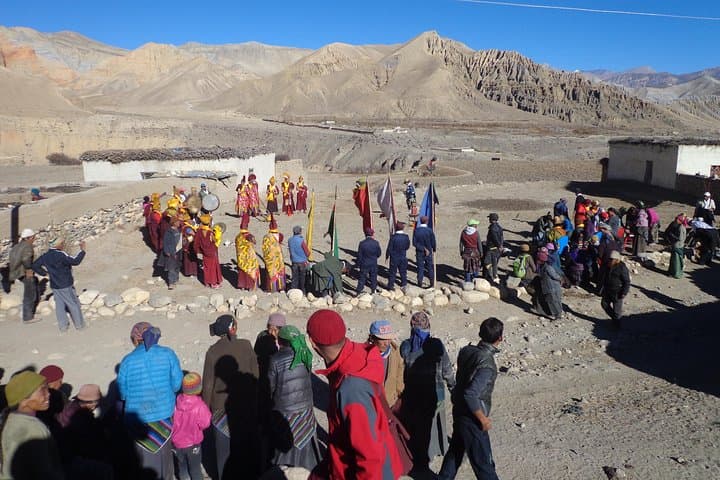
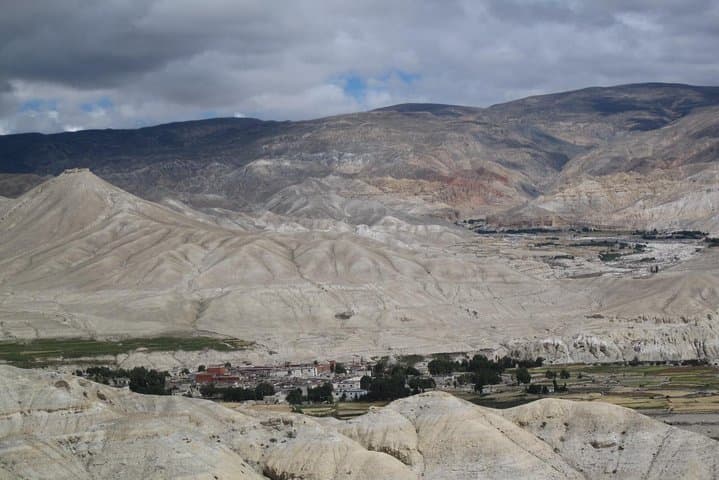
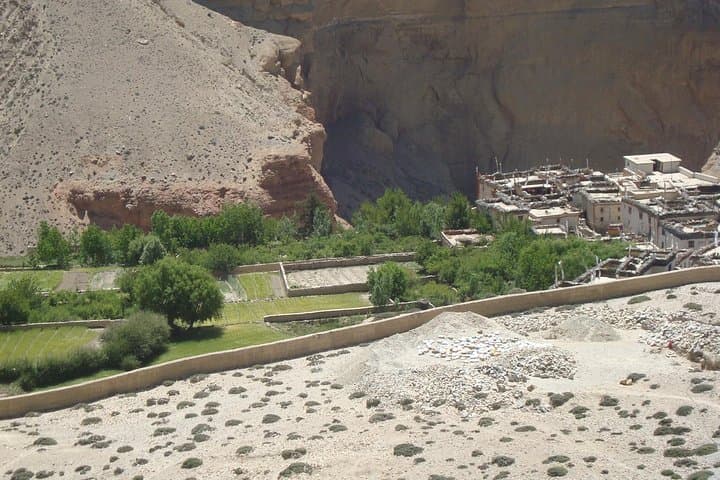
The Upper Mustang trek threads through an ancient trans-Himalayan corridor once governed by a semi-independent Buddhist kingdom. Geologically, the route runs along the rain-shadow of the Annapurna-Dhaulagiri ranges—wind-polished red cliffs, gravel plains and dramatic gorges carved by millennia of meltwater. Cultural markers appear as whitewashed flat-roof houses, long mani walls and monasteries that hold centuries of frescoes and ritual objects.
Lo Manthang, the walled capital, dates to the 14th century and still functions as a living museum: king’s palaces, Jampa Lhakhang and Thubchen Gompa speak to Mustang’s Tibetan links. Expect sparse vegetation, cold-stepped villages that trade with Tibet, and occasional flocks of blue sheep moving across upper ridges.
Practical guidance: allow two weeks for proper acclimatization—the itinerary climbs over multiple 4,000m passes. Footing alternates between gravel river terraces and steep mule tracks; trekking poles and steady shoes matter. Weather swings rapidly—sunburn and hypothermia are both real risks—so layer for sun, wind and sudden cold. Permits are required in Upper Mustang and typically arranged by your operator; carry cash for teahouses and optional jeep/horse hires. Bring a reliable headlamp for dim monastery interiors and spare batteries—the villages have limited power. Pace your days, hydrate, and respect local customs when visiting sacred sites.
challenging.
15–18 days.
Good aerobic fitness and prior multi-day trekking experience recommended; ability to hike 4–6 hours daily at high elevation.
Yes—Upper Mustang is a restricted area requiring a special permit and often a TIMS card; your operator usually secures these in advance.
Spring (March–May) and fall (September–November) offer the most stable weather, clearer mountain views and comfortable daytime temperatures.
Days are typically 3–7 hours of walking on uneven terrain with altitude gain; allow time for rest and acclimatization to reduce strain.
Yes—basic tea-house lodges provide twin rooms and meals on the route; expect simple facilities and limited hot-water availability at higher elevations.
Upper Mustang was a semi-autonomous Buddhist kingdom with close cultural ties to Tibet; Lo Manthang’s palace dates to the 14th century and remains central to local identity.
The region’s fragile dryland ecosystems and archaeological sites demand low-impact travel—avoid camping in sensitive areas and carry out waste; support local lodges to keep economic benefits in the valley.
Nepal Kailash Trekking operates guided outdoor trips and adventures with an emphasis on safety, stewardship, and memorable experiences.
You step out of the morning light at Jomsom and the wind immediately begins to test your resolve; the Kali Gandaki river dares you to look down into its canyon while the ridgelines push the sky aside.
You step out of the morning light at Jomsom and the wind immediately begins to test your resolve; the Kali Gandaki river dares you to look down into its canyon while the ridgelines push the sky aside.
The Upper Mustang trek threads through an ancient trans-Himalayan corridor once governed by a semi-independent Buddhist kingdom. Geologically, the route runs along the rain-shadow of the Annapurna-Dhaulagiri ranges—wind-polished red cliffs, gravel plains and dramatic gorges carved by millennia of meltwater. Cultural markers appear as whitewashed flat-roof houses, long mani walls and monasteries that hold centuries of frescoes and ritual objects.
Lo Manthang, the walled capital, dates to the 14th century and still functions as a living museum: king’s palaces, Jampa Lhakhang and Thubchen Gompa speak to Mustang’s Tibetan links. Expect sparse vegetation, cold-stepped villages that trade with Tibet, and occasional flocks of blue sheep moving across upper ridges.
Practical guidance: allow two weeks for proper acclimatization—the itinerary climbs over multiple 4,000m passes. Footing alternates between gravel river terraces and steep mule tracks; trekking poles and steady shoes matter. Weather swings rapidly—sunburn and hypothermia are both real risks—so layer for sun, wind and sudden cold. Permits are required in Upper Mustang and typically arranged by your operator; carry cash for teahouses and optional jeep/horse hires. Bring a reliable headlamp for dim monastery interiors and spare batteries—the villages have limited power. Pace your days, hydrate, and respect local customs when visiting sacred sites.