THE ADVENTURE COLLECTIVE® · Independent discovery and booking for outdoor travel

Travel the ancient trade route into Nepal’s Forbidden Kingdom. The Upper Mustang Trek crosses arid high valleys, walled Lo Manthang, and remote monasteries — a 17‑day trans‑Himalayan journey that combines cultural immersion with stark, desert‑like mountain scenery.
Travel the ancient trade route into Nepal’s Forbidden Kingdom. The Upper Mustang Trek crosses arid high valleys, walled Lo Manthang, and remote monasteries — a 17‑day trans‑Himalayan journey that combines cultural immersion with stark, desert‑like mountain scenery.
The trail opens on a high, wind-swept ledge where ochre cliffs and rock-cut caves stare back at you, and the sky feels impossibly close. Early mornings smell of cold tea and yak dung smoke; by midday the sparsely vegetated valley throws a hard light that makes every ridge and gompa stand out like a carved map.
Verified experiences and guided adventures in the surrounding area.
Operated by Peregrine Treks and Tours · Lo Manthang, Gandaki Province
The trail opens on a high, wind-swept ledge where ochre cliffs and rock-cut caves stare back at you, and the sky feels impossibly close. Early mornings smell of cold tea and yak dung smoke; by midday the sparsely vegetated valley throws a hard light that makes every ridge and gompa stand out like a carved map.
Upper Mustang occupies Nepal’s rain shadow north of the Annapurna massif. Geology here is stark — wind-polished sandstone, eroded escarpments and sedimentary terraces that record uplift and long dry seasons. Culturally the region reads like Little Tibet: monasteries, mani walls, and the fortified walled capital of Lo Manthang (3,840 m), once the center of an independent kingdom and a node on the trans-Himalayan trade route to Tibet.
The typical itinerary runs about 17 days, combining transfers from Kathmandu and Pokhara with flights or road approaches to Jomsom then on into Kagbeni and toward Lo Manthang. Expect arid trails, gravelly riverbeds, and cliff-edge switchbacks; daily walking usually ranges from 4–8 hours with gradual altitude gain, so acclimatization days are built into the schedule.
Practical guidance: obtain the Restricted Area Permit and hire an experienced guide — permits are mandatory and crew logistics are arranged in advance. Pack high-SPF sun protection, layers for cold nights, and treat water; services inside Upper Mustang are basic and cash-based. Hydrate before each stage and respect local monasteries and prayer flags. The landscape will test your lungs and reward you with sweeping, rarefied views of Dhaulagiri, Annapurna and the Mustang plateau — a trek that feels both remote and historically charged.
moderate.
17 days.
Expect long days of hiking at altitude; good aerobic fitness and prior multi‑day trekking experience are recommended
Yes — the Restricted Area Permit requires a licensed guide and local liaison; operators typically provide guide and crew.
The walled town of Lo Manthang sits around 3,840 m; daily walking stays below extreme elevations but altitude acclimatization is necessary.
Spring (April–May) and autumn (September–October) offer the most stable weather and clearer mountain views; shoulder seasons can be colder or windier.
Basic teahouses and lodges operate through much of the route, but facilities are simple and services limited inside Upper Mustang.
Mustang was an independent kingdom with close cultural ties to Tibet; it remained restricted to foreigners until the 1990s and retains a distinct Tibetan Buddhist heritage.
The region's fragile rain‑shadow ecosystem is vulnerable to overuse; trekkers should minimize waste, avoid bringing single‑use plastics, and follow local guidelines to protect water sources and cultural sites.
Peregrine Treks and Tours operates guided outdoor trips and adventures with an emphasis on safety, stewardship, and memorable experiences.
The trail opens on a high, wind-swept ledge where ochre cliffs and rock-cut caves stare back at you, and the sky feels impossibly close. Early mornings smell of cold tea and yak dung smoke; by midday the sparsely vegetated valley throws a hard light that makes every ridge and gompa stand out like a carved map.
The trail opens on a high, wind-swept ledge where ochre cliffs and rock-cut caves stare back at you, and the sky feels impossibly close. Early mornings smell of cold tea and yak dung smoke; by midday the sparsely vegetated valley throws a hard light that makes every ridge and gompa stand out like a carved map.
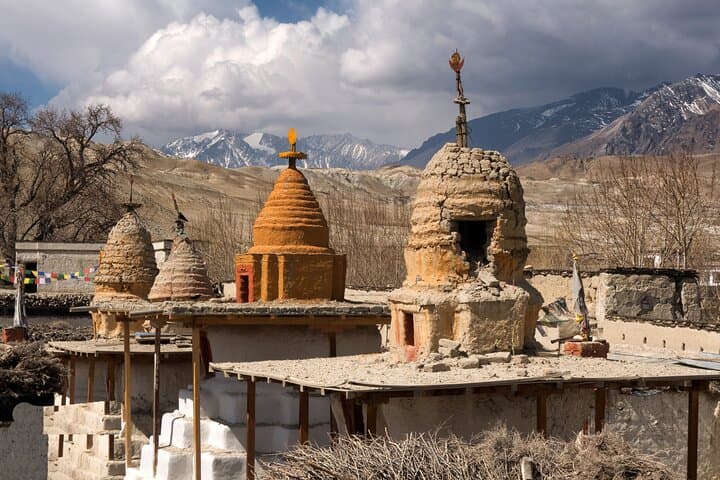
Upper Mustang occupies Nepal’s rain shadow north of the Annapurna massif. Geology here is stark — wind-polished sandstone, eroded escarpments and sedimentary terraces that record uplift and long dry seasons. Culturally the region reads like Little Tibet: monasteries, mani walls, and the fortified walled capital of Lo Manthang (3,840 m), once the center of an independent kingdom and a node on the trans-Himalayan trade route to Tibet.
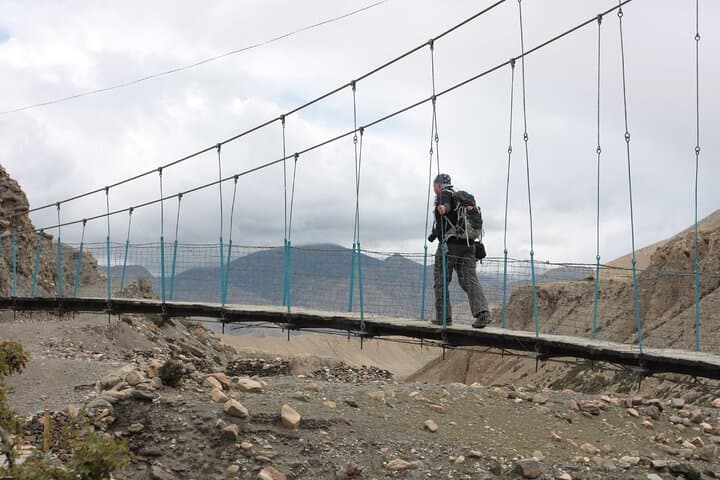
The typical itinerary runs about 17 days, combining transfers from Kathmandu and Pokhara with flights or road approaches to Jomsom then on into Kagbeni and toward Lo Manthang. Expect arid trails, gravelly riverbeds, and cliff-edge switchbacks; daily walking usually ranges from 4–8 hours with gradual altitude gain, so acclimatization days are built into the schedule.
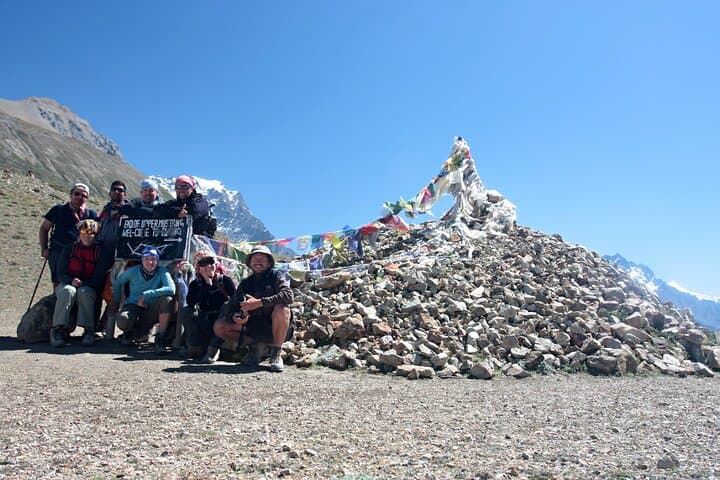
Practical guidance: obtain the Restricted Area Permit and hire an experienced guide — permits are mandatory and crew logistics are arranged in advance. Pack high-SPF sun protection, layers for cold nights, and treat water; services inside Upper Mustang are basic and cash-based. Hydrate before each stage and respect local monasteries and prayer flags. The landscape will test your lungs and reward you with sweeping, rarefied views of Dhaulagiri, Annapurna and the Mustang plateau — a trek that feels both remote and historically charged.