THE ADVENTURE COLLECTIVE® · Independent discovery and booking for outdoor travel

Walk through a high-altitude desert where eroded cliffs, cave dwellings and a walled Tibetan town define an ancient trade route. The Upper Mustang Trek combines raw geology, distinct Tibetan culture and sweeping Himalayan views over a 16–18 day route.
Walk through a high-altitude desert where eroded cliffs, cave dwellings and a walled Tibetan town define an ancient trade route. The Upper Mustang Trek combines raw geology, distinct Tibetan culture and sweeping Himalayan views over a 16–18 day route.
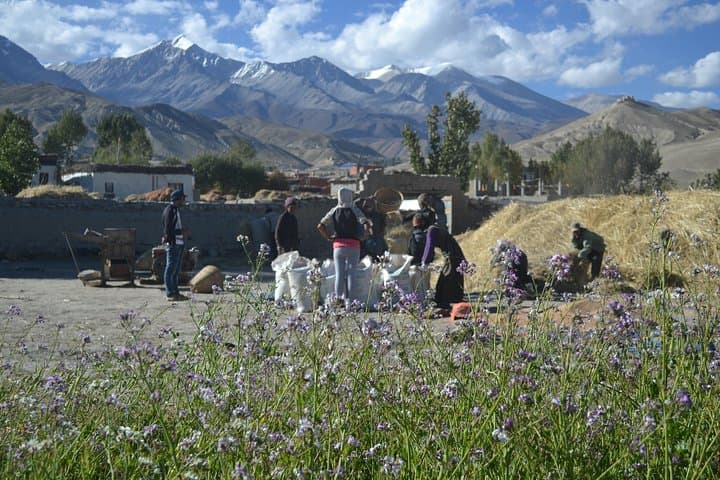
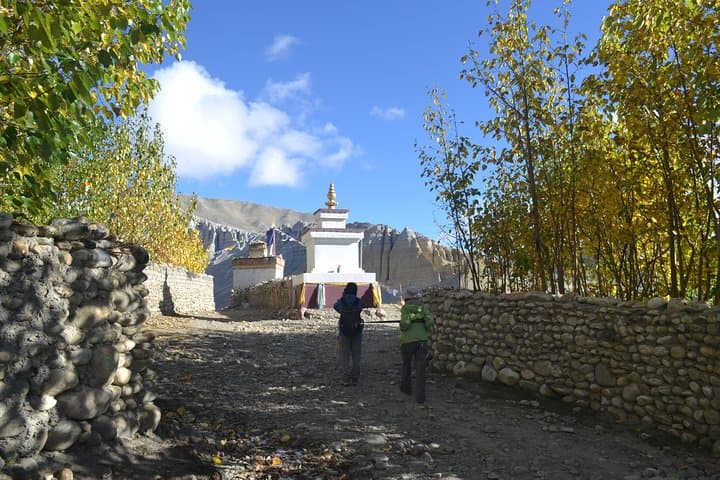
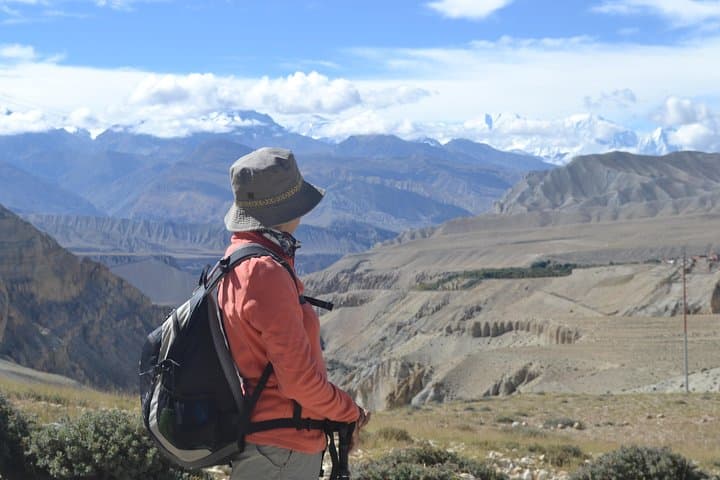
The trail opens on a wind-scoured plateau where the sky feels close enough to touch and the Kali Gandaki dares you to keep walking. Dusty red cliffs and eroded pinnacles rise like ruins of an ancient sea, and the first sight of Lo Manthang’s walled town—flat-roofed houses and prayer flags—anchors the journey in human history.
Verified experiences and guided adventures in the surrounding area.
Operated by The Great Adventure Treks & Expedition - Private Day Tours · Lo Manthang, Gandaki Province
The trail opens on a wind-scoured plateau where the sky feels close enough to touch and the Kali Gandaki dares you to keep walking. Dusty red cliffs and eroded pinnacles rise like ruins of an ancient sea, and the first sight of Lo Manthang’s walled town—flat-roofed houses and prayer flags—anchors the journey in human history.
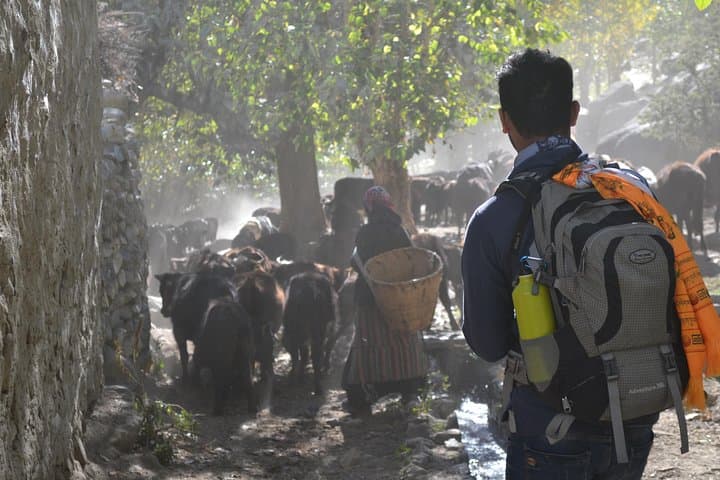
Upper Mustang sits in the rain shadow of the Dhaulagiri and Annapurna ranges; geologically it’s a high-altitude desert carved by rivers and wind. Once part of Tibetan polities and closed to foreigners until the early 1990s, the region preserves strong Tibetan-Buddhist culture: gompas, royal courtyards, cave dwellings, and salt-trade routes that shaped local life. Peaks like Dhaulagiri and Nilgiri slice the horizon, while the Kali Gandaki valley traces ancient Himalayan uplift.
Expect a mix of dusty tracks, stone stairways, and exposed ridgelines. Lo Manthang sits around 3,800–3,900 m; many camps and tea-houses line the route, but services are basic. Permits (Restricted Area Permit and ACAP) are mandatory and enforced—guides handle these details.
Practically: plan 16–18 days to allow acclimatization, pack layered clothing for strong sun by day and freezing nights, and bring a water-treatment method. Flights from Pokhara to Jomsom cut travel time; many itineraries include bus transfers and scenic mountain flights. Be self-reliant—your guide and porter system helps, but the landscape is remote and weather can reroute plans.
This is a trek for travelers who want raw landscapes, close encounters with living Tibetan culture, and long alpine light—prepare for altitude, short supply chains, and unforgettable clarity of sky.
challenging.
16–18 days.
Good cardiovascular fitness and previous multi‑day trekking experience recommended; comfortable with daily hikes of 4–7 hours and carrying a daypack.
Yes—foreign visitors must travel with a registered guide; operators also arrange the Restricted Area Permit and logistics.
Lo Manthang is around 3,800–3,900 m; the itinerary includes gradual ascent and rest days—acclimatization is essential to reduce altitude sickness risk.
Tea-houses and guesthouses are common in villages; some nights may be in simple camps—expect basic facilities and hot meals provided by operators.
Autumn (Sept–Nov) and spring (Mar–May) offer the most stable weather and best visibility; winter is colder with limited services, summer sees fewer monsoon effects but more dust.
Upper Mustang was a semi-independent kingdom with strong Tibetan ties and remained restricted to foreigners until the early 1990s, preserving traditional culture and architecture.
The region requires ACAP and a Restricted Area Permit—these fees support conservation and local communities; minimize waste, avoid single-use plastics, and follow local sanitation rules.
The Great Adventure Treks & Expedition - Private Day Tours operates guided outdoor trips and adventures with an emphasis on safety, stewardship, and memorable experiences.
The trail opens on a wind-scoured plateau where the sky feels close enough to touch and the Kali Gandaki dares you to keep walking. Dusty red cliffs and eroded pinnacles rise like ruins of an ancient sea, and the first sight of Lo Manthang’s walled town—flat-roofed houses and prayer flags—anchors the journey in human history.
The trail opens on a wind-scoured plateau where the sky feels close enough to touch and the Kali Gandaki dares you to keep walking. Dusty red cliffs and eroded pinnacles rise like ruins of an ancient sea, and the first sight of Lo Manthang’s walled town—flat-roofed houses and prayer flags—anchors the journey in human history.
Upper Mustang sits in the rain shadow of the Dhaulagiri and Annapurna ranges; geologically it’s a high-altitude desert carved by rivers and wind. Once part of Tibetan polities and closed to foreigners until the early 1990s, the region preserves strong Tibetan-Buddhist culture: gompas, royal courtyards, cave dwellings, and salt-trade routes that shaped local life. Peaks like Dhaulagiri and Nilgiri slice the horizon, while the Kali Gandaki valley traces ancient Himalayan uplift.
Expect a mix of dusty tracks, stone stairways, and exposed ridgelines. Lo Manthang sits around 3,800–3,900 m; many camps and tea-houses line the route, but services are basic. Permits (Restricted Area Permit and ACAP) are mandatory and enforced—guides handle these details.
Practically: plan 16–18 days to allow acclimatization, pack layered clothing for strong sun by day and freezing nights, and bring a water-treatment method. Flights from Pokhara to Jomsom cut travel time; many itineraries include bus transfers and scenic mountain flights. Be self-reliant—your guide and porter system helps, but the landscape is remote and weather can reroute plans.
This is a trek for travelers who want raw landscapes, close encounters with living Tibetan culture, and long alpine light—prepare for altitude, short supply chains, and unforgettable clarity of sky.