THE ADVENTURE COLLECTIVE® · Independent discovery and booking for outdoor travel

A 17‑day crossing into Upper Mustang leads to Lo Manthang’s walled streets, arid plateaus and high mountain passes. This guide explains what to expect—terrain, permits, gear and practical advice for a safe, immersive trek.
A 17‑day crossing into Upper Mustang leads to Lo Manthang’s walled streets, arid plateaus and high mountain passes. This guide explains what to expect—terrain, permits, gear and practical advice for a safe, immersive trek.
The wind in Upper Mustang moves like a sculptor, carving ochre cliffs and stepping stones of scree while the Kali Gandaki dares you to follow its gorge north. On this 17‑day route you will leave the broad river valley, climb high passes, and arrive at Lo Manthang—an ancient walled town where prayer flags stitch the sky.
Verified experiences and guided adventures in the surrounding area.
Operated by Alpine Club of Himalaya · Lo Manthang, Gandaki Province
The wind in Upper Mustang moves like a sculptor, carving ochre cliffs and stepping stones of scree while the Kali Gandaki dares you to follow its gorge north. On this 17‑day route you will leave the broad river valley, climb high passes, and arrive at Lo Manthang—an ancient walled town where prayer flags stitch the sky.
Geology here is dramatic and dry: the rain‑shadow of the Tibetan Plateau produces eroded red and white conglomerate cliffs, sparse alpine meadows, and rockbound passes that reach above 4,300 m. Culturally, Mustang reads as a living fragment of Tibetan Buddhism—gompas, mani walls and the remains of Ame Pal’s fortress recall a kingdom that was politically distinct until the late 20th century and opened slowly to outsiders.
Expect days of steady ascents and descents between small villages: mule tracks, stone chortens, and fields of barley framed by poplar groves. Accommodation alternates between basic guesthouses and tented camps; meals are mostly simple dal‑bhat and local tea. Weather shifts fast—sun can be intense and nights sub‑freezing.
Practical guidance: pace acclimatization—take the Chogo La incrementally—carry layered clothing, a reliable down jacket, and UV protection. Hydrate, use a filter or purification tablets, and pack a headlamp and blister care. Permits (Upper Mustang permit, TIMS, Annapurna/NP fees) are mandatory and arranged in advance. Guides and porters are strongly recommended for navigation and local logistics—both reduce risk and add cultural insight.
challenging.
17 days.
Good endurance with experience in multi‑day hikes; comfortable walking 5–8 hours daily at altitude.
Yes—Upper Mustang requires an Upper Mustang permit in addition to TIMS and any national park fees; these are typically arranged before departure.
Spring (April–May) and fall (September–November) offer the most stable weather, clearer mountain views and manageable temperatures.
Many days include sustained climbs to passes above 4,000 m; expect 4–8 hour trekking days on mixed rocky, dry trails—good fitness and some altitude experience are important.
Lodges and tented camps are basic: shared rooms, simple mattresses and communal dining; carry a warm sleeping layer and personal toiletries for comfort.
Upper Mustang was a semi‑independent Himalayan kingdom with strong Tibetan cultural ties; the region was restricted to foreigners until the 1990s, preserving its traditions.
The rain‑shadow ecosystem is fragile—stick to trails, pack out waste, and respect local water limits; permit fees support local management and livelihoods.
Alpine Club of Himalaya operates guided outdoor trips and adventures with an emphasis on safety, stewardship, and memorable experiences.
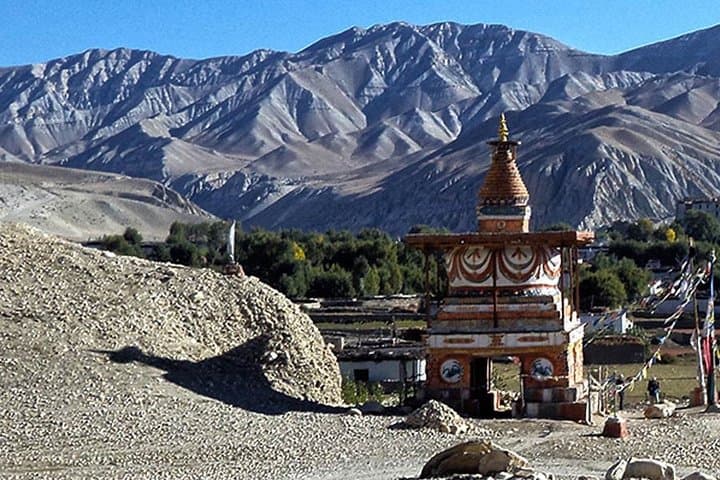
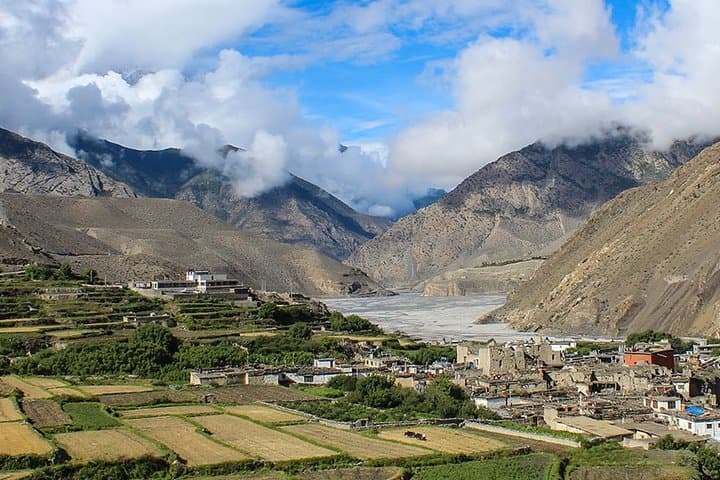
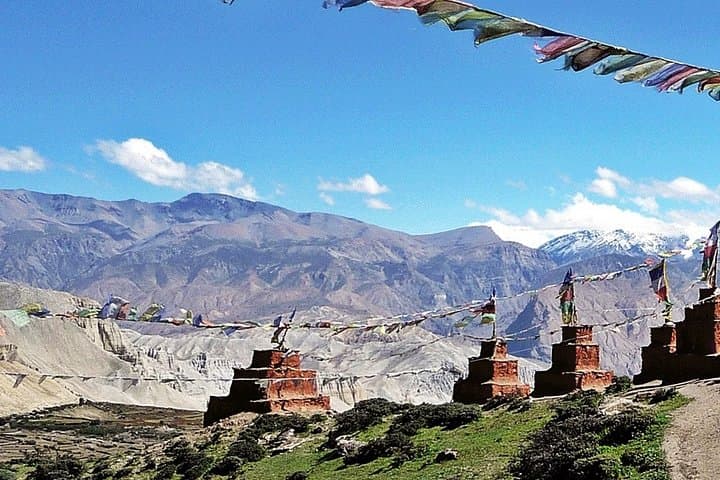
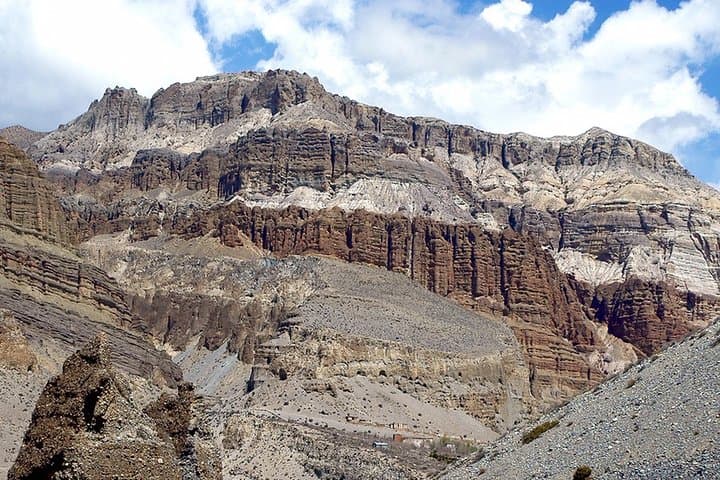
The wind in Upper Mustang moves like a sculptor, carving ochre cliffs and stepping stones of scree while the Kali Gandaki dares you to follow its gorge north. On this 17‑day route you will leave the broad river valley, climb high passes, and arrive at Lo Manthang—an ancient walled town where prayer flags stitch the sky.
The wind in Upper Mustang moves like a sculptor, carving ochre cliffs and stepping stones of scree while the Kali Gandaki dares you to follow its gorge north. On this 17‑day route you will leave the broad river valley, climb high passes, and arrive at Lo Manthang—an ancient walled town where prayer flags stitch the sky.
Geology here is dramatic and dry: the rain‑shadow of the Tibetan Plateau produces eroded red and white conglomerate cliffs, sparse alpine meadows, and rockbound passes that reach above 4,300 m. Culturally, Mustang reads as a living fragment of Tibetan Buddhism—gompas, mani walls and the remains of Ame Pal’s fortress recall a kingdom that was politically distinct until the late 20th century and opened slowly to outsiders.
Expect days of steady ascents and descents between small villages: mule tracks, stone chortens, and fields of barley framed by poplar groves. Accommodation alternates between basic guesthouses and tented camps; meals are mostly simple dal‑bhat and local tea. Weather shifts fast—sun can be intense and nights sub‑freezing.
Practical guidance: pace acclimatization—take the Chogo La incrementally—carry layered clothing, a reliable down jacket, and UV protection. Hydrate, use a filter or purification tablets, and pack a headlamp and blister care. Permits (Upper Mustang permit, TIMS, Annapurna/NP fees) are mandatory and arranged in advance. Guides and porters are strongly recommended for navigation and local logistics—both reduce risk and add cultural insight.