THE ADVENTURE COLLECTIVE® · Independent discovery and booking for outdoor travel

A 17-day guided trek into Upper Mustang takes you into Nepal’s former ‘Forbidden Kingdom’—Lo Manthang—across arid plateaus, gompas, and cliff caves. Expect dry trails, high-altitude days, and deep cultural immersion with required permits and guided logistics.
A 17-day guided trek into Upper Mustang takes you into Nepal’s former ‘Forbidden Kingdom’—Lo Manthang—across arid plateaus, gompas, and cliff caves. Expect dry trails, high-altitude days, and deep cultural immersion with required permits and guided logistics.
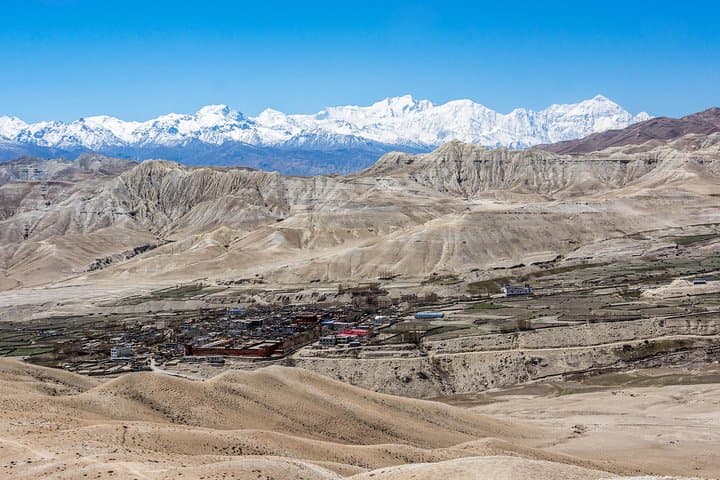
Dust rises like a memory as the trail leaves the river valleys and climbs into a landscape that almost refuses to green—wind-polished cliffs, flat high plateaus, and mani walls blinking with prayer flags. On the approach from Jomsom, the air thins and the world converts into light and stone; rivers dare you to cross on spindly bridges, and the wind pushes a steady, dry insistence across the plateau.
Verified experiences and guided adventures in the surrounding area.
Operated by Himalayan Trekking Path (P). Ltd. · Lo Manthang, Gandaki Province
Dust rises like a memory as the trail leaves the river valleys and climbs into a landscape that almost refuses to green—wind-polished cliffs, flat high plateaus, and mani walls blinking with prayer flags. On the approach from Jomsom, the air thins and the world converts into light and stone; rivers dare you to cross on spindly bridges, and the wind pushes a steady, dry insistence across the plateau.
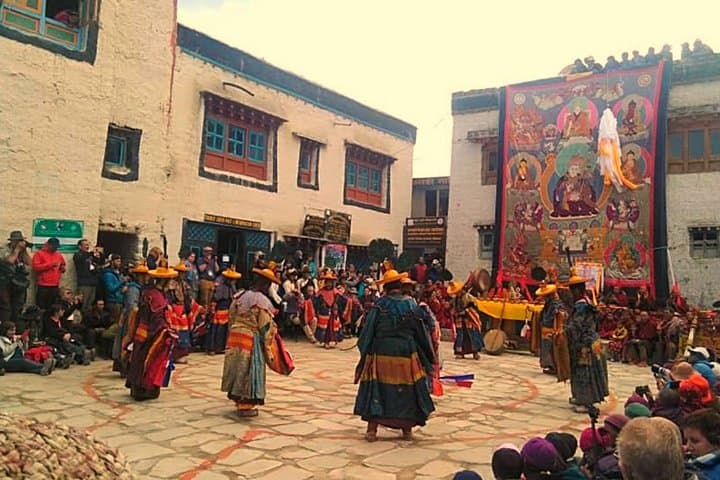
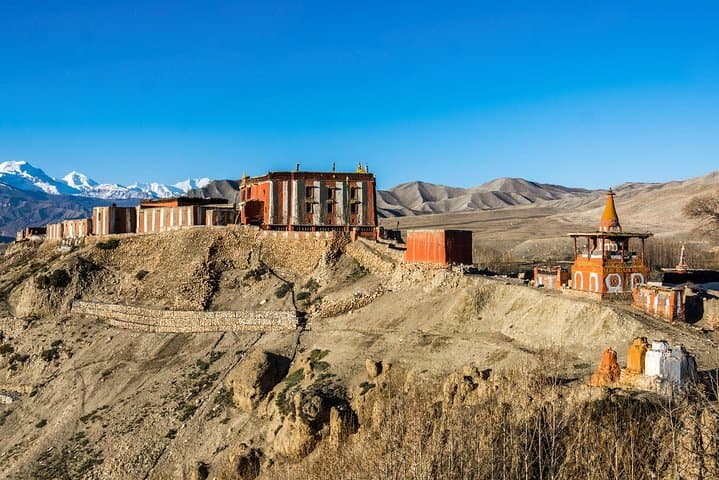
Upper Mustang is geographically a rain-shadow desert carved from Jurassic limestone and red sandstone, a canyon-and-plateau region that sits higher than most of Europe. The walled capital, Lo Manthang, dates to the 14th century under King Ame Pal and retained Tibetan Buddhist culture through centuries of restricted access—outsiders only arrived in the 1990s. Local villages still practice ritual offerings, butter-lamp ceremonies, and keep cliff-side caves and gompas that read like an open-air archive.
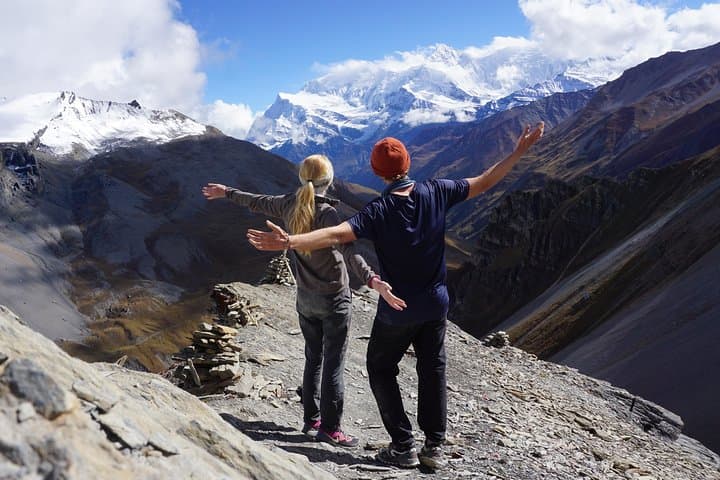
Trekking here is technical in its exposure to altitude and aridity rather than steep alpine scrambling: expect daily approaches of 3–7 hours between 2,700–3,820 m, intermittent elevation gains of 300–800 m, and trails that switch from packed gravel to rocky singletrack and dusty plateaus.
Practical guidance: plan for 16–17 days total, arrange Restricted Area Permits in advance, and build acclimatization days into your schedule (Lo Manthang rest days are common). Hydration and sun protection are as vital as warm layers—temperatures swing quickly after sunset. A local guide not only navigates the sparse signage but provides cultural context and permit handling. Travel light, respect village customs, and leave no trace in this fragile rain-shadow kingdom.
challenging.
16–17 days.
Should be in good cardiovascular shape with experience hiking 4–7 hours per day and carrying a daypack; prior high-altitude experience recommended.
Yes—Upper Mustang is a restricted area requiring a Restricted Area Permit plus TIMS; permits are typically arranged by your operator before departure.
Spring (March–May) and fall (September–November) offer the most stable weather and clearer views; winters are cold and some services are reduced, while summer brings monsoon influence at lower elevations.
Daily hikes are generally 3–7 hours with elevation ranges from about 2,700 m to 3,820 m; acclimatization days are built into typical itineraries to manage altitude.
A licensed guide is strongly recommended and commonly required by permit rules—guides handle logistics, navigation, and local liaison, which is essential in a restricted region.
Lo Manthang was founded by King Ame Pal in the 14th century and remained culturally distinct and closed to outsiders until the early 1990s, preserving Tibetan-Buddhist traditions.
Upper Mustang’s thin-soil, rain-shadow landscape is fragile—stick to established trails, minimize campfires, and pack out waste; support local guides to ensure tourism benefits villages.
Himalayan Trekking Path (P). Ltd. operates guided outdoor trips and adventures with an emphasis on safety, stewardship, and memorable experiences.
Dust rises like a memory as the trail leaves the river valleys and climbs into a landscape that almost refuses to green—wind-polished cliffs, flat high plateaus, and mani walls blinking with prayer flags. On the approach from Jomsom, the air thins and the world converts into light and stone; rivers dare you to cross on spindly bridges, and the wind pushes a steady, dry insistence across the plateau.
Dust rises like a memory as the trail leaves the river valleys and climbs into a landscape that almost refuses to green—wind-polished cliffs, flat high plateaus, and mani walls blinking with prayer flags. On the approach from Jomsom, the air thins and the world converts into light and stone; rivers dare you to cross on spindly bridges, and the wind pushes a steady, dry insistence across the plateau.
Upper Mustang is geographically a rain-shadow desert carved from Jurassic limestone and red sandstone, a canyon-and-plateau region that sits higher than most of Europe. The walled capital, Lo Manthang, dates to the 14th century under King Ame Pal and retained Tibetan Buddhist culture through centuries of restricted access—outsiders only arrived in the 1990s. Local villages still practice ritual offerings, butter-lamp ceremonies, and keep cliff-side caves and gompas that read like an open-air archive.
Trekking here is technical in its exposure to altitude and aridity rather than steep alpine scrambling: expect daily approaches of 3–7 hours between 2,700–3,820 m, intermittent elevation gains of 300–800 m, and trails that switch from packed gravel to rocky singletrack and dusty plateaus.
Practical guidance: plan for 16–17 days total, arrange Restricted Area Permits in advance, and build acclimatization days into your schedule (Lo Manthang rest days are common). Hydration and sun protection are as vital as warm layers—temperatures swing quickly after sunset. A local guide not only navigates the sparse signage but provides cultural context and permit handling. Travel light, respect village customs, and leave no trace in this fragile rain-shadow kingdom.