THE ADVENTURE COLLECTIVE® · Independent discovery and booking for outdoor travel

Follow the wind-scoured trails from Jomsom to the walled city of Lo Manthang on a 17-day trek through Upper Mustang. Discover Tibetan-influenced villages, high desert landscapes and remote gompas while preparing for high-altitude, lodge-to-lodge trekking.
Follow the wind-scoured trails from Jomsom to the walled city of Lo Manthang on a 17-day trek through Upper Mustang. Discover Tibetan-influenced villages, high desert landscapes and remote gompas while preparing for high-altitude, lodge-to-lodge trekking.
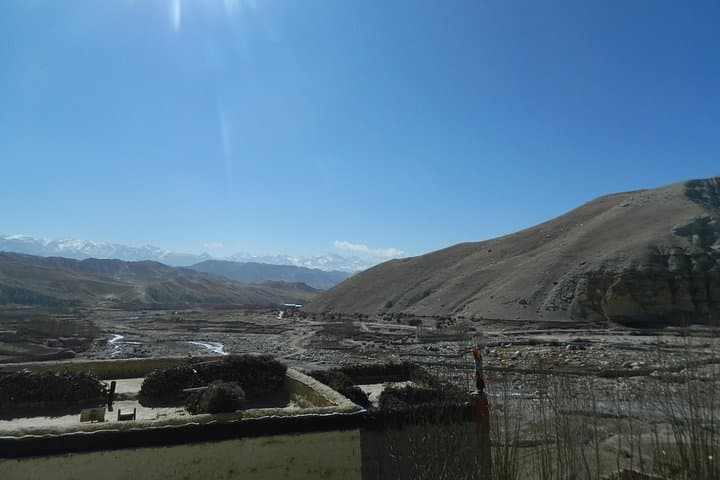
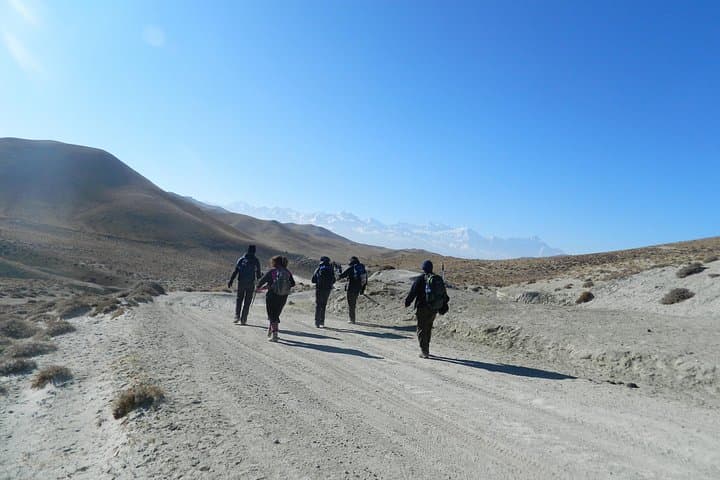
The wind in the rain-shadow of the Tibetan plateau hits sharp and dry as you step onto the stony trail toward Lo Manthang—an ancient walled capital that has kept its rules, houses and monasteries little changed for centuries.
Verified experiences and guided adventures in the surrounding area.
Operated by Accessible Adventure Pvt. Ltd · Lo Manthang, Mustang District
The wind in the rain-shadow of the Tibetan plateau hits sharp and dry as you step onto the stony trail toward Lo Manthang—an ancient walled capital that has kept its rules, houses and monasteries little changed for centuries.
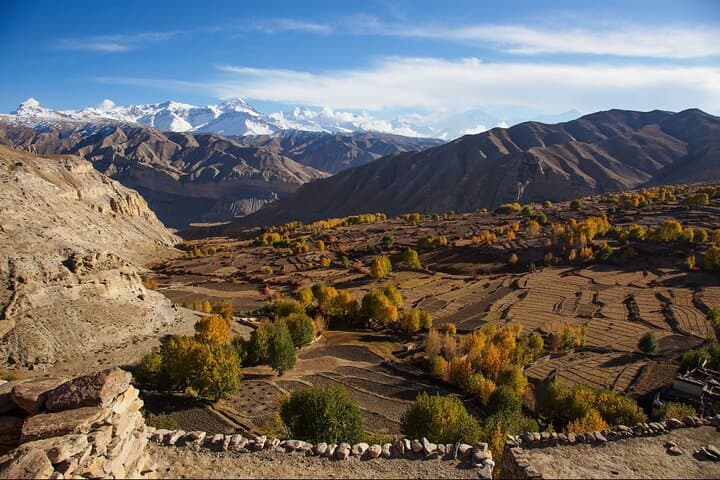
This 17-day route follows the Kali Gandaki gorge and climbs through terraced farmland, arid plateaus and ochre cliffs carved by millennia of wind. Upper Mustang was a semi-independent Lo kingdom and remained restricted to outsiders until the early 1990s; that isolation preserved four-storey palaces, city walls and distinct Tibetan-Bhote culture. Geologically the valley is dramatic: uplifted Himalayan strata, moraine-capped ridgelines and the world’s deepest gorge frame the walk.
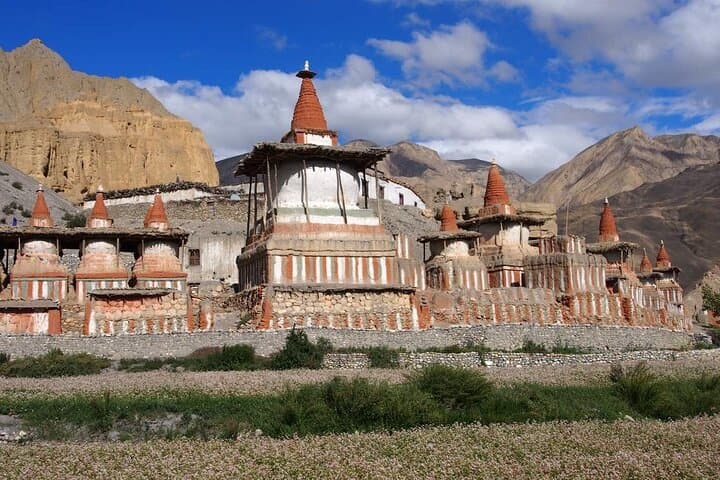
Villages like Kagbeni, Tangbe and Tsarang present mud-brick houses, red gompas and lineages of horsemen still tending barley and yaks. Monasteries—Namgyal and Jhong—offer frescoed interiors and ritual butter lamps that reveal layers of Buddhist practice tied to old Himalayan trade routes.
Practical guide: be prepared for sustained altitude (peaks around 4,100 m), long days on loose scree and lodge-to-lodge sleeping; morning flights from Pokhara to Jomsom shorten walking approaches. Acclimatize in Pokhara/Kathmandu, carry water-treatment and layers for intense sun by day and freezing nights. Permits are mandatory (Upper Mustang restricted-area permit plus ACAP/trekking permits). Expect limited Wi‑Fi and basic teahouse comforts; pack a good down jacket, sun protection and blister-ready footwear. Move slowly, hydrate often, and let the barren cliffs and prayer flags set your rhythm—the land here rewards patience more than speed.
difficult.
16–17 days.
Good aerobic fitness with experience on multi-day hikes and ability to handle long days at altitude
Yes—travelers require a Restricted Area Permit for Upper Mustang plus the Annapurna Conservation Area Project (ACAP) permit; arrange them in advance through your operator or Nepal’s immigration office.
Spring (April–May) and fall (September–November) offer the most stable weather and clear mountain views; winter is very cold, summer can bring occasional monsoon winds and cloud.
Expect long days, high passes and prolonged exposure to altitude—good cardiovascular fitness and prior multi-day trekking experience are strongly recommended.
Yes—most nights are in local guest houses or basic lodges with simple meals; quality varies and hot showers are limited at higher elevations.
Upper Mustang was the Lo Kingdom, politically distinct with Tibetan cultural ties; it restricted foreign entry until the 1990s, preserving local architecture and traditions.
The region is a fragile rain-shadow ecosystem—minimize waste, respect water scarcity, support local lodges and follow permit rules that fund conservation.
Accessible Adventure Pvt. Ltd operates guided outdoor trips and adventures with an emphasis on safety, stewardship, and memorable experiences.
The wind in the rain-shadow of the Tibetan plateau hits sharp and dry as you step onto the stony trail toward Lo Manthang—an ancient walled capital that has kept its rules, houses and monasteries little changed for centuries.
The wind in the rain-shadow of the Tibetan plateau hits sharp and dry as you step onto the stony trail toward Lo Manthang—an ancient walled capital that has kept its rules, houses and monasteries little changed for centuries.
This 17-day route follows the Kali Gandaki gorge and climbs through terraced farmland, arid plateaus and ochre cliffs carved by millennia of wind. Upper Mustang was a semi-independent Lo kingdom and remained restricted to outsiders until the early 1990s; that isolation preserved four-storey palaces, city walls and distinct Tibetan-Bhote culture. Geologically the valley is dramatic: uplifted Himalayan strata, moraine-capped ridgelines and the world’s deepest gorge frame the walk.
Villages like Kagbeni, Tangbe and Tsarang present mud-brick houses, red gompas and lineages of horsemen still tending barley and yaks. Monasteries—Namgyal and Jhong—offer frescoed interiors and ritual butter lamps that reveal layers of Buddhist practice tied to old Himalayan trade routes.
Practical guide: be prepared for sustained altitude (peaks around 4,100 m), long days on loose scree and lodge-to-lodge sleeping; morning flights from Pokhara to Jomsom shorten walking approaches. Acclimatize in Pokhara/Kathmandu, carry water-treatment and layers for intense sun by day and freezing nights. Permits are mandatory (Upper Mustang restricted-area permit plus ACAP/trekking permits). Expect limited Wi‑Fi and basic teahouse comforts; pack a good down jacket, sun protection and blister-ready footwear. Move slowly, hydrate often, and let the barren cliffs and prayer flags set your rhythm—the land here rewards patience more than speed.