THE ADVENTURE COLLECTIVE® · Independent discovery and booking for outdoor travel

A deliberate, high-desert trek into the once-forbidden kingdom of Upper Mustang. Over 14 days you’ll cross arid valleys, visit Lo Manthang’s walled streets, and stay in teahouses while acclimatizing to the stark Tibetan-influenced landscape.
A deliberate, high-desert trek into the once-forbidden kingdom of Upper Mustang. Over 14 days you’ll cross arid valleys, visit Lo Manthang’s walled streets, and stay in teahouses while acclimatizing to the stark Tibetan-influenced landscape.
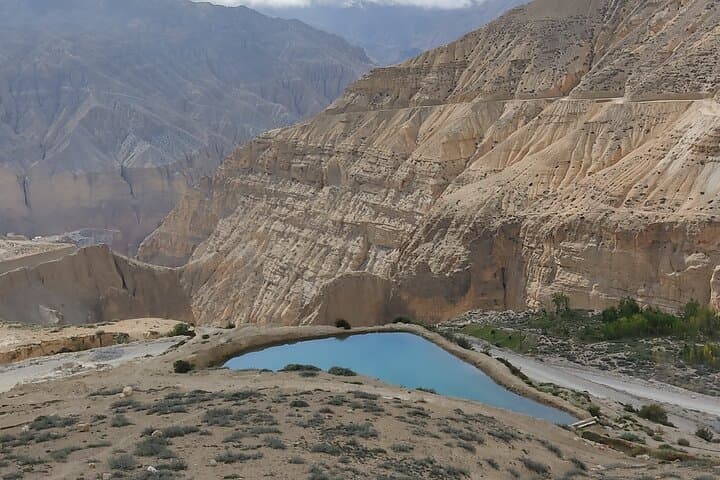
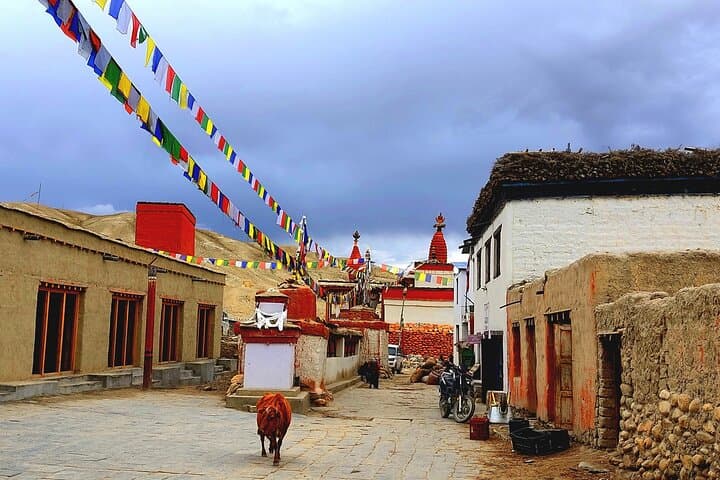
You step out of the thin-air blue into a valley that feels older than maps: wind pushes along the Kali Gandaki, cliffs stare down like pages of geology, and prayer flags flicker over mud-brick alleys as if greeting strangers.
Verified experiences and guided adventures in the surrounding area.
Operated by Trek Mania Nepal · Lo Manthang, Mustang District
You step out of the thin-air blue into a valley that feels older than maps: wind pushes along the Kali Gandaki, cliffs stare down like pages of geology, and prayer flags flicker over mud-brick alleys as if greeting strangers.
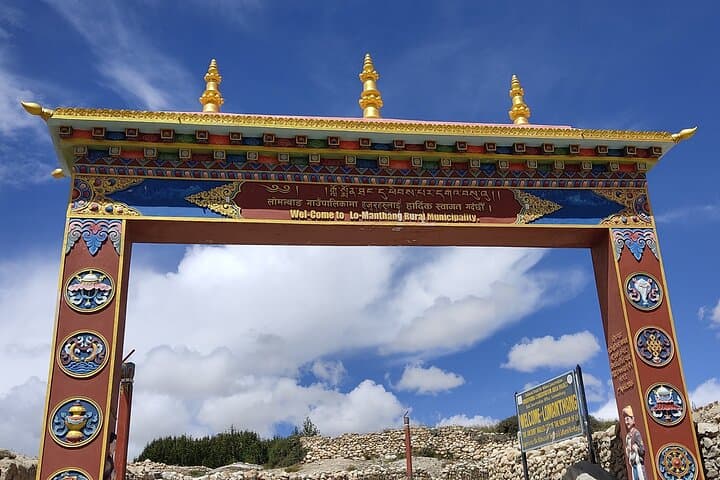
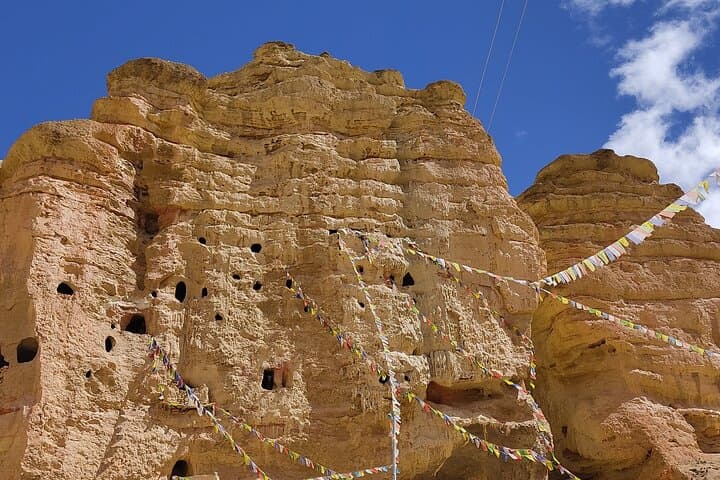
Upper Mustang was a once-forbidden kingdom on Nepal’s northern flank, shaped by Tibetan trade routes, centuries-old monasteries, and human settlements carved into red and ochre cliffs. The region is a rain-shadowed high desert—loess and sandstone sculpted by wind—where sky caves and walled towns like Lo Manthang preserve a living Tibetan-influenced culture. Expect stone courtyards, mani walls, and monasteries with faded murals alongside households that continue traditional crafts.
This 14-day route moves deliberately: fly Pokhara–Jomsom, then trek through Kagbeni, Chele, Ghami, Tsarang and into Lo Manthang at roughly 3,800–3,900 m. Daily walking is mixed terrain—packed dirt, gravel scree, and short rocky ascents—with typical days of 4–7 hours to allow acclimatization. Accommodation is teahouse-style; meals are simple and warming.
Practicalities matter: Upper Mustang is a restricted area requiring permits, flights to Jomsom are weather-dependent, and altitude awareness is essential. Bring reliable boots for loose scree, layered insulation for large diurnal swings, and water treatment. Plan buffer days for weather or flight delays, respect monastery customs (remove hats, ask before photographing), and hire an experienced local guide—local knowledge safeguards both acclimatization and cultural access. Done right, this trek balances remote adventure with deep cultural immersion: the land will test your stamina, and the people will repay your curiosity.
challenging.
14 days.
Good aerobic fitness with prior multi-day trekking experience; able to hike 4–7 hours a day at increasing altitude.
Yes—Upper Mustang is a restricted area and requires a special permit in addition to standard permits; your operator typically arranges this in advance.
Expect 4–7 hours of walking per day over mixed terrain with some sustained climbs; the challenge primarily comes from altitude rather than technical difficulty.
Spring and fall offer the most stable weather and clearer mountain views; monsoon (summer) brings dust and possible flight disruptions, and winter is very cold with shorter daylight.
Yes—this itinerary uses teahouses and basic guesthouses in villages; facilities are simple and vary in comfort and hot water availability.
Upper Mustang was a semi-autonomous kingdom with strong Tibetan cultural ties and strategic trade routes to Tibet; Lo Manthang served as the royal seat for centuries.
The region sits in a fragile rain-shadow ecosystem; visitors should minimize waste, avoid disturbing archaeological features, and support local conservation-focused guides and lodges.
Trek Mania Nepal operates guided outdoor trips and adventures with an emphasis on safety, stewardship, and memorable experiences.
You step out of the thin-air blue into a valley that feels older than maps: wind pushes along the Kali Gandaki, cliffs stare down like pages of geology, and prayer flags flicker over mud-brick alleys as if greeting strangers.
You step out of the thin-air blue into a valley that feels older than maps: wind pushes along the Kali Gandaki, cliffs stare down like pages of geology, and prayer flags flicker over mud-brick alleys as if greeting strangers.
Upper Mustang was a once-forbidden kingdom on Nepal’s northern flank, shaped by Tibetan trade routes, centuries-old monasteries, and human settlements carved into red and ochre cliffs. The region is a rain-shadowed high desert—loess and sandstone sculpted by wind—where sky caves and walled towns like Lo Manthang preserve a living Tibetan-influenced culture. Expect stone courtyards, mani walls, and monasteries with faded murals alongside households that continue traditional crafts.
This 14-day route moves deliberately: fly Pokhara–Jomsom, then trek through Kagbeni, Chele, Ghami, Tsarang and into Lo Manthang at roughly 3,800–3,900 m. Daily walking is mixed terrain—packed dirt, gravel scree, and short rocky ascents—with typical days of 4–7 hours to allow acclimatization. Accommodation is teahouse-style; meals are simple and warming.
Practicalities matter: Upper Mustang is a restricted area requiring permits, flights to Jomsom are weather-dependent, and altitude awareness is essential. Bring reliable boots for loose scree, layered insulation for large diurnal swings, and water treatment. Plan buffer days for weather or flight delays, respect monastery customs (remove hats, ask before photographing), and hire an experienced local guide—local knowledge safeguards both acclimatization and cultural access. Done right, this trek balances remote adventure with deep cultural immersion: the land will test your stamina, and the people will repay your curiosity.