THE ADVENTURE COLLECTIVE® · Independent discovery and booking for outdoor travel

Fly from Pokhara into the rain-shadow of the Annapurnas and follow ancient trade routes into the Forbidden Kingdom of Lo. This 12-day trek crosses red rock canyons and isolated Tibetan-influenced villages, offering stark landscapes, remote monasteries and high-altitude desert trekking.
Fly from Pokhara into the rain-shadow of the Annapurnas and follow ancient trade routes into the Forbidden Kingdom of Lo. This 12-day trek crosses red rock canyons and isolated Tibetan-influenced villages, offering stark landscapes, remote monasteries and high-altitude desert trekking.
Early light slices the rain-shadow of the Annapurna range and the plane drops you into a wind-scoured valley where the air tastes sharp and dry.
Verified experiences and guided adventures in the surrounding area.
Operated by Nepal Mountain Club Pvt Ltd · Lo Manthang, Gandaki Province
Early light slices the rain-shadow of the Annapurna range and the plane drops you into a wind-scoured valley where the air tastes sharp and dry.
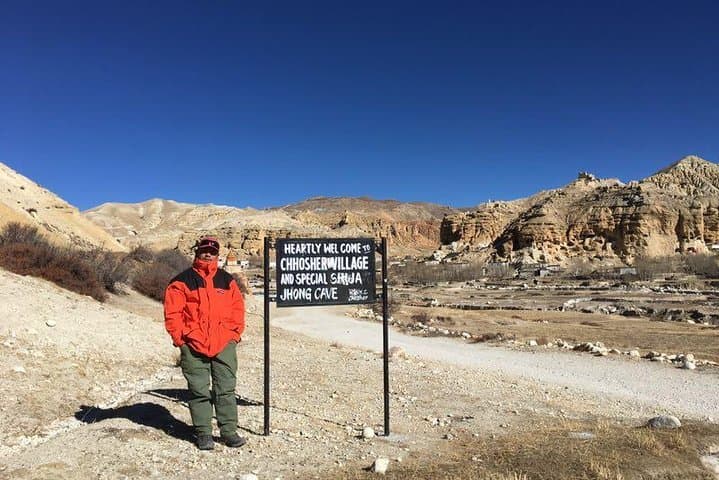
From Jomsom the trail threads ancient river terraces and arid cliffs toward the Kingdom of Lo—a high desert of loess canyons, red ochre cliffs and whitewashed gompas. Rocks here are folded like pages; wind and sparse water have carved fortified villages and deep gorges that seem to watch every step.
Upper Mustang holds a layered history: Tibetan-influenced princedoms that kept limited contact with Kathmandu until the mid-20th century, monasteries that mark trade routes to Lhasa, and salt-road archaeology etched into cliff faces. Geologically, the region sits in a rain shadow of the Himalaya, giving it a cold, desert climate and exposed strata where you can read millions of years in bands of sandstone and volcanic ash.
Culturally the route is intimate—Ghar and Ghami’s barrios, prayer wheels that spin with each gust, and the walled capital Lo Manthang where courtyards and royal houses reflect Mustang’s distinct identity.
Practical guidance: expect 3–7 hour walking days at elevations up to about 3,800–4,000 m; daily terrain mixes rocky mule tracks, loose scree and compacted village paths. Permits (Restricted Area Permit plus conservation fees) are mandatory and usually arranged by operators; bring cash for remote guesthouses and tips. Acclimatize—build rest days and monitor for AMS symptoms. Weather swings quickly: sun can burn by noon and nights freeze.
This itinerary suits trekkers ready for high-altitude exposure, cultural immersion and long days on uneven ground.
challenging.
12 days.
Good aerobic fitness with experience on multi-day hikes and at least moderate altitude exposure; able to walk 4–7 hours on uneven ground.
Yes. Upper Mustang is a restricted area; trekkers need a Restricted Area Permit plus conservation/ACAP fees—these are usually handled by your operator but require passport details and extra payment.
Spring (March–May) and autumn (September–November) are preferred for stable weather and clearer views; shoulder seasons can be colder and windier but less crowded.
Expect mostly 3–7 hour walking days over rocky paths and short ups and downs; cumulative altitude gain and thin air make days feel harder than distance alone suggests.
Medical care is basic in villages; serious issues require evacuation to Jomsom or Pokhara—travel insurance with high-altitude helicopter evacuation coverage is strongly recommended.
The walled town of Lo Manthang was the seat of the Kingdom of Lo; Upper Mustang preserved a distinct Tibetan-influenced culture and limited external contact until the 20th century.
Upper Mustang is managed through restricted permits and conservation fees to limit visitor impact; practice leave-no-trace and respect local monastery protocols.
Nepal Mountain Club Pvt Ltd operates guided outdoor trips and adventures with an emphasis on safety, stewardship, and memorable experiences.
Early light slices the rain-shadow of the Annapurna range and the plane drops you into a wind-scoured valley where the air tastes sharp and dry.
Early light slices the rain-shadow of the Annapurna range and the plane drops you into a wind-scoured valley where the air tastes sharp and dry.
From Jomsom the trail threads ancient river terraces and arid cliffs toward the Kingdom of Lo—a high desert of loess canyons, red ochre cliffs and whitewashed gompas. Rocks here are folded like pages; wind and sparse water have carved fortified villages and deep gorges that seem to watch every step.
Upper Mustang holds a layered history: Tibetan-influenced princedoms that kept limited contact with Kathmandu until the mid-20th century, monasteries that mark trade routes to Lhasa, and salt-road archaeology etched into cliff faces. Geologically, the region sits in a rain shadow of the Himalaya, giving it a cold, desert climate and exposed strata where you can read millions of years in bands of sandstone and volcanic ash.
Culturally the route is intimate—Ghar and Ghami’s barrios, prayer wheels that spin with each gust, and the walled capital Lo Manthang where courtyards and royal houses reflect Mustang’s distinct identity.
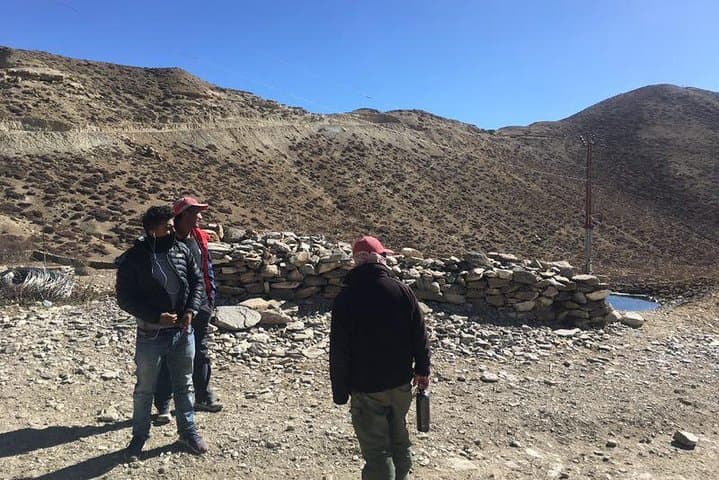
Practical guidance: expect 3–7 hour walking days at elevations up to about 3,800–4,000 m; daily terrain mixes rocky mule tracks, loose scree and compacted village paths. Permits (Restricted Area Permit plus conservation fees) are mandatory and usually arranged by operators; bring cash for remote guesthouses and tips. Acclimatize—build rest days and monitor for AMS symptoms. Weather swings quickly: sun can burn by noon and nights freeze.
This itinerary suits trekkers ready for high-altitude exposure, cultural immersion and long days on uneven ground.