THE ADVENTURE COLLECTIVE® · Independent discovery and booking for outdoor travel

Walk through a photographer’s dream: narrow sandstone corridors lit by dramatic sunbeams, guided by Navajo hosts who explain the canyon’s geology and culture. This concise guide covers what to expect, safety rules, and practical tips for planning your visit.
Walk through a photographer’s dream: narrow sandstone corridors lit by dramatic sunbeams, guided by Navajo hosts who explain the canyon’s geology and culture. This concise guide covers what to expect, safety rules, and practical tips for planning your visit.
You step down into a narrow throat of red sandstone and the world above contracts to a bright slit. Sunlight threads through the canyon roof and paints the undulating walls in bands of copper and gold; the rocks seem to breathe as the light moves.
Verified experiences and guided adventures in the surrounding area.
Operated by National Park Express · Page, Arizona
You step down into a narrow throat of red sandstone and the world above contracts to a bright slit. Sunlight threads through the canyon roof and paints the undulating walls in bands of copper and gold; the rocks seem to breathe as the light moves.
Carved over millions of years by flash floods and wind, Upper Antelope Canyon sits on Navajo Nation land and functions as both geological classroom and ceremonial place. The slot’s smooth, flowing curves are Navajo sandstone—old river and dune deposits reshaped into the sinuous corridors photographers prize. Guides from the community point out classic formations, explain safety around monsoon-driven floods, and share cultural context that connects the place to local stories.
Tours move at a steady pace: about 60 minutes inside and roughly 80 minutes total including check-in and the short 15-minute rim hike back over the canyon with 21 steps up and 112 down. The floor is largely flat and sandy, but there are stair sections and narrow squeezes; comfortable, stable footwear matters. Photography rules are strict—no tripods or drones—and guides will position you for the best beams while protecting fragile rock and fellow visitors.
Plan for desert conditions: arrive 30 minutes early at the operator’s lot on Highway 98 (mile marker 302), carry water, and wear sun protection for the wait outside. Weather closures happen—operators and Navajo Parks make safety calls—so keep flexible plans. Respect the canyon’s rules and your guide, and you’ll leave with vivid images and a clearer sense of how water and time sculpt stone.
moderate.
1–1.5 hours.
Moderate; you should be able to walk unassisted on uneven surfaces and climb stairs.
No; tripods, monopods, selfie sticks, and drones are prohibited to protect the canyon and keep passageways clear.
No; the experience includes stairs and uneven terrain and does not permit wheelchairs, walkers, or canes.
Light beams are strongest in summer around midday when the sun is high; guides will time the best photo opportunities but conditions vary.
Expect about 60 minutes inside the slot and roughly 80 minutes total including check-in and the short rim exit hike.
Upper Antelope Canyon sits on Navajo Nation land and was formed by centuries of flash-flood erosion of Navajo sandstone; it has cultural significance for the local Diné people.
The canyon’s sandstone is fragile—strict bag and drone rules, limits on gear, and guided-only access help reduce erosion and crowd impacts.
National Park Express operates guided outdoor trips and adventures with an emphasis on safety, stewardship, and memorable experiences.
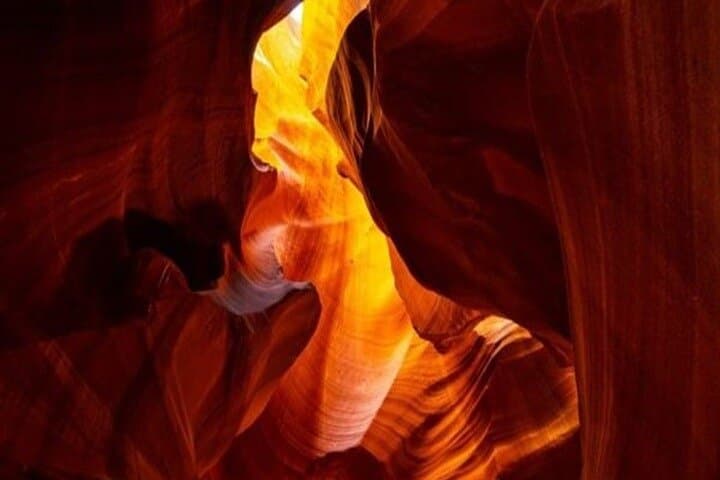
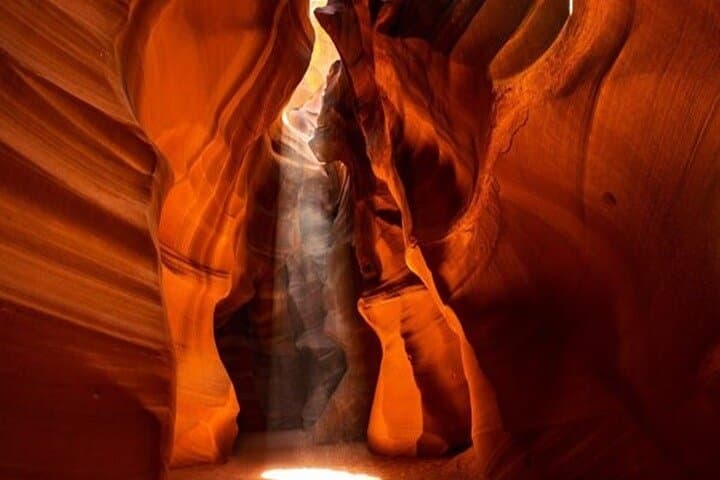
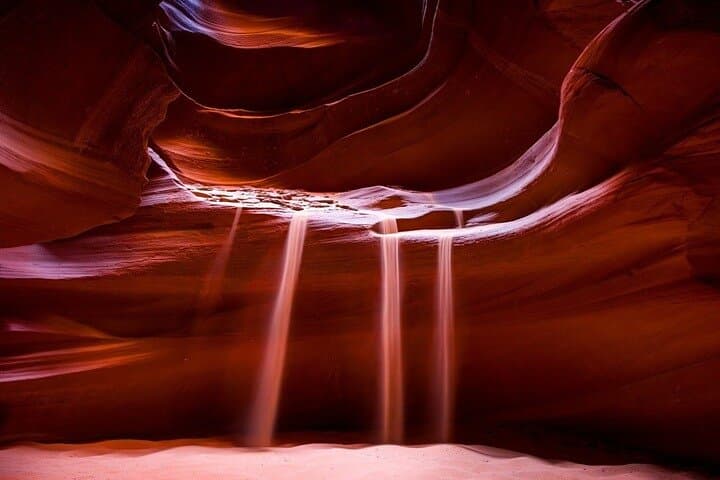
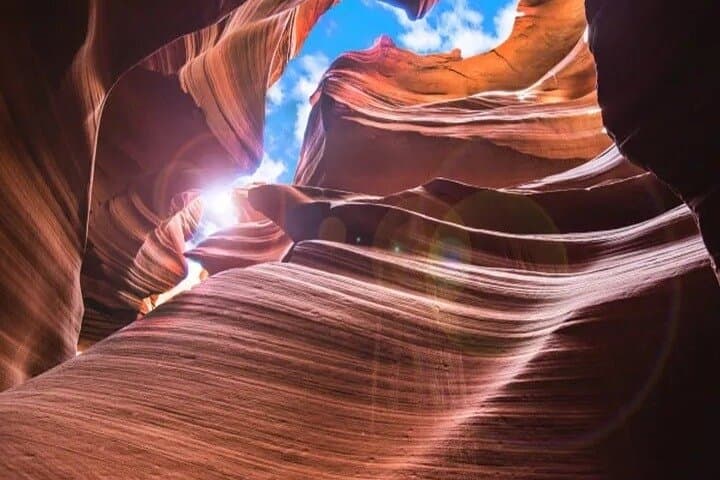
You step down into a narrow throat of red sandstone and the world above contracts to a bright slit. Sunlight threads through the canyon roof and paints the undulating walls in bands of copper and gold; the rocks seem to breathe as the light moves.
You step down into a narrow throat of red sandstone and the world above contracts to a bright slit. Sunlight threads through the canyon roof and paints the undulating walls in bands of copper and gold; the rocks seem to breathe as the light moves.
Carved over millions of years by flash floods and wind, Upper Antelope Canyon sits on Navajo Nation land and functions as both geological classroom and ceremonial place. The slot’s smooth, flowing curves are Navajo sandstone—old river and dune deposits reshaped into the sinuous corridors photographers prize. Guides from the community point out classic formations, explain safety around monsoon-driven floods, and share cultural context that connects the place to local stories.
Tours move at a steady pace: about 60 minutes inside and roughly 80 minutes total including check-in and the short 15-minute rim hike back over the canyon with 21 steps up and 112 down. The floor is largely flat and sandy, but there are stair sections and narrow squeezes; comfortable, stable footwear matters. Photography rules are strict—no tripods or drones—and guides will position you for the best beams while protecting fragile rock and fellow visitors.
Plan for desert conditions: arrive 30 minutes early at the operator’s lot on Highway 98 (mile marker 302), carry water, and wear sun protection for the wait outside. Weather closures happen—operators and Navajo Parks make safety calls—so keep flexible plans. Respect the canyon’s rules and your guide, and you’ll leave with vivid images and a clearer sense of how water and time sculpt stone.