THE ADVENTURE COLLECTIVE® · Independent discovery and booking for outdoor travel

Spend an hour beside a living highway of leafcutter ants at Chilamate’s Operation Center. This guided visit reveals fungus farming, caste roles and—occasionally—the queen, paired with local ecological context and practical tips for a humid rainforest encounter.
Spend an hour beside a living highway of leafcutter ants at Chilamate’s Operation Center. This guided visit reveals fungus farming, caste roles and—occasionally—the queen, paired with local ecological context and practical tips for a humid rainforest encounter.
A low wooden viewing platform sits within the humid breath of Sarapiquí’s lowland forest; damp earth and the metallic scent of leaf decay frame a living conveyor belt of leafcutter ants. For one hour you stand close enough to hear the rasp of mandibles and watch columns of workers ferry green fragments past sentinel plants, each ant intent on its task.
Verified experiences and guided adventures in the surrounding area.
Operated by Aguas Bravas Rafting · Chilamate, Heredia
A low wooden viewing platform sits within the humid breath of Sarapiquí’s lowland forest; damp earth and the metallic scent of leaf decay frame a living conveyor belt of leafcutter ants. For one hour you stand close enough to hear the rasp of mandibles and watch columns of workers ferry green fragments past sentinel plants, each ant intent on its task.
The tour at Chilamate’s Operation Center Aguas Bravas interprets an insect society that predates much human agriculture: these ants cultivate fungus as food, operate strict caste divisions and, in protected settings, reveal the elusive queen. The region’s volcanic soils and year-round warmth create the rich leaf litter and fungal growth that fuel both ant farms and the frogs that breed nearby, tying entomology to local ecology.
Culturally, Sarapiquí mixes smallholder farms, conservation research stations and ecotourism; guides often link traditional agroforestry practices to the ants’ role in nutrient cycling. Expect close-up observation rather than a hike—paths are short and generally flat, but humid and sometimes muddy.
Practical guidance: wear closed-toe shoes, bring insect repellent and a refillable water bottle. The tour is wheelchair accessible and runs daily from mid-morning to late afternoon; guide commentary covers ant taxonomy, colony structure and composting uses. Keep voices low, don’t touch the colony, and follow the guide’s positioning to avoid trampling microhabitat. Photography is usually allowed but avoid flash near frog shelters. For naturalists and families curious about complex animal societies, this compact, hands-off experience delivers surprising detail on one of the region’s busiest tiny engineers.
moderate.
1 hour.
Moderate; tour involves short standing periods and brief walks on humid, occasionally slippery ground
Yes—children are welcome but must be accompanied by an adult; guides emphasize safety and minimal disturbance.
You can watch active foraging trails and on-site colonies closely; the queen is visible in the managed colony but sightings depend on the enclosure and timing.
Yes, the tour site indicates wheelchair accessibility with raised viewing areas and short, level access paths.
Photography is generally allowed; avoid using flash near frog habitats and follow the guide’s instructions to prevent disturbance.
The Sarapiquí lowlands have long supported mixed subsistence farms and research stations; local guides often connect traditional land use to insect-driven soil processes.
Tours are run with an educational focus to minimize disturbance; visitors are asked not to touch colonies and to follow waste-free practices to protect microhabitats.
Aguas Bravas Rafting operates guided outdoor trips and adventures with an emphasis on safety, stewardship, and memorable experiences.
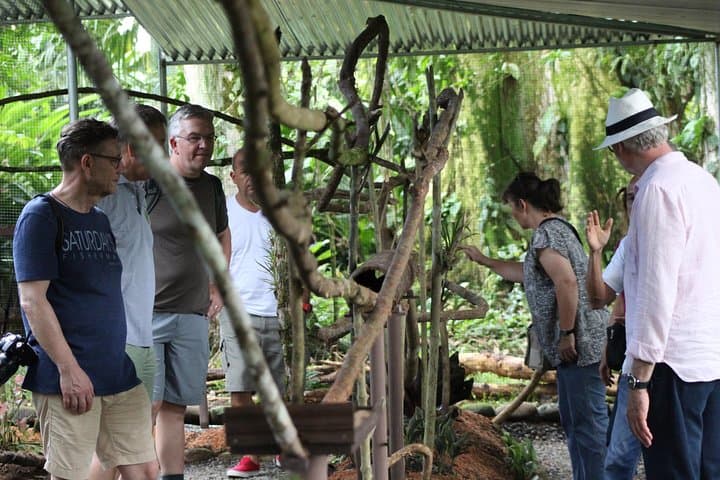
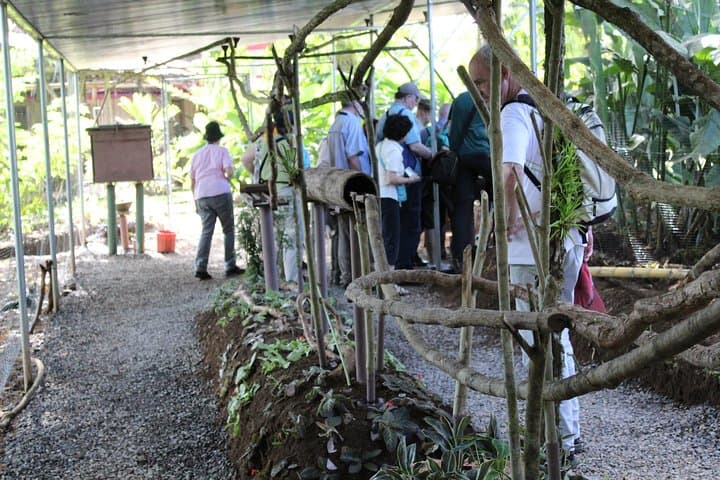
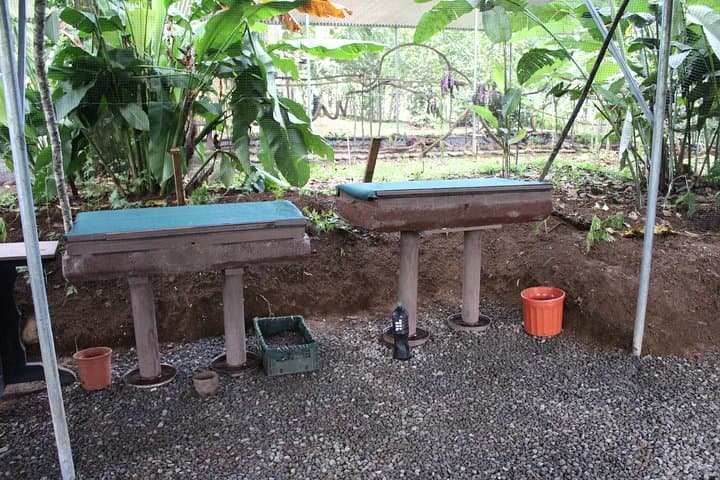
A low wooden viewing platform sits within the humid breath of Sarapiquí’s lowland forest; damp earth and the metallic scent of leaf decay frame a living conveyor belt of leafcutter ants. For one hour you stand close enough to hear the rasp of mandibles and watch columns of workers ferry green fragments past sentinel plants, each ant intent on its task.
A low wooden viewing platform sits within the humid breath of Sarapiquí’s lowland forest; damp earth and the metallic scent of leaf decay frame a living conveyor belt of leafcutter ants. For one hour you stand close enough to hear the rasp of mandibles and watch columns of workers ferry green fragments past sentinel plants, each ant intent on its task.
The tour at Chilamate’s Operation Center Aguas Bravas interprets an insect society that predates much human agriculture: these ants cultivate fungus as food, operate strict caste divisions and, in protected settings, reveal the elusive queen. The region’s volcanic soils and year-round warmth create the rich leaf litter and fungal growth that fuel both ant farms and the frogs that breed nearby, tying entomology to local ecology.
Culturally, Sarapiquí mixes smallholder farms, conservation research stations and ecotourism; guides often link traditional agroforestry practices to the ants’ role in nutrient cycling. Expect close-up observation rather than a hike—paths are short and generally flat, but humid and sometimes muddy.
Practical guidance: wear closed-toe shoes, bring insect repellent and a refillable water bottle. The tour is wheelchair accessible and runs daily from mid-morning to late afternoon; guide commentary covers ant taxonomy, colony structure and composting uses. Keep voices low, don’t touch the colony, and follow the guide’s positioning to avoid trampling microhabitat. Photography is usually allowed but avoid flash near frog shelters. For naturalists and families curious about complex animal societies, this compact, hands-off experience delivers surprising detail on one of the region’s busiest tiny engineers.