THE ADVENTURE COLLECTIVE® · Independent discovery and booking for outdoor travel

Stand within sight of the Great Pyramid and the Sphinx on a four-hour Giza Plateau tour that pairs close-up history with a short camel ride. Learn when to time your visit, what areas require extra tickets, and practical tips for navigating the site.
Stand within sight of the Great Pyramid and the Sphinx on a four-hour Giza Plateau tour that pairs close-up history with a short camel ride. Learn when to time your visit, what areas require extra tickets, and practical tips for navigating the site.
You step from the dust-choked plaza and the Great Pyramid fills the sky — rock faces hunched in layers of time, edges still sharp enough to draw a line to the horizon. Camels nudge at your ankles; the wind carries sand and the distant hum of Cairo. This is the Giza Plateau: an uncompromising landscape where human ambition meets desert.
Verified experiences and guided adventures in the surrounding area.
Operated by KING FAROUK private tour guide · Giza, Giza Governorate
You step from the dust-choked plaza and the Great Pyramid fills the sky — rock faces hunched in layers of time, edges still sharp enough to draw a line to the horizon. Camels nudge at your ankles; the wind carries sand and the distant hum of Cairo. This is the Giza Plateau: an uncompromising landscape where human ambition meets desert.
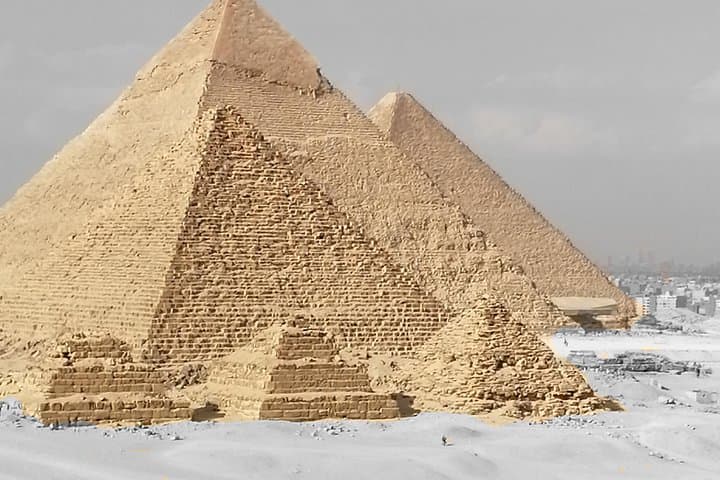
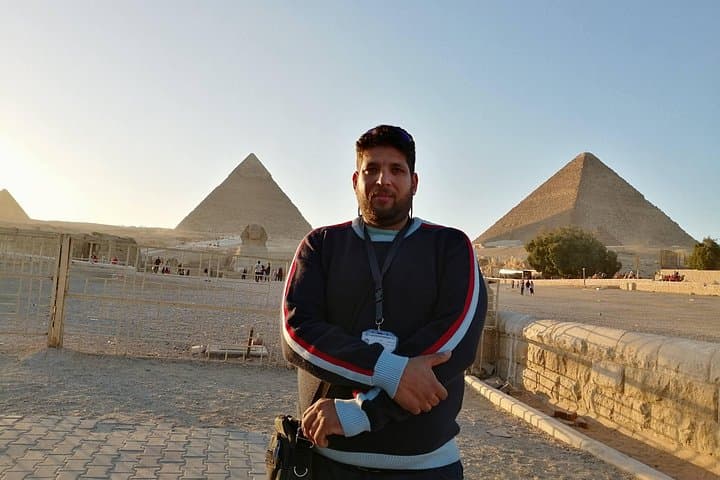
Built during Egypt’s Fourth Dynasty (around 2560 BCE), the three main pyramids — Khufu (Cheops), Khafre (Chephren) and Menkaure (Menkaure) — are limestone and granite monuments that reflect ancient planning, labor systems and astronomical alignment. The Sphinx, carved from the bedrock, watches the plateau with an almost human posture; erosion and restoration have shaped its modern face.
Geologically the plateau is a fossiliferous limestone shelf; the stone’s durability is why these structures survive. Culturally, Giza sits at the junction of millennia: Bedouin camel handlers still work here, and modern Cairo sprawls just beyond the dunes.
Practical guidance: tours typically run about four hours, include close-up access to the pyramids and the Sphinx, and often offer camel rides. Note that entry into pyramid interiors usually requires a separate ticket and limited access; photographic restrictions can apply. Wear sturdy shoes for walking on uneven bedrock and bring a sun hat, sunglasses and at least 1.5 liters of water. Morning or late-afternoon visits avoid the heat and harsh midday light for photos. Respect marked barriers and follow your guide’s instructions — preservation measures restrict off-path wandering. Planning tip: combine a visit to the Solar Boat Museum or a rooftop view at Mena House for different perspectives of this ancient stage.
easy.
4 hours.
Suitable for most fitness levels; expect short walks over uneven ground and brief climbs on ramps or steps
No — interior access is often not included in general tours and typically requires a separate, limited ticket purchased either on-site or in advance when available.
Camel rides are commonly offered and may be included depending on the tour; confirm with your operator whether rides and any associated fees are covered.
Main visitor areas and some transportation options are wheelchair accessible, but expect rough surfaces and limited access into interior chambers.
Photography is permitted around the plateau and Sphinx; however, rules can vary for interior spaces and museum exhibits, so follow posted signs and your guide’s instructions.
The Great Pyramid of Khufu dates to around 2560 BCE and was the tallest man-made structure for millennia; the complex illustrates ancient Egypt’s funerary and astronomical practices.
Visitor numbers and environmental erosion are managed by Egyptian authorities; stay on marked paths and avoid touching ancient stone to limit wear.
KING FAROUK private tour guide operates guided outdoor trips and adventures with an emphasis on safety, stewardship, and memorable experiences.
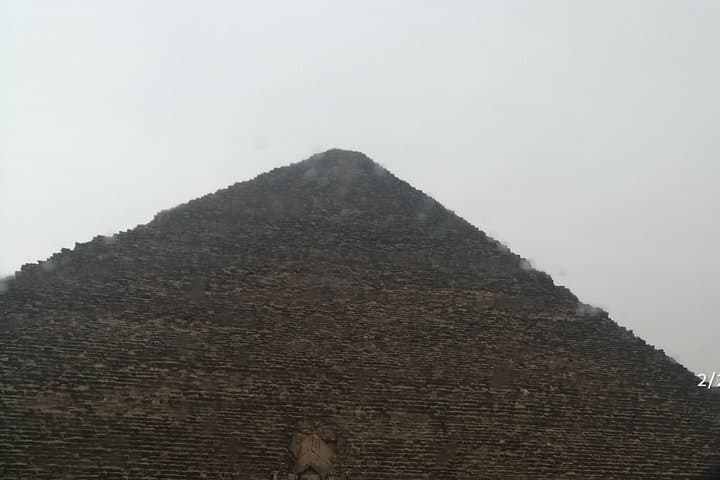
You step from the dust-choked plaza and the Great Pyramid fills the sky — rock faces hunched in layers of time, edges still sharp enough to draw a line to the horizon. Camels nudge at your ankles; the wind carries sand and the distant hum of Cairo. This is the Giza Plateau: an uncompromising landscape where human ambition meets desert.
You step from the dust-choked plaza and the Great Pyramid fills the sky — rock faces hunched in layers of time, edges still sharp enough to draw a line to the horizon. Camels nudge at your ankles; the wind carries sand and the distant hum of Cairo. This is the Giza Plateau: an uncompromising landscape where human ambition meets desert.
Built during Egypt’s Fourth Dynasty (around 2560 BCE), the three main pyramids — Khufu (Cheops), Khafre (Chephren) and Menkaure (Menkaure) — are limestone and granite monuments that reflect ancient planning, labor systems and astronomical alignment. The Sphinx, carved from the bedrock, watches the plateau with an almost human posture; erosion and restoration have shaped its modern face.
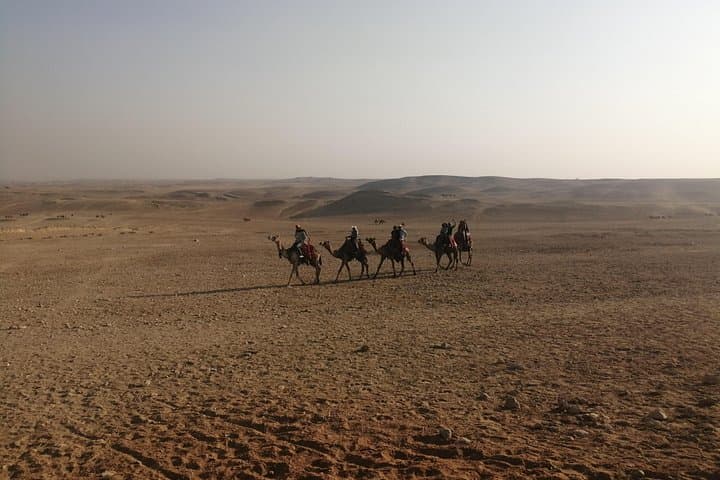
Geologically the plateau is a fossiliferous limestone shelf; the stone’s durability is why these structures survive. Culturally, Giza sits at the junction of millennia: Bedouin camel handlers still work here, and modern Cairo sprawls just beyond the dunes.
Practical guidance: tours typically run about four hours, include close-up access to the pyramids and the Sphinx, and often offer camel rides. Note that entry into pyramid interiors usually requires a separate ticket and limited access; photographic restrictions can apply. Wear sturdy shoes for walking on uneven bedrock and bring a sun hat, sunglasses and at least 1.5 liters of water. Morning or late-afternoon visits avoid the heat and harsh midday light for photos. Respect marked barriers and follow your guide’s instructions — preservation measures restrict off-path wandering. Planning tip: combine a visit to the Solar Boat Museum or a rooftop view at Mena House for different perspectives of this ancient stage.