THE ADVENTURE COLLECTIVE® · Independent discovery and booking for outdoor travel

A three-hour, phone-free urban navigation that starts at Samgakji Station and sends small groups into Seoul’s streets with analog maps and mission cards. Expect cafés, hidden spots, and a retro photo drop the next day.
A three-hour, phone-free urban navigation that starts at Samgakji Station and sends small groups into Seoul’s streets with analog maps and mission cards. Expect cafés, hidden spots, and a retro photo drop the next day.
You step out of Samgakji Station Exit 10 and the city immediately rearranges itself — subways hum like organized bees, alleys whisper possibilities, and neon signs trade their usual demands for polite invitations. The guide hands out mission cards, the rule is simple: phones stay zipped; decisions are analog; curiosity leads.
Verified experiences and guided adventures in the surrounding area.
Operated by Kimchiman in Seoul · Seoul, Seoul
You step out of Samgakji Station Exit 10 and the city immediately rearranges itself — subways hum like organized bees, alleys whisper possibilities, and neon signs trade their usual demands for polite invitations. The guide hands out mission cards, the rule is simple: phones stay zipped; decisions are analog; curiosity leads.
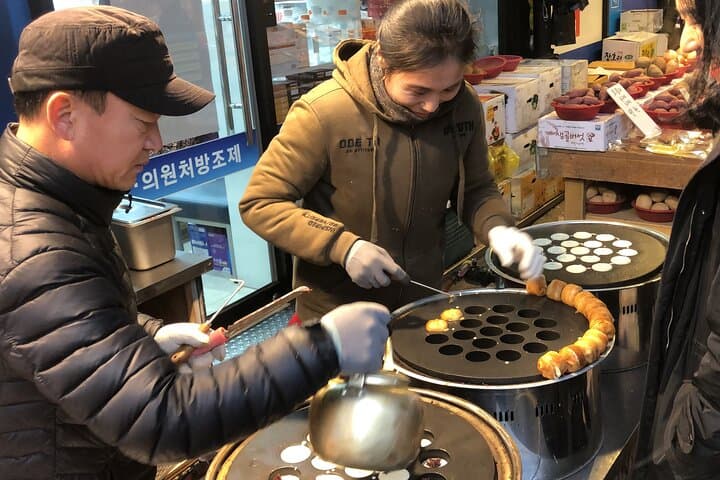
This three-hour walk riffs on Seoul’s layered past. The neighborhood sits between the War Memorial and Yongsan — where modern redevelopment meets post-war grit — so the streets show recent urban renewal beside older, unpretentious eateries and stair-stepped rooftops. Geologically, you’re on Seoul’s rolling lowlands carved by the Han River’s broader shifts; culturally you’ll feel the city’s pragmatic rhythm: late-night cafés, small galleries, and convenience-store snacks that double as local markers.
The experience is about presence — reading signage, trusting each other, and letting a mission card steer you to a little gallery, rooftop view, or pocket park. Expect short bursts of brisk walking, stair climbs into alleys, and sudden café respites.
Practical tips: meet at Samgakji Exit 10 on time, carry cash or a T-money card for small purchases, and wear comfortable shoes — pavement, steps, and occasional slick tiles are constant partners. The tour includes one café drink, a snack, and a retro photo drop the next day, so save your phone for after the tour when you’ll review the images and your route with fresh eyes.
For city travelers who want to experience Seoul by sense rather than screen, this is a compact, urban reset that rewards attention and low-tech play.
easy.
3 hours.
Light urban walking; be able to stand and walk intermittently for three hours and manage short stair climbs.
Phones are kept off and stowed during the tour; bring it in a sealed pouch for use after the experience and to receive your retro photos the following day.
Yes — the activity relies on simple maps, signage, and group navigation; guides and participants often use basic English, and the experience is largely hands-on and visual.
Meet at Samgakji Station Exit 10; the guide will be identifiable and a brief orientation happens before cards are drawn and the route begins.
The tour notes stroller accessibility and light, easy physical demand, but expect stairs and uneven sidewalks — contact the operator if you need specific accessibility accommodations.
This corridor sits near the War Memorial and Yongsan area, an intersection of Seoul’s post-war redevelopment and older neighborhood life — streets reflect layers of 20th-century urban change.
Keep purchases local, avoid single-use plastics where possible, and respect private property; small-group urban tours minimize footprint while supporting independent cafés and shops.
Kimchiman in Seoul operates guided outdoor trips and adventures with an emphasis on safety, stewardship, and memorable experiences.

You step out of Samgakji Station Exit 10 and the city immediately rearranges itself — subways hum like organized bees, alleys whisper possibilities, and neon signs trade their usual demands for polite invitations. The guide hands out mission cards, the rule is simple: phones stay zipped; decisions are analog; curiosity leads.
You step out of Samgakji Station Exit 10 and the city immediately rearranges itself — subways hum like organized bees, alleys whisper possibilities, and neon signs trade their usual demands for polite invitations. The guide hands out mission cards, the rule is simple: phones stay zipped; decisions are analog; curiosity leads.
This three-hour walk riffs on Seoul’s layered past. The neighborhood sits between the War Memorial and Yongsan — where modern redevelopment meets post-war grit — so the streets show recent urban renewal beside older, unpretentious eateries and stair-stepped rooftops. Geologically, you’re on Seoul’s rolling lowlands carved by the Han River’s broader shifts; culturally you’ll feel the city’s pragmatic rhythm: late-night cafés, small galleries, and convenience-store snacks that double as local markers.
The experience is about presence — reading signage, trusting each other, and letting a mission card steer you to a little gallery, rooftop view, or pocket park. Expect short bursts of brisk walking, stair climbs into alleys, and sudden café respites.
Practical tips: meet at Samgakji Exit 10 on time, carry cash or a T-money card for small purchases, and wear comfortable shoes — pavement, steps, and occasional slick tiles are constant partners. The tour includes one café drink, a snack, and a retro photo drop the next day, so save your phone for after the tour when you’ll review the images and your route with fresh eyes.
For city travelers who want to experience Seoul by sense rather than screen, this is a compact, urban reset that rewards attention and low-tech play.