THE ADVENTURE COLLECTIVE® · Independent discovery and booking for outdoor travel

Drive through historical Kritsa, climb to the windswept Katharo Plateau, cool off in Sarakina Gorge, and end with a swim at Myrtos. This six-hour loop packs geology, wildlife and coastal relaxation into one accessible day trip.
Drive through historical Kritsa, climb to the windswept Katharo Plateau, cool off in Sarakina Gorge, and end with a swim at Myrtos. This six-hour loop packs geology, wildlife and coastal relaxation into one accessible day trip.
The morning air tastes of cypress resin as the minivan slips out of Agios Nikolaos and the road climbs toward Kritsa.
Verified experiences and guided adventures in the surrounding area.
Operated by Safari Crete Experience · Agios Nikolaos, Crete
The morning air tastes of cypress resin as the minivan slips out of Agios Nikolaos and the road climbs toward Kritsa.
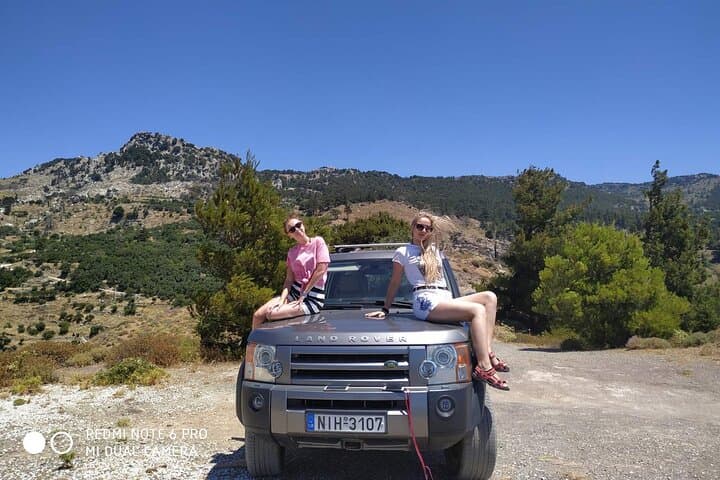
Stones and whitewashed houses lean into narrow lanes; Panagia Kera’s 12th-century frescoes watch over a village whose history threads back to the ancient city of Lato and Venetian sailors who named a distant gulf “Mira a Belo” — beautiful view. From here the ride winds higher to Katharo Plateau (about 1,200 m), where the forest opens and goats pick their way along limestone outcrops while griffon vultures wheel above, looking like slow-moving punctuation marks in the sky.
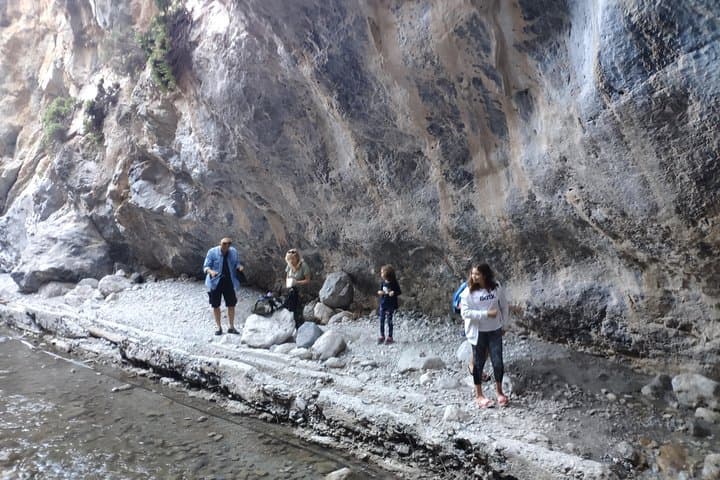
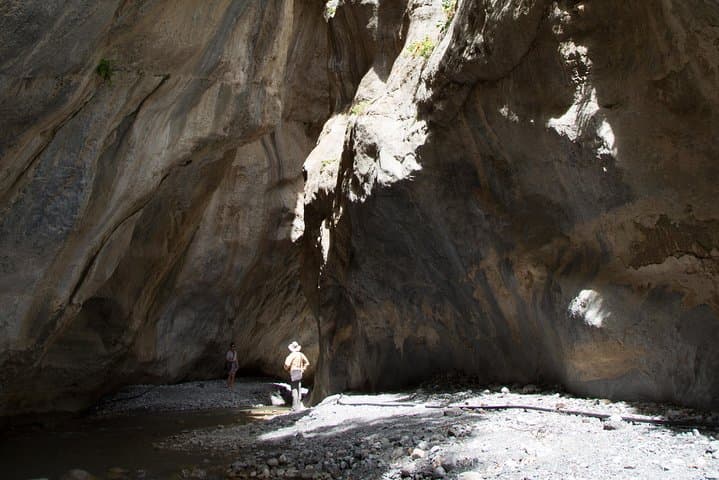
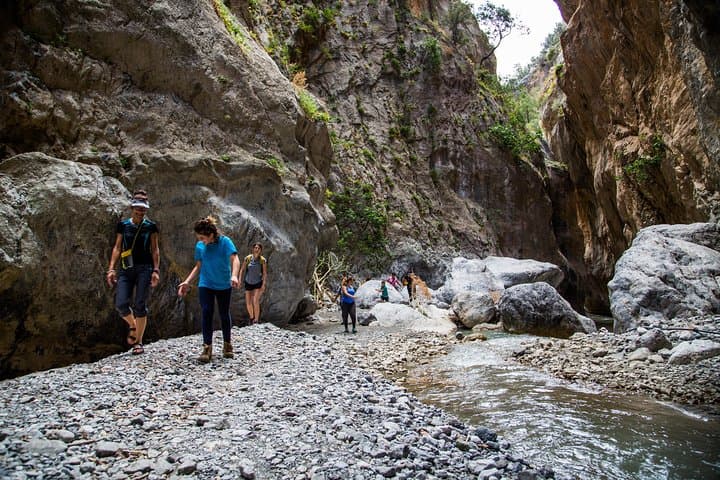
Geology here reads as folded limestone and eroded gorges: Selakano’s pine stands on soil that supports the island’s famed honey, and Sarakina Gorge is carved narrow and short, a pocket of shaded rock and shallow pools that invites cooling off after the plateau’s dry wind.
Practicalities: the full loop runs roughly six hours with short, low-angle walks — easy terrain but uneven underfoot in places. Bring sturdy sneakers, sun protection and a charged camera; there’s a swim stop at the pebble beach of Myrtos on the Libyan Sea, so pack swimwear and a towel. Expect stamped-in local hospitality: a village lunch, bottled water provided, and light walking suitable for most fitness levels.
Timing matters — mornings are best for sights and vultures, afternoons for the sea. Respect beekeeping and bird habitats: stay on paths, carry out trash, and keep noise low where honey and raptors rely on quiet.
easy.
5–6 hours.
Suitable for most people who can walk short uneven sections and climb brief stone paths; no sustained fitness required.
The tour is approximately six hours total with short, low-angle walks at stops; most sections are accessible to people of average mobility.
There is a swim stop at Myrtos; bring your own towel and swimwear — towels are not typically provided by the operator.
You may spot griffon vultures and wild Cretan goats (kri-kri), especially near Katharo Plateau and the cypress forests, though sightings can’t be guaranteed.
The itinerary is family-friendly for children who can walk short distances; it is not recommended for pregnant travelers or those with serious cardiovascular conditions per operator guidance.
Kritsa’s roots reach back to the ancient city of Lato; Venetian and Ottoman eras left visible marks in village layout and place names.
Selakano forest and local beekeeping are sensitive — stay on trails, avoid loud noise, and carry out all waste to protect pollinators and raptors.
Safari Crete Experience operates guided outdoor trips and adventures with an emphasis on safety, stewardship, and memorable experiences.
The morning air tastes of cypress resin as the minivan slips out of Agios Nikolaos and the road climbs toward Kritsa.
The morning air tastes of cypress resin as the minivan slips out of Agios Nikolaos and the road climbs toward Kritsa.
Stones and whitewashed houses lean into narrow lanes; Panagia Kera’s 12th-century frescoes watch over a village whose history threads back to the ancient city of Lato and Venetian sailors who named a distant gulf “Mira a Belo” — beautiful view. From here the ride winds higher to Katharo Plateau (about 1,200 m), where the forest opens and goats pick their way along limestone outcrops while griffon vultures wheel above, looking like slow-moving punctuation marks in the sky.
Geology here reads as folded limestone and eroded gorges: Selakano’s pine stands on soil that supports the island’s famed honey, and Sarakina Gorge is carved narrow and short, a pocket of shaded rock and shallow pools that invites cooling off after the plateau’s dry wind.
Practicalities: the full loop runs roughly six hours with short, low-angle walks — easy terrain but uneven underfoot in places. Bring sturdy sneakers, sun protection and a charged camera; there’s a swim stop at the pebble beach of Myrtos on the Libyan Sea, so pack swimwear and a towel. Expect stamped-in local hospitality: a village lunch, bottled water provided, and light walking suitable for most fitness levels.
Timing matters — mornings are best for sights and vultures, afternoons for the sea. Respect beekeeping and bird habitats: stay on paths, carry out trash, and keep noise low where honey and raptors rely on quiet.