THE ADVENTURE COLLECTIVE® · Independent discovery and booking for outdoor travel

Trace 1,000 years of Celtic history across Anglesey and Snowdonia on a private full-day tour that pairs coastal geology and seabird colonies with medieval castles and slate-industry heritage. Expect cliff overlooks, castle tours, and short walks between iconic sites.
Trace 1,000 years of Celtic history across Anglesey and Snowdonia on a private full-day tour that pairs coastal geology and seabird colonies with medieval castles and slate-industry heritage. Expect cliff overlooks, castle tours, and short walks between iconic sites.
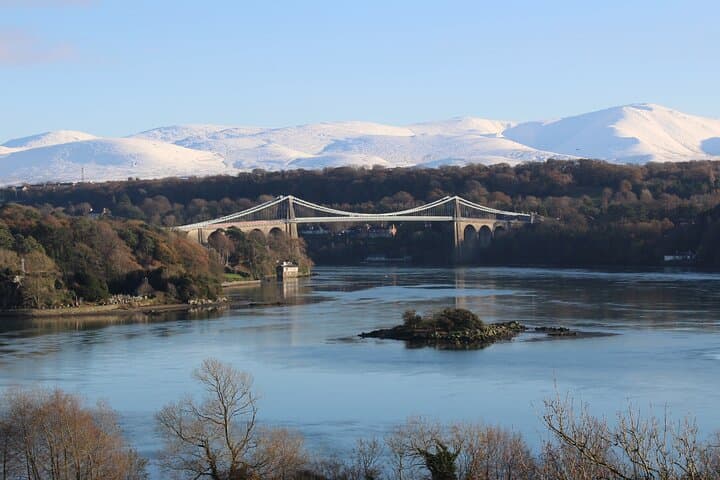
You step out of the SUV where sea-wind cuts across the clifftop and the South Stack lighthouse squats on its own islet, waves daring you to come closer. The road folds inland from wind-scoured shorelines into slate scars and then green valleys, each turn revealing a new chapter of North Wales — cliff colonies, medieval stone, and a living language.
Verified experiences and guided adventures in the surrounding area.
Operated by HOLYHEAD ISLAND ANGLESEY _ GO EXPLORE (HIA-GE) · Caernarfon, Gwynedd
You step out of the SUV where sea-wind cuts across the clifftop and the South Stack lighthouse squats on its own islet, waves daring you to come closer. The road folds inland from wind-scoured shorelines into slate scars and then green valleys, each turn revealing a new chapter of North Wales — cliff colonies, medieval stone, and a living language.
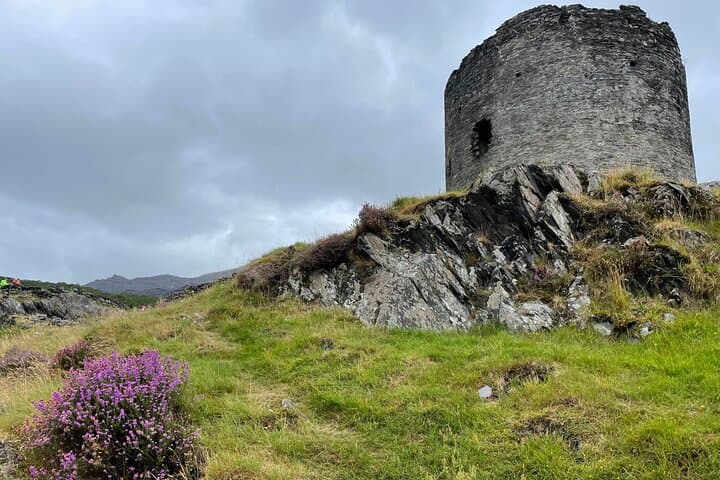
The route tracks roughly 1,000 years of Celtic history: Iron Age hut circles on Anglesey, the 13th-century fortifications of Caernarfon, and the slate-era industry preserved in the National Slate Museum. Geology reads like an open book here — Precambrian folds at South Stack, glacial U-shaped valleys in Snowdonia, and the ridged spine of Snowdon itself reminding you how ice and sea shaped these places.
Culture arrives in small details: Welsh spoken in pubs and on roadside signs, centuries-old taverns serving simple fare, and place names long enough to make any map blush. Birdlife crowds the cliffs in spring; in the mountains, sheep and hardy ponies move across moorland as if checking your progress.
Practical guidance: this is a full-day private tour (7–8 hours) with intermittent walking and multiple short stops — expect about 2 hours total driving between sites across roughly 80 miles (130–150 km). Wear waterproof layers and sturdy shoes for cliff and town walks; bring a camera and binoculars for seabirds. Weather can shift rapidly — plan to start early, set aside time for castle entry, and leave flexible return arrangements. The experience balances coastal geology, living Welsh culture, and historic architecture — an accessible, varied day on the edge of the Irish Sea and the mountains beyond.
moderate.
7–8 hours.
Expect intermittent walking, short stair climbs and standing at viewpoints; a moderate fitness level is recommended.
The tour covers about 80 miles (around 130–145 km) with roughly two hours of driving total spread across the day between stops.
Yes if children can sit safely in belted seats for transfers; no child seats are provided so check requirements before booking.
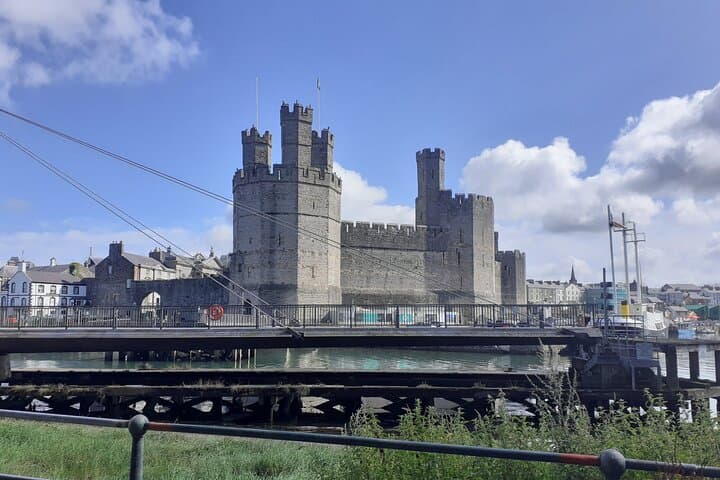
Yes — the itinerary includes a guided tour of Caernarfon Castle and town walls with time for a short refreshment stop nearby.
Expect seabirds like guillemots, gannets and terns at South Stack; puffins may appear in spring/early summer though sightings are never guaranteed.
The region combines prehistoric remains with medieval power: Edward I’s 13th-century castles in North Wales were built to control the Welsh principality and remain among the best-preserved examples of concentric castle design.
South Stack forms part of Anglesey’s GeoMôn UNESCO Global Geopark and an RSPB bird sanctuary — respect nesting areas and keep to paths to reduce disturbance.
HOLYHEAD ISLAND ANGLESEY _ GO EXPLORE (HIA-GE) operates guided outdoor trips and adventures with an emphasis on safety, stewardship, and memorable experiences.
You step out of the SUV where sea-wind cuts across the clifftop and the South Stack lighthouse squats on its own islet, waves daring you to come closer. The road folds inland from wind-scoured shorelines into slate scars and then green valleys, each turn revealing a new chapter of North Wales — cliff colonies, medieval stone, and a living language.
You step out of the SUV where sea-wind cuts across the clifftop and the South Stack lighthouse squats on its own islet, waves daring you to come closer. The road folds inland from wind-scoured shorelines into slate scars and then green valleys, each turn revealing a new chapter of North Wales — cliff colonies, medieval stone, and a living language.
The route tracks roughly 1,000 years of Celtic history: Iron Age hut circles on Anglesey, the 13th-century fortifications of Caernarfon, and the slate-era industry preserved in the National Slate Museum. Geology reads like an open book here — Precambrian folds at South Stack, glacial U-shaped valleys in Snowdonia, and the ridged spine of Snowdon itself reminding you how ice and sea shaped these places.
Culture arrives in small details: Welsh spoken in pubs and on roadside signs, centuries-old taverns serving simple fare, and place names long enough to make any map blush. Birdlife crowds the cliffs in spring; in the mountains, sheep and hardy ponies move across moorland as if checking your progress.
Practical guidance: this is a full-day private tour (7–8 hours) with intermittent walking and multiple short stops — expect about 2 hours total driving between sites across roughly 80 miles (130–150 km). Wear waterproof layers and sturdy shoes for cliff and town walks; bring a camera and binoculars for seabirds. Weather can shift rapidly — plan to start early, set aside time for castle entry, and leave flexible return arrangements. The experience balances coastal geology, living Welsh culture, and historic architecture — an accessible, varied day on the edge of the Irish Sea and the mountains beyond.