THE ADVENTURE COLLECTIVE® · Independent discovery and booking for outdoor travel

Dine beside a floor-to-ceiling seawater aquarium at Al Mahara inside the Burj Al Arab. This two-hour Italian seafood degustation blends theatrical marine ambiance with precise, fine-dining service.
Dine beside a floor-to-ceiling seawater aquarium at Al Mahara inside the Burj Al Arab. This two-hour Italian seafood degustation blends theatrical marine ambiance with precise, fine-dining service.
Stepping through the Burj Al Arab’s revolving doors, guests are led into Al Mahara where the room quiets and a floor-to-ceiling seawater aquarium fills the scene. Fish drift like punctuation marks against the blue; light refracts across polished tables. The experience is centered on the aquarium’s slow choreography, paired with a five-course Italian seafood degustation that emphasizes texture, clean flavors, and precise plating.
Verified experiences and guided adventures in the surrounding area.
Operated by RUSH TOURISM · Dubai, Dubai
Stepping through the Burj Al Arab’s revolving doors, guests are led into Al Mahara where the room quiets and a floor-to-ceiling seawater aquarium fills the scene. Fish drift like punctuation marks against the blue; light refracts across polished tables. The experience is centered on the aquarium’s slow choreography, paired with a five-course Italian seafood degustation that emphasizes texture, clean flavors, and precise plating.
Opened with the hotel in 1999, the Burj Al Arab became an instant icon of Dubai’s late-20th-century boom; Al Mahara followed as a designed environment meant to evoke the sea without leaving the shore. The restaurant’s aquarium is engineered seawater, maintained for display and ambiance rather than public touch—its staff are custodians as much as servers. Culturally, dining here sits at the intersection of Gulf hospitality and international haute cuisine: expect formal service, structured courses, and an emphasis on presentation.
Practical guidance is straightforward: reservations are essential, menus can be amended for dietary needs if requested in advance, and an evening visit aligns with the lighting that best showcases the aquarium. Transfers from Dubai hotels are often available as an add-on to simplify arrival logistics. Dress code is smart casual to formal; bring ID for check-in at the hotel. For those tracking sustainability, ask about seafood sourcing and choose lower-impact options when possible. Cameras are welcome but avoid using flash to protect the aquarium inhabitants. The overall visit is sensory and composed—an accessible, high-end dining outing rather than an active or exploratory excursion.
easy.
2 hours.
Suitable for all physical fitness levels; primarily a seated dining experience
Yes. Al Mahara requires reservations and popular times can book out days or weeks ahead.
Yes. Smart casual to formal attire is recommended; avoid beachwear and overly casual clothing.
Transfers are an optional add-on—check your booking to see if pick-up and drop-off were selected.
Yes. The restaurant can accommodate many dietary needs if notified in advance; include requests when booking.
The Burj Al Arab opened in 1999 as a symbol of Dubai’s rapid development; its sail-shaped silhouette and over-the-top interiors helped define luxury hospitality in the region.
Ask staff about seafood sourcing and prefer menu items labeled with sustainable fisheries or certifications; the aquarium relies on specialized husbandry practices—observe viewing rules and avoid flash.
RUSH TOURISM operates guided outdoor trips and adventures with an emphasis on safety, stewardship, and memorable experiences.
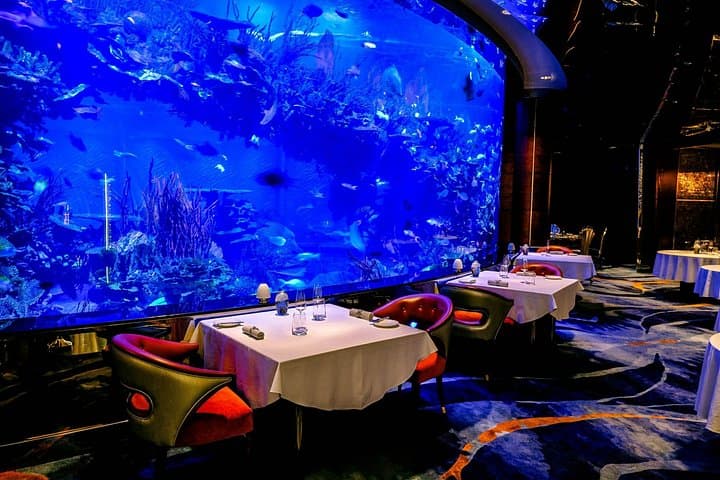
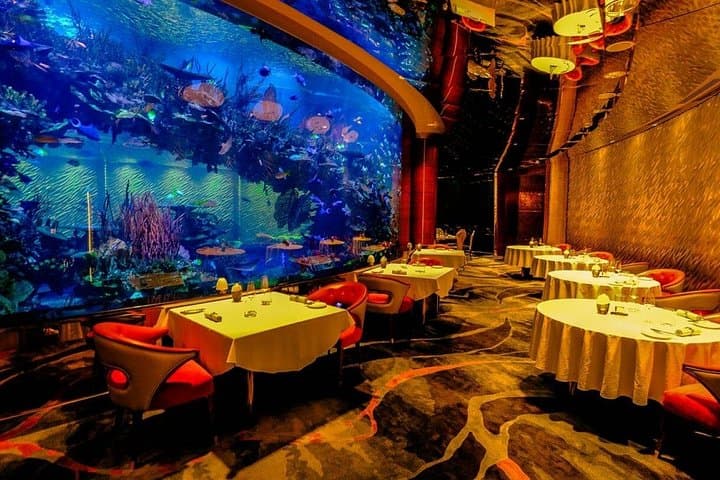
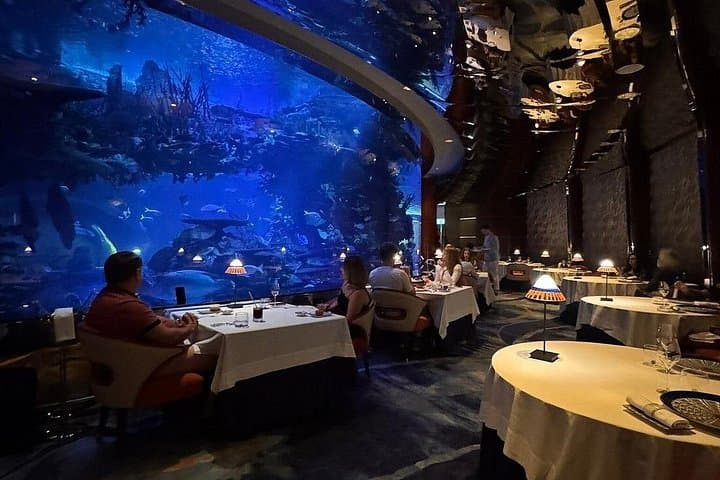
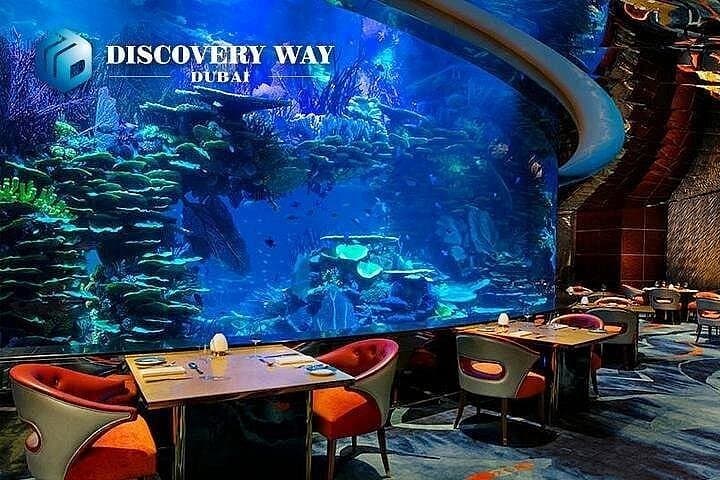
Stepping through the Burj Al Arab’s revolving doors, guests are led into Al Mahara where the room quiets and a floor-to-ceiling seawater aquarium fills the scene. Fish drift like punctuation marks against the blue; light refracts across polished tables. The experience is centered on the aquarium’s slow choreography, paired with a five-course Italian seafood degustation that emphasizes texture, clean flavors, and precise plating.
Stepping through the Burj Al Arab’s revolving doors, guests are led into Al Mahara where the room quiets and a floor-to-ceiling seawater aquarium fills the scene. Fish drift like punctuation marks against the blue; light refracts across polished tables. The experience is centered on the aquarium’s slow choreography, paired with a five-course Italian seafood degustation that emphasizes texture, clean flavors, and precise plating.
Opened with the hotel in 1999, the Burj Al Arab became an instant icon of Dubai’s late-20th-century boom; Al Mahara followed as a designed environment meant to evoke the sea without leaving the shore. The restaurant’s aquarium is engineered seawater, maintained for display and ambiance rather than public touch—its staff are custodians as much as servers. Culturally, dining here sits at the intersection of Gulf hospitality and international haute cuisine: expect formal service, structured courses, and an emphasis on presentation.
Practical guidance is straightforward: reservations are essential, menus can be amended for dietary needs if requested in advance, and an evening visit aligns with the lighting that best showcases the aquarium. Transfers from Dubai hotels are often available as an add-on to simplify arrival logistics. Dress code is smart casual to formal; bring ID for check-in at the hotel. For those tracking sustainability, ask about seafood sourcing and choose lower-impact options when possible. Cameras are welcome but avoid using flash to protect the aquarium inhabitants. The overall visit is sensory and composed—an accessible, high-end dining outing rather than an active or exploratory excursion.