THE ADVENTURE COLLECTIVE® · Independent discovery and booking for outdoor travel

Descend into centuries of salt-carved chambers on a guided tour from Krakow. Explore the Chapel of St. Kinga, learn miner lore, and experience the mine’s therapeutic microclimate with convenient hotel pickup.
Descend into centuries of salt-carved chambers on a guided tour from Krakow. Explore the Chapel of St. Kinga, learn miner lore, and experience the mine’s therapeutic microclimate with convenient hotel pickup.
You step off the minivan and the air shifts—cooler, drier, and carrying a faint mineral tang that feels like the place has been holding its breath for centuries.
Verified experiences and guided adventures in the surrounding area.
Operated by Best Tours Cracow · Wieliczka, Lesser Poland
You step off the minivan and the air shifts—cooler, drier, and carrying a faint mineral tang that feels like the place has been holding its breath for centuries.
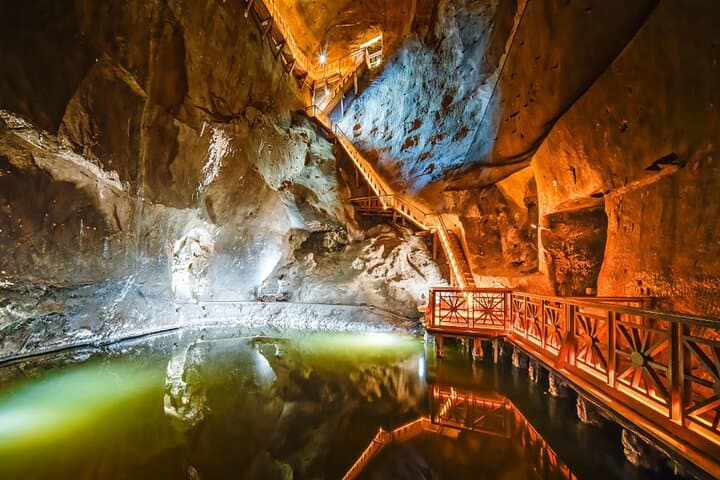
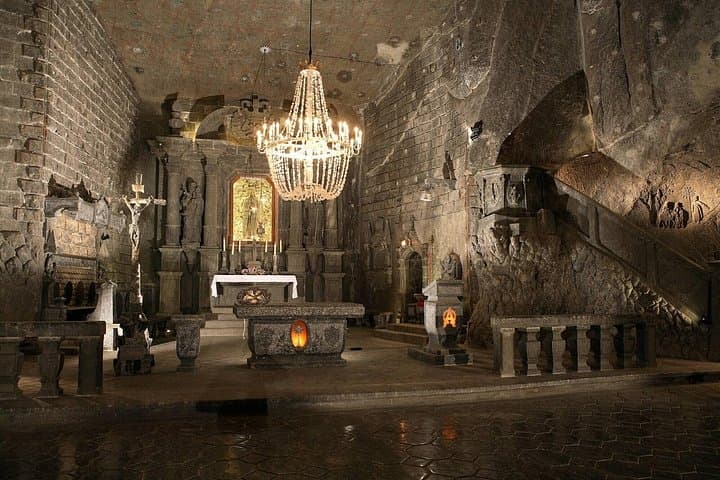
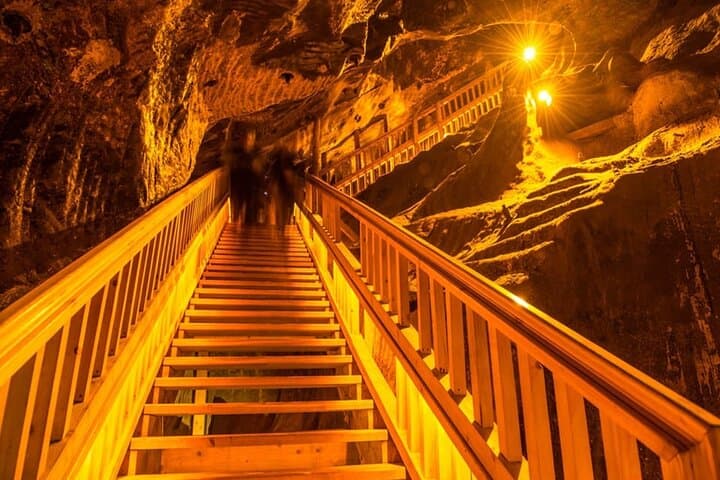
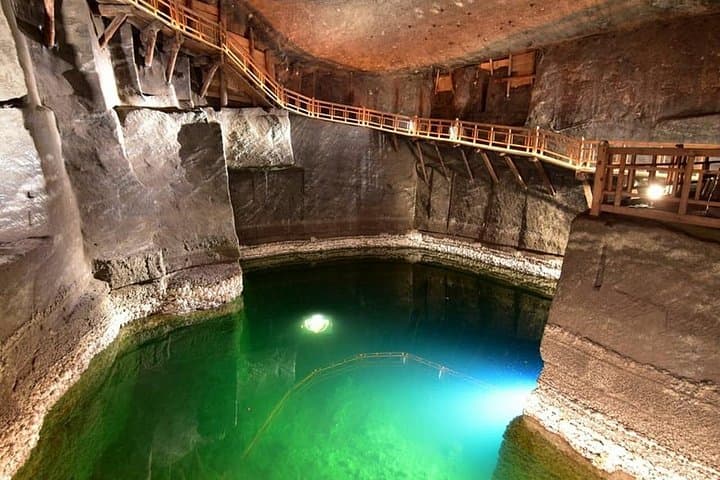
The Wieliczka Salt Mine drops visitors into a carved world: salt-lined galleries, chandeliers hewn from crystalline salt, and the vaulted Chapel of St. Kinga, an entire worship space sculpted by miners. Operating since the 13th century, the tourist route descends roughly 135 meters and runs about 3.5 km of passages and chambers, punctuated by staircases that remind you this is an active monument of labor as much as art.
Geology here is straightforward and striking—evaporite layers compressed over millennia, salt seams thick enough to be carved into statues and altarpieces. Culturally, Wieliczka shaped Krakow’s economy and folklore; miners developed a distinct craft and rituals still visible in the carvings and miner shrines.
Practical guidance: tours last about 2–3 hours underground with hotel pickup adding transit to a 4-hour window. Expect hundreds of stairs (both down and back up), cool temperatures (around 16°C/60°F) and low light; photography is generally allowed but respect conservation signs. The mine’s stable microclimate is cited for respiratory benefits, but travelers with heart or pregnancy concerns should consult a physician.
Plan layers, sturdy non-slip shoes, and enough time for the return transfer to Krakow. Whether you’re after history, geology, or a surreal subterranean chapel, the Wieliczka tour is an immersive, practical experience—ancient craft framed by modern conservation.
easy.
3–4 hours.
Suitable for most people who can manage multiple flights of stairs and walking several kilometers at a slow pace
The underground tour runs about 2–3 hours; including hotel pickup and transfers expect a total window around 3–4 hours.
The standard tourist route includes many stairs and uneven surfaces and is not wheelchair-accessible; travelers with serious mobility issues should contact the operator for alternatives.
Photography is generally permitted on the route, but follow signage and guide instructions—flash or tripods may be restricted in sensitive areas like the Chapel of St. Kinga.
The mine’s microclimate is considered beneficial for some respiratory conditions, but it is not recommended for pregnant travelers or people with serious cardiovascular problems—consult your doctor if unsure.
Wieliczka has been mined since the 13th century and was inscribed as a UNESCO World Heritage site in 1978, reflecting its cultural and industrial significance.
The mine’s salt formations are fragile—visitors must stay on marked routes and avoid touching carvings. Management limits access and controls humidity to preserve chambers for future generations.
Best Tours Cracow operates guided outdoor trips and adventures with an emphasis on safety, stewardship, and memorable experiences.
You step off the minivan and the air shifts—cooler, drier, and carrying a faint mineral tang that feels like the place has been holding its breath for centuries.
You step off the minivan and the air shifts—cooler, drier, and carrying a faint mineral tang that feels like the place has been holding its breath for centuries.
The Wieliczka Salt Mine drops visitors into a carved world: salt-lined galleries, chandeliers hewn from crystalline salt, and the vaulted Chapel of St. Kinga, an entire worship space sculpted by miners. Operating since the 13th century, the tourist route descends roughly 135 meters and runs about 3.5 km of passages and chambers, punctuated by staircases that remind you this is an active monument of labor as much as art.
Geology here is straightforward and striking—evaporite layers compressed over millennia, salt seams thick enough to be carved into statues and altarpieces. Culturally, Wieliczka shaped Krakow’s economy and folklore; miners developed a distinct craft and rituals still visible in the carvings and miner shrines.
Practical guidance: tours last about 2–3 hours underground with hotel pickup adding transit to a 4-hour window. Expect hundreds of stairs (both down and back up), cool temperatures (around 16°C/60°F) and low light; photography is generally allowed but respect conservation signs. The mine’s stable microclimate is cited for respiratory benefits, but travelers with heart or pregnancy concerns should consult a physician.
Plan layers, sturdy non-slip shoes, and enough time for the return transfer to Krakow. Whether you’re after history, geology, or a surreal subterranean chapel, the Wieliczka tour is an immersive, practical experience—ancient craft framed by modern conservation.