THE ADVENTURE COLLECTIVE® · Independent discovery and booking for outdoor travel

Spend a day beyond Bogotá exploring the Salt Cathedral of Zipaquirá and the sacred Laguna de Guatavita. This private nine-hour tour combines subterranean architecture, Muisca history, and Andean scenery with easy walking and cultural insight.
Spend a day beyond Bogotá exploring the Salt Cathedral of Zipaquirá and the sacred Laguna de Guatavita. This private nine-hour tour combines subterranean architecture, Muisca history, and Andean scenery with easy walking and cultural insight.
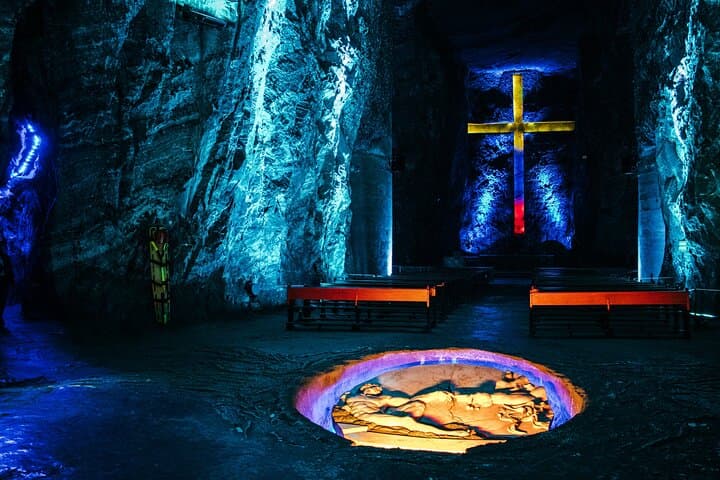
The bus pulls out of Bogotá before the city heat gathers and the high plain opens into patchwork fields; within an hour the landscape tilts toward the Andean foothills and the Salt Cathedral of Zipaquirá appears—an engineered cavern hewn from halite where light and shadow set the scale.
Verified experiences and guided adventures in the surrounding area.
Operated by Hansa Tours S.A.S · Bogotá, Cundinamarca
The bus pulls out of Bogotá before the city heat gathers and the high plain opens into patchwork fields; within an hour the landscape tilts toward the Andean foothills and the Salt Cathedral of Zipaquirá appears—an engineered cavern hewn from halite where light and shadow set the scale.
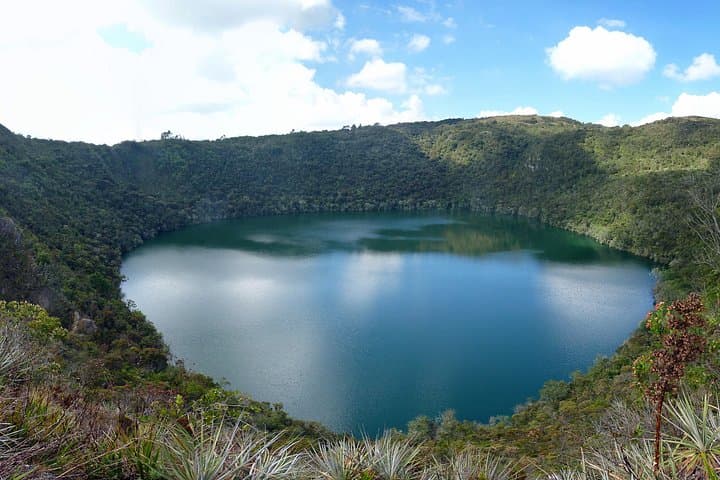
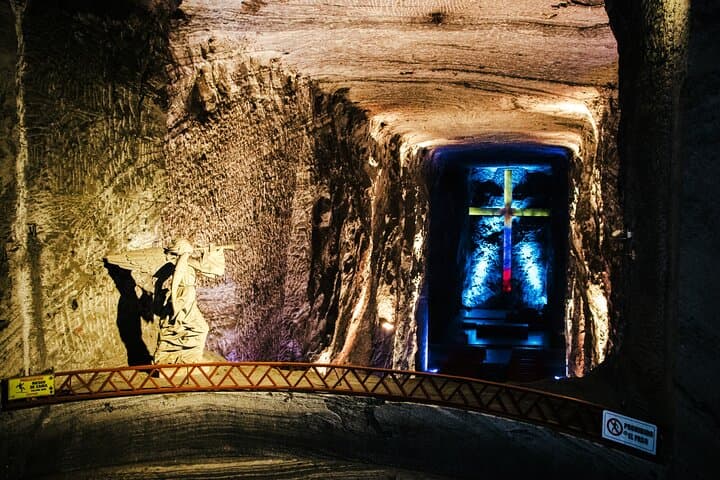
Visitors descend concrete ramps and carved stairways into a working salt mine repurposed as a Roman Catholic sanctuary roughly 180 meters below the surface. The cathedral’s geometric chambers and illuminated crosses show both industrial geology and decades of human faith. After the subterranean visit the route heads northeast across the Altiplano Cundiboyacense to Laguna de Guatavita, the small highland lake the Muisca people revered—its rim still carries archaeological echoes of the El Dorado rites.
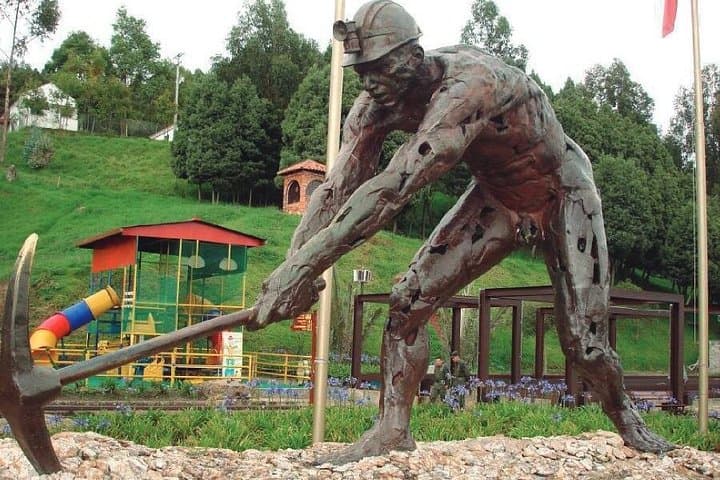
Geology is visible at every turn: salt veins, fold structures in roadside cuts and the rounded moraine-like forms around the lagoon. Culture threads the day—local guides explain Muisca offerings, salt production, and how mining shaped towns like Zipaquirá and Nemocón.
Practical guidance: this is a nine-hour private tour with short, paved walks and some stairs underground; expect moderate walking at 2,600–3,000 m altitude. Bring a daypack, layers for cool underground air and brisk highland winds, sunscreen and at least 1–1.5 liters of water. A valid passport is required for pickup identification. Plan for a mid-day lunch in Zipaquirá, comfortable shoes for uneven surfaces, and a camera with low-light capability for the cathedral’s interiors.
easy.
9 hours.
Suitable for most fitness levels; requires walking on stairs and short uneven surfaces.
The private tour is approximately nine hours and includes hotel pickup/drop-off, bilingual guide, entrance to the Salt Cathedral and Guatavita (or alternate nearby attraction), lunch, and private transportation.
The tour is generally family-friendly; the Salt Cathedral involves stairs and ramps but sites and transport are wheelchair accessible in parts—check specifics when booking.
Yes—participants must present a valid passport at pickup for identification on the day of travel.
Sites sit on the Andean plateau around 2,600–3,000 m; most visitors feel only mild effects but should hydrate, move at an easy pace, and avoid heavy exertion on arrival.
The region sits on the Altiplano Cundiboyacense; the Muisca people used salt and sacred lakes like Guatavita in rituals that inspired El Dorado legends.
Laguna de Guatavita is protected with managed access to limit erosion and cultural damage; visitors should stick to trails and avoid leaving waste.
Hansa Tours S.A.S operates guided outdoor trips and adventures with an emphasis on safety, stewardship, and memorable experiences.
The bus pulls out of Bogotá before the city heat gathers and the high plain opens into patchwork fields; within an hour the landscape tilts toward the Andean foothills and the Salt Cathedral of Zipaquirá appears—an engineered cavern hewn from halite where light and shadow set the scale.
The bus pulls out of Bogotá before the city heat gathers and the high plain opens into patchwork fields; within an hour the landscape tilts toward the Andean foothills and the Salt Cathedral of Zipaquirá appears—an engineered cavern hewn from halite where light and shadow set the scale.
Visitors descend concrete ramps and carved stairways into a working salt mine repurposed as a Roman Catholic sanctuary roughly 180 meters below the surface. The cathedral’s geometric chambers and illuminated crosses show both industrial geology and decades of human faith. After the subterranean visit the route heads northeast across the Altiplano Cundiboyacense to Laguna de Guatavita, the small highland lake the Muisca people revered—its rim still carries archaeological echoes of the El Dorado rites.
Geology is visible at every turn: salt veins, fold structures in roadside cuts and the rounded moraine-like forms around the lagoon. Culture threads the day—local guides explain Muisca offerings, salt production, and how mining shaped towns like Zipaquirá and Nemocón.
Practical guidance: this is a nine-hour private tour with short, paved walks and some stairs underground; expect moderate walking at 2,600–3,000 m altitude. Bring a daypack, layers for cool underground air and brisk highland winds, sunscreen and at least 1–1.5 liters of water. A valid passport is required for pickup identification. Plan for a mid-day lunch in Zipaquirá, comfortable shoes for uneven surfaces, and a camera with low-light capability for the cathedral’s interiors.