THE ADVENTURE COLLECTIVE® · Independent discovery and booking for outdoor travel

Step into a Beaux‑Arts sanctuary on a focused one‑hour tour of Congregation Sherith Israel. Experience frescoed ceilings, 38 stained‑glass windows, and a historic organ while learning how the Gold Rush shaped San Francisco’s Jewish community.
Step into a Beaux‑Arts sanctuary on a focused one‑hour tour of Congregation Sherith Israel. Experience frescoed ceilings, 38 stained‑glass windows, and a historic organ while learning how the Gold Rush shaped San Francisco’s Jewish community.
You step off California Street into an ornate nave where sunlight pours through 38 historic stained-glass panes and dust motes float like slow confetti.
Verified experiences and guided adventures in the surrounding area.
Operated by Congregation Sherith Israel · San Francisco, California
You step off California Street into an ornate nave where sunlight pours through 38 historic stained-glass panes and dust motes float like slow confetti.
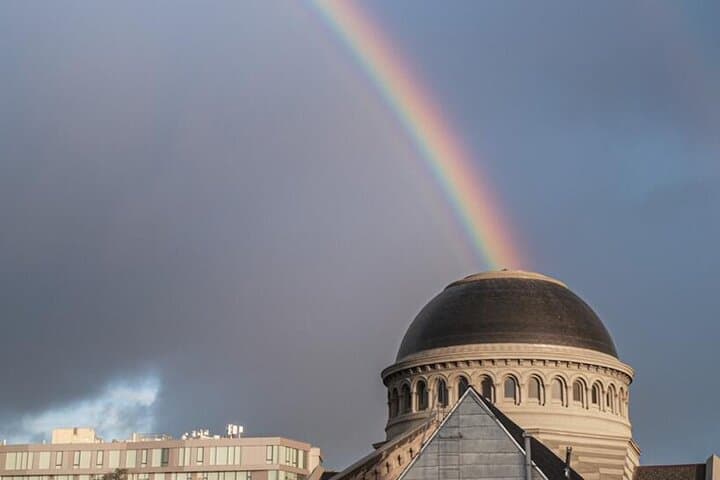
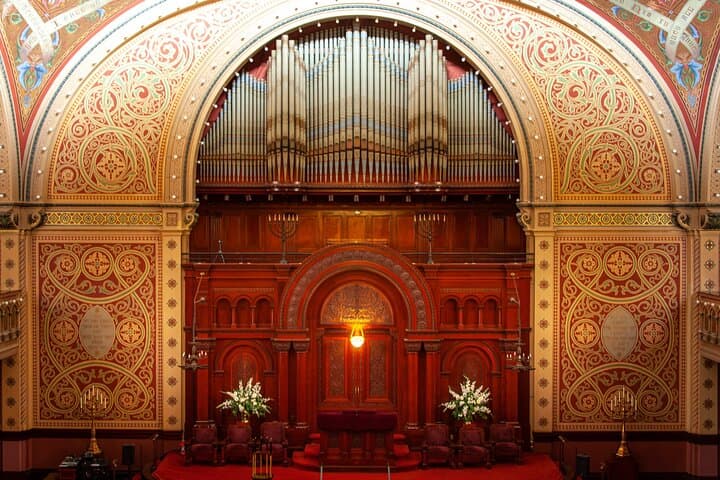
The one-hour guided tour of Congregation Sherith Israel places you inside a Beaux-Arts room by architect Albert Pissis, a rare surviving interior that stood through the 1906 earthquake. Guides move from frescoed ceilings to brass memorials and the pipework of the Murry‑Harris organ, explaining how Jewish merchants and entrepreneurs shaped San Francisco during the 1849 Gold Rush and the city's rebuilding afterward.
Geology and urban growth come into view here too: the building sits on the hills of the Marina/Western Addition edge, a cityscape formed by earthquakes and reclaimed land, which shaped how institutions rebuilt in sturdier styles after 1906. The synagogue’s stained glass documents community narratives and immigration stories that weave into San Francisco’s civic history.
Culturally, the visit is intimate—religion is living here, not only history. Expect a short walking component inside the building, low light in the sanctuary, and close-up views of artifacts and inscriptions that most visitors miss.
Practical guidance: tours run about 60–75 minutes and are wheelchair accessible; bring a light layer for cooler interior air and plan to arrive 10–15 minutes early. Photography may be allowed but avoid flash and large tripods; follow guide instructions. Book ahead to secure limited spots and treat historic surfaces and textiles with care to help preserve them for future visitors.
easy.
1–1.25 hours.
Suitable for all fitness levels; mostly standing and short indoor walking.
Tours run approximately 60–75 minutes and include guided narration with interior viewing.
Yes—entrances and interior surfaces are wheelchair accessible; indicate needs when booking.
Photography policies vary; typically non-flash photos are permitted but ask the guide and refrain from tripods or flash to protect historic materials.
Yes—stroller access is typically available but keep children supervised as this is a place of worship and historic artifacts are delicate.
Congregation Sherith Israel traces roots to the Gold Rush era; the current Beaux‑Arts building by Albert Pissis was rebuilt and reinforced after the 1906 earthquake and remains an active house of worship.
The building is a registered historic site—follow signage, avoid touching textiles and painted surfaces, and support preservation by adhering to guide instructions.
Congregation Sherith Israel operates guided outdoor trips and adventures with an emphasis on safety, stewardship, and memorable experiences.

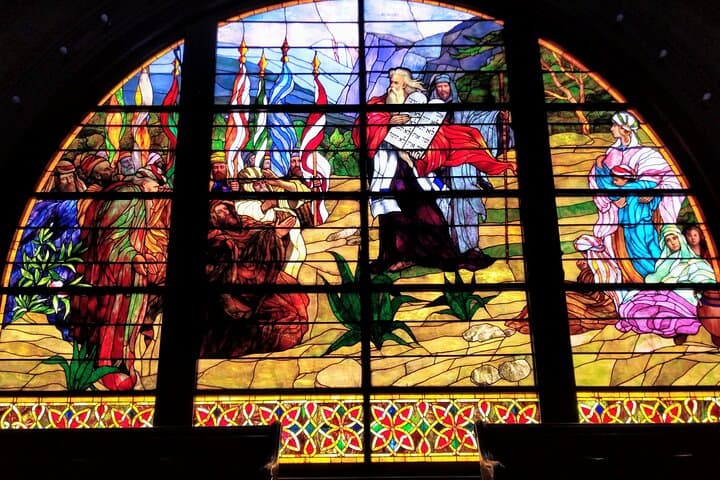
You step off California Street into an ornate nave where sunlight pours through 38 historic stained-glass panes and dust motes float like slow confetti.
You step off California Street into an ornate nave where sunlight pours through 38 historic stained-glass panes and dust motes float like slow confetti.
The one-hour guided tour of Congregation Sherith Israel places you inside a Beaux-Arts room by architect Albert Pissis, a rare surviving interior that stood through the 1906 earthquake. Guides move from frescoed ceilings to brass memorials and the pipework of the Murry‑Harris organ, explaining how Jewish merchants and entrepreneurs shaped San Francisco during the 1849 Gold Rush and the city's rebuilding afterward.
Geology and urban growth come into view here too: the building sits on the hills of the Marina/Western Addition edge, a cityscape formed by earthquakes and reclaimed land, which shaped how institutions rebuilt in sturdier styles after 1906. The synagogue’s stained glass documents community narratives and immigration stories that weave into San Francisco’s civic history.
Culturally, the visit is intimate—religion is living here, not only history. Expect a short walking component inside the building, low light in the sanctuary, and close-up views of artifacts and inscriptions that most visitors miss.
Practical guidance: tours run about 60–75 minutes and are wheelchair accessible; bring a light layer for cooler interior air and plan to arrive 10–15 minutes early. Photography may be allowed but avoid flash and large tripods; follow guide instructions. Book ahead to secure limited spots and treat historic surfaces and textiles with care to help preserve them for future visitors.