THE ADVENTURE COLLECTIVE® · Independent discovery and booking for outdoor travel

A three-hour private walking tour that digs beneath the familiar façades of Monastiraki and Plaka, revealing small monuments, island-style lanes of Anafiotika, and local stories most visitors miss. Ideal for travelers who want history delivered on foot with practical local tips.
A three-hour private walking tour that digs beneath the familiar façades of Monastiraki and Plaka, revealing small monuments, island-style lanes of Anafiotika, and local stories most visitors miss. Ideal for travelers who want history delivered on foot with practical local tips.
You step out of the Acropolis metro into a tangle of narrow streets where the city’s layers press close: Ottoman-era signage, Roman fragments, and cafés where locals argue over late‑morning coffee. The guide leads the way, voice low over cobblestones, pointing out alleyways and thresholds most visitors pass without noticing.
Verified experiences and guided adventures in the surrounding area.
Operated by Whatsathenstour · Athens, Attica
You step out of the Acropolis metro into a tangle of narrow streets where the city’s layers press close: Ottoman-era signage, Roman fragments, and cafés where locals argue over late‑morning coffee. The guide leads the way, voice low over cobblestones, pointing out alleyways and thresholds most visitors pass without noticing.
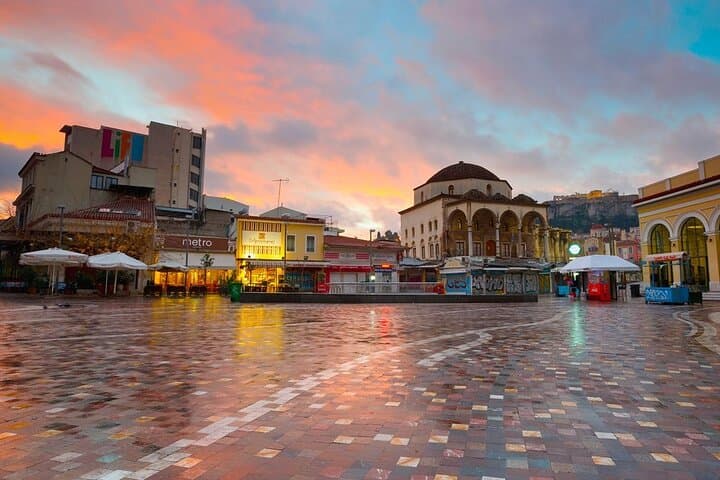
The route threads through Monastiraki’s flea markets and into Plaka’s stepped lanes, areas that grew from the ancient city’s suburbs into the living quarters of successive waves—Byzantine, Ottoman, and modern Greek. Buildings here sit on top of geology that shaped Athens: limestone outcrops interspersed with pockets of red soil, crevices that preserved fragments of marble and pottery for archaeologists to untangle centuries later.
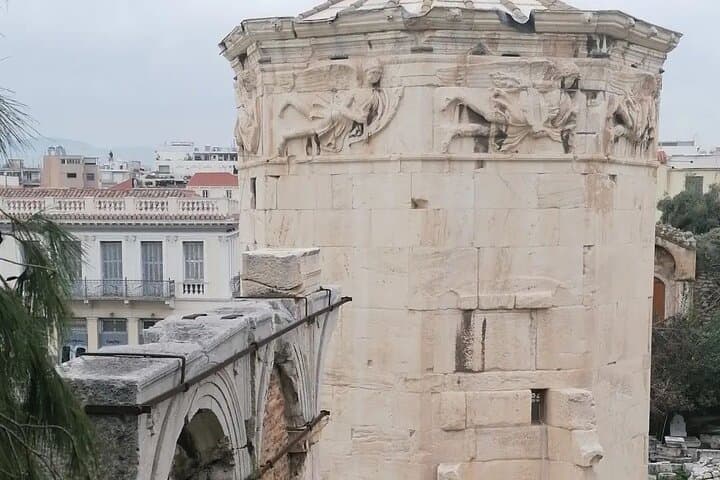
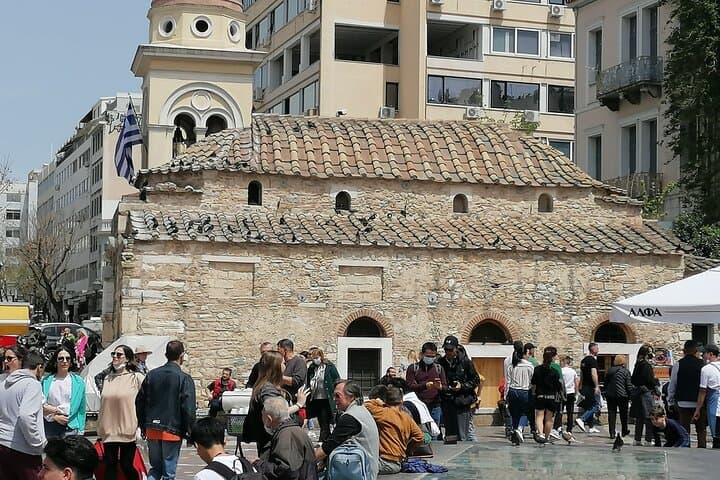
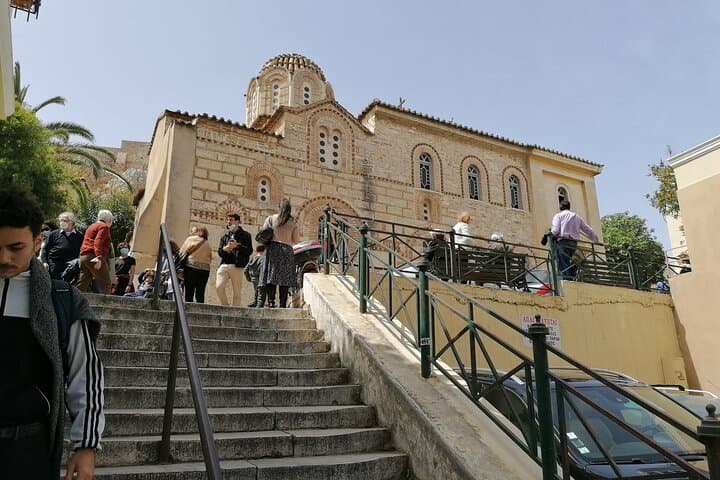
Cultural notes arrive as you walk: the story of Anafiotika’s island-style houses, the little churches with hidden frescoes, and the curious tower whose stones carry tales of past owners and odd repairs. The guide concentrates on lesser-known monuments—small chapels, courtyard inscriptions, and local anecdotes—so the tour feels like reading the city’s marginalia rather than the headline sights.
Practical guidance is woven in: expect three hours of steady walking on uneven cobbles, bring a light daypack, and schedule the tour in morning or late afternoon to avoid heat and crowds. Mobility is needed for short flights of stone steps and narrow passages; the route is largely accessible but includes compact gradients. The private format means questions steer the pace—perfect for travelers who want history with a practical, on‑the‑ground view of Athens’ living neighborhoods.
moderate.
3 hours.
Moderate fitness; able to walk 3–4 miles on uneven, cobbled streets with short flights of stairs.
The tour is approximately three hours with a steady walking pace and frequent stops for stories and viewing small monuments; private format allows pace adjustments.
Many streets are wheelchair- and stroller-accessible, but expect some cobblestone sections and short stairways—discuss needs with the operator in advance.
Most monuments are visible from outside at no charge; specific admissions noted in the itinerary may be included—confirm when booking.
Yes, as a private tour the guide can tailor stops and pacing to suit families or slower walkers—request this at booking.
Plaka and Monastiraki occupy the historic heart of Athens, built over ancient suburbs and reshaped through Byzantine and Ottoman periods into their present urban fabric.
These neighborhoods are living quarters with fragile historic fabric; stick to marked paths, avoid touching frescoes, and support local businesses to keep conservation viable.
Whatsathenstour operates guided outdoor trips and adventures with an emphasis on safety, stewardship, and memorable experiences.
You step out of the Acropolis metro into a tangle of narrow streets where the city’s layers press close: Ottoman-era signage, Roman fragments, and cafés where locals argue over late‑morning coffee. The guide leads the way, voice low over cobblestones, pointing out alleyways and thresholds most visitors pass without noticing.
You step out of the Acropolis metro into a tangle of narrow streets where the city’s layers press close: Ottoman-era signage, Roman fragments, and cafés where locals argue over late‑morning coffee. The guide leads the way, voice low over cobblestones, pointing out alleyways and thresholds most visitors pass without noticing.
The route threads through Monastiraki’s flea markets and into Plaka’s stepped lanes, areas that grew from the ancient city’s suburbs into the living quarters of successive waves—Byzantine, Ottoman, and modern Greek. Buildings here sit on top of geology that shaped Athens: limestone outcrops interspersed with pockets of red soil, crevices that preserved fragments of marble and pottery for archaeologists to untangle centuries later.
Cultural notes arrive as you walk: the story of Anafiotika’s island-style houses, the little churches with hidden frescoes, and the curious tower whose stones carry tales of past owners and odd repairs. The guide concentrates on lesser-known monuments—small chapels, courtyard inscriptions, and local anecdotes—so the tour feels like reading the city’s marginalia rather than the headline sights.
Practical guidance is woven in: expect three hours of steady walking on uneven cobbles, bring a light daypack, and schedule the tour in morning or late afternoon to avoid heat and crowds. Mobility is needed for short flights of stone steps and narrow passages; the route is largely accessible but includes compact gradients. The private format means questions steer the pace—perfect for travelers who want history with a practical, on‑the‑ground view of Athens’ living neighborhoods.