THE ADVENTURE COLLECTIVE® · Independent discovery and booking for outdoor travel

Move through Kathmandu’s most significant UNESCO sites in a private half-day tour that pairs close-up history with practical guidance. Expect hilltop stupas, royal courtyards, riverside rituals and clear advice on etiquette and logistics.
Move through Kathmandu’s most significant UNESCO sites in a private half-day tour that pairs close-up history with practical guidance. Expect hilltop stupas, royal courtyards, riverside rituals and clear advice on etiquette and logistics.
Morning light spills over the bowl of Kathmandu Valley as travelers step from an air-conditioned vehicle onto foot-worn stone. The city’s skyline is a stitched line of stupas, tiled roofs and chiseled spires; prayer flags tug at the breeze, and monkeys judge the procession from lichen-laced walls. This private sightseeing loop moves through Swayambhunath’s hilltop gaze, the carved courtyards around the royal palace in Kathmandu Durbar Square, the riverside rites at Pashupatinath, and the slow circumambulation around Boudhanath’s white dome.
Verified experiences and guided adventures in the surrounding area.
Operated by Yakthung Tours and Travels · Kathmandu, Bagmati Province
Morning light spills over the bowl of Kathmandu Valley as travelers step from an air-conditioned vehicle onto foot-worn stone. The city’s skyline is a stitched line of stupas, tiled roofs and chiseled spires; prayer flags tug at the breeze, and monkeys judge the procession from lichen-laced walls. This private sightseeing loop moves through Swayambhunath’s hilltop gaze, the carved courtyards around the royal palace in Kathmandu Durbar Square, the riverside rites at Pashupatinath, and the slow circumambulation around Boudhanath’s white dome.
These sites chronicle Kathmandu’s layered history: Newar artisans shaping wooden and brick architecture in the medieval period, Buddhist and Hindu rituals intertwined in daily life, and the valley’s geology—uplifted by the collision of the Indian and Eurasian plates—creating the compact basin that concentrated centuries of human settlement. Guides point out iconography, living traditions like the Kumari, and how the Bagmati River serves both sacred and urban functions.
Practicalities matter: expect several short walks on uneven stone and occasional steep steps; most temple entries charge separate local admission and enforce modest dress. Midday can be hot and crowded—start early for cooler light and quieter shrines. Bring a refillable water bottle, a respectful cover for shoulders and knees, comfortable soles for cobbles, and cash for small temple fees and donations. Photography is allowed in many places but restricted at some inner sanctums—follow your guide. The tour is accessible to most fitness levels and offers a concentrated cultural primer for anyone wanting the valley’s history, rituals, and craftsmanship in a single, efficient morning.
easy.
6 hours.
Suitable for people with basic mobility; includes multiple short walks and some stair climbing.
No; the itinerary lists admissions as not included—pay local entrance fees on-site, usually in NPR (cash) or via local payment methods.
Yes—it's rated easy with short walks, but those with limited mobility should note uneven surfaces and some staircases.
Photography is allowed in many public areas but can be restricted in inner sanctums (e.g., Kumari’s residence) and at some rituals—follow your guide’s directions.
The tour notes include transportation amenities and a pickup point is typically arranged—confirm pickup details when booking and provide exact hotel location.
Kathmandu Valley’s core monuments reflect centuries of Newar craftsmanship and mixed Hindu–Buddhist practice; many structures date from the 5th to 17th centuries and the valley is a UNESCO World Heritage site.
High visitor numbers stress fragile brickwork and shrines—follow pathways, avoid touching carved woodwork, and use local guides who support preservation efforts.
Yakthung Tours and Travels operates guided outdoor trips and adventures with an emphasis on safety, stewardship, and memorable experiences.
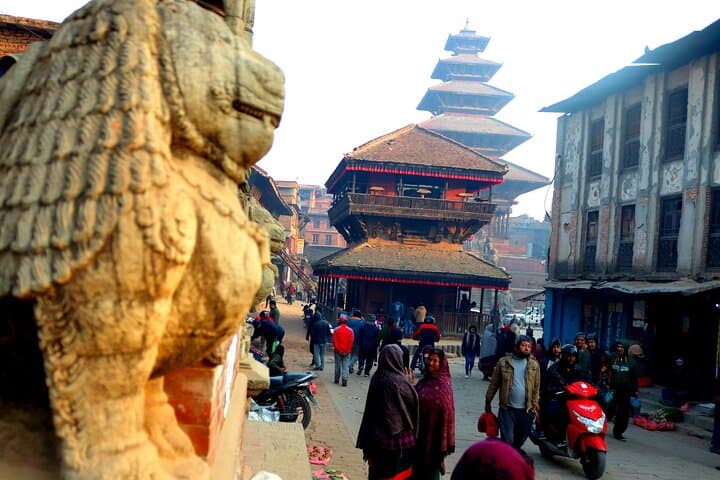
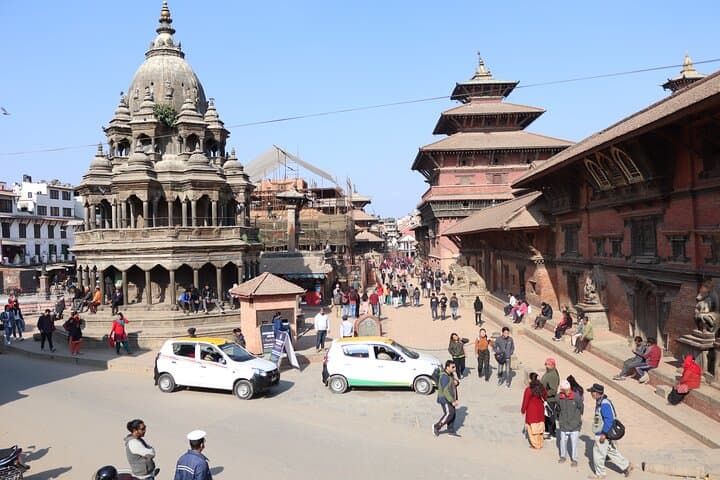
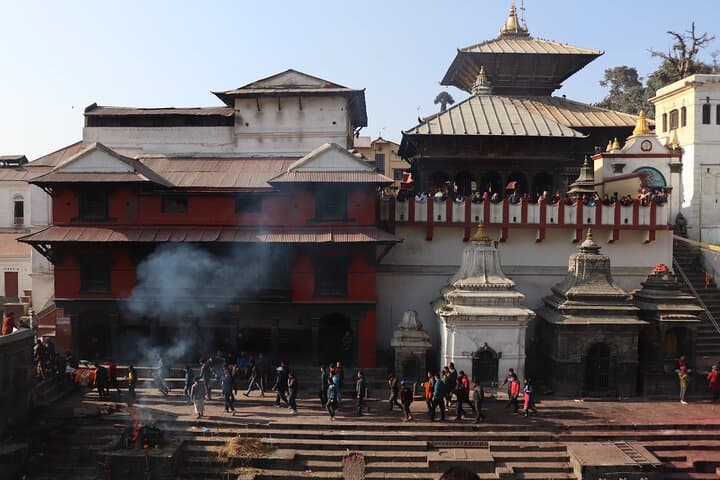
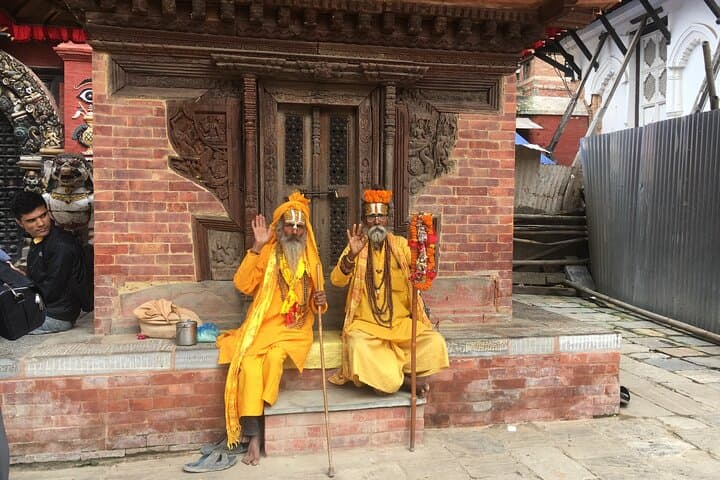
Morning light spills over the bowl of Kathmandu Valley as travelers step from an air-conditioned vehicle onto foot-worn stone. The city’s skyline is a stitched line of stupas, tiled roofs and chiseled spires; prayer flags tug at the breeze, and monkeys judge the procession from lichen-laced walls. This private sightseeing loop moves through Swayambhunath’s hilltop gaze, the carved courtyards around the royal palace in Kathmandu Durbar Square, the riverside rites at Pashupatinath, and the slow circumambulation around Boudhanath’s white dome.
Morning light spills over the bowl of Kathmandu Valley as travelers step from an air-conditioned vehicle onto foot-worn stone. The city’s skyline is a stitched line of stupas, tiled roofs and chiseled spires; prayer flags tug at the breeze, and monkeys judge the procession from lichen-laced walls. This private sightseeing loop moves through Swayambhunath’s hilltop gaze, the carved courtyards around the royal palace in Kathmandu Durbar Square, the riverside rites at Pashupatinath, and the slow circumambulation around Boudhanath’s white dome.
These sites chronicle Kathmandu’s layered history: Newar artisans shaping wooden and brick architecture in the medieval period, Buddhist and Hindu rituals intertwined in daily life, and the valley’s geology—uplifted by the collision of the Indian and Eurasian plates—creating the compact basin that concentrated centuries of human settlement. Guides point out iconography, living traditions like the Kumari, and how the Bagmati River serves both sacred and urban functions.
Practicalities matter: expect several short walks on uneven stone and occasional steep steps; most temple entries charge separate local admission and enforce modest dress. Midday can be hot and crowded—start early for cooler light and quieter shrines. Bring a refillable water bottle, a respectful cover for shoulders and knees, comfortable soles for cobbles, and cash for small temple fees and donations. Photography is allowed in many places but restricted at some inner sanctums—follow your guide. The tour is accessible to most fitness levels and offers a concentrated cultural primer for anyone wanting the valley’s history, rituals, and craftsmanship in a single, efficient morning.