THE ADVENTURE COLLECTIVE® · Independent discovery and booking for outdoor travel

Walk the Oxford University Museum of Natural History with a guide who reframes specimens as constructed stories. This 90-minute Uncomfortable Oxford tour pairs close-looking with history, questioning how collections reflect power and choice.
Walk the Oxford University Museum of Natural History with a guide who reframes specimens as constructed stories. This 90-minute Uncomfortable Oxford tour pairs close-looking with history, questioning how collections reflect power and choice.
You enter under a vaulted iron-and-glass roof where plaster casts and taxidermy catch the daylight like witnesses waiting to be asked their backstory.
Verified experiences and guided adventures in the surrounding area.
Operated by Uncomfortable Oxford · Oxford, Oxfordshire
You enter under a vaulted iron-and-glass roof where plaster casts and taxidermy catch the daylight like witnesses waiting to be asked their backstory.
On Uncomfortable Oxford’s ninety-minute tour the display cases stop being neutral: they are choices. Guides lead small groups through dinosaur halls, geological cabinets and anthropological displays while reframing ‘natural’ as an argument shaped by Victorian collecting, empire and classification systems.
The building itself—mid-19th-century Gothic Revival—reflects the era that produced the collections. Geological specimens tell the story of the region’s deep past; the placement of human and cultural objects reveals the institutional priorities of museum-making. The tour surfaces how acquisition, interpretation and display intersect with colonial history and modern debates over repatriation, representation and ethical stewardship.
Expect a conversational walk, close looks at key specimens and pointed questions: why these objects were collected, who named them, and who’s missing from the labels. It’s not a traditional naturalist walk; it’s a cultural excavation in gallery form.
Practical: tours last 90 minutes, run in small groups, and are largely indoors with level routes and wheelchair access. Bring water, a charged phone for notes or photos where allowed, and time afterwards to explore the museum’s permanent exhibits independently. If you want a tour that reframes familiar displays and prompts clearer thinking about collections and conservation, this one is designed to provoke and inform.
easy.
1.5 hours.
Suitable for all fitness levels; minimal walking on level indoor floors.
The guided experience runs approximately 90 minutes and focuses on key galleries and themes.
Yes—content is accessible to older children and teens, but the tour’s critical themes suit mature discussion; parents should judge readiness.
Yes, the museum and tour routes are wheelchair accessible; indicate any access needs when booking.
Yes—these topics are central: the tour examines provenance, colonial-era collecting practices and current museum debates.
The Oxford University Museum of Natural History dates to the mid-19th century; its Victorian Gothic architecture and collections reflect the scientific and imperial priorities of that era.
The tour highlights contemporary conversations about ethical collecting, provenance research and repatriation as part of responsible stewardship and museum sustainability.
Uncomfortable Oxford operates guided outdoor trips and adventures with an emphasis on safety, stewardship, and memorable experiences.
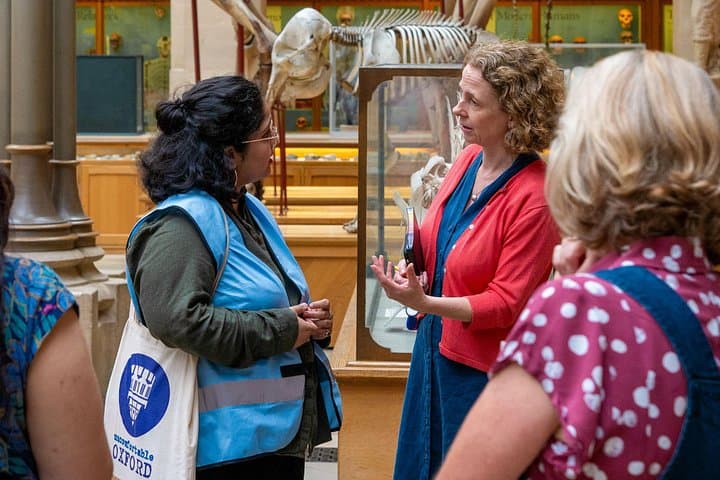
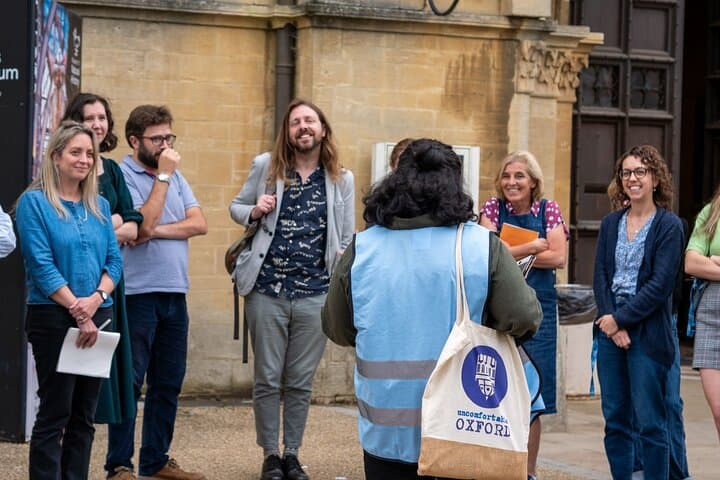
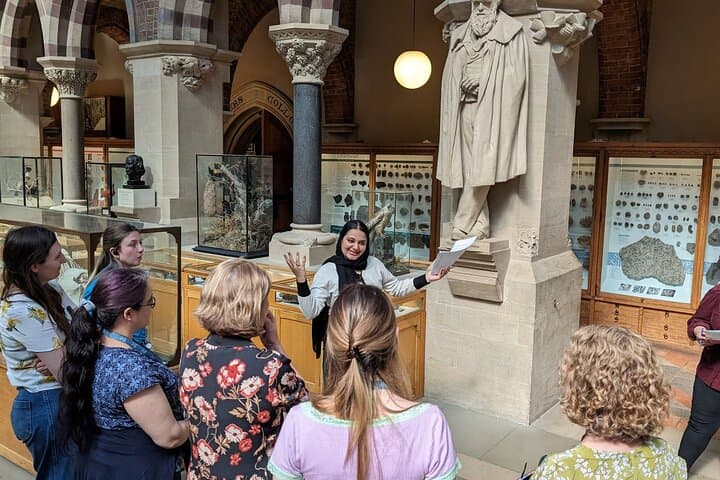
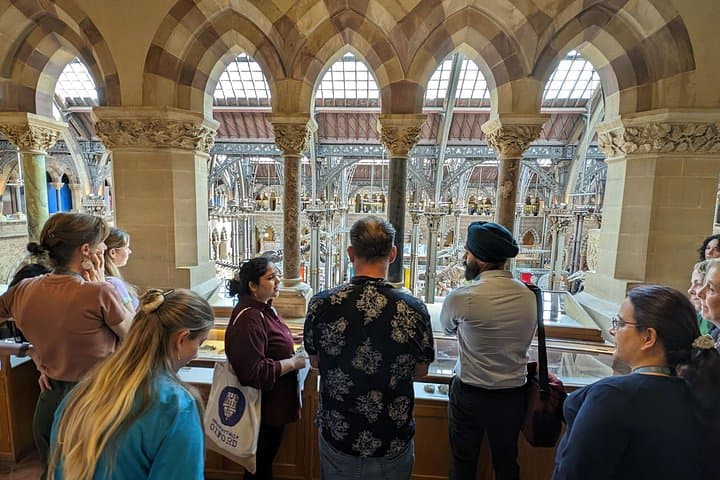
You enter under a vaulted iron-and-glass roof where plaster casts and taxidermy catch the daylight like witnesses waiting to be asked their backstory.
You enter under a vaulted iron-and-glass roof where plaster casts and taxidermy catch the daylight like witnesses waiting to be asked their backstory.
On Uncomfortable Oxford’s ninety-minute tour the display cases stop being neutral: they are choices. Guides lead small groups through dinosaur halls, geological cabinets and anthropological displays while reframing ‘natural’ as an argument shaped by Victorian collecting, empire and classification systems.
The building itself—mid-19th-century Gothic Revival—reflects the era that produced the collections. Geological specimens tell the story of the region’s deep past; the placement of human and cultural objects reveals the institutional priorities of museum-making. The tour surfaces how acquisition, interpretation and display intersect with colonial history and modern debates over repatriation, representation and ethical stewardship.
Expect a conversational walk, close looks at key specimens and pointed questions: why these objects were collected, who named them, and who’s missing from the labels. It’s not a traditional naturalist walk; it’s a cultural excavation in gallery form.
Practical: tours last 90 minutes, run in small groups, and are largely indoors with level routes and wheelchair access. Bring water, a charged phone for notes or photos where allowed, and time afterwards to explore the museum’s permanent exhibits independently. If you want a tour that reframes familiar displays and prompts clearer thinking about collections and conservation, this one is designed to provoke and inform.