THE ADVENTURE COLLECTIVE® · Independent discovery and booking for outdoor travel

Watch the sun fall behind Uluwatu’s cliff‑side temple, feel the drumlike call of a 60‑voice Kecak circle, then finish with grilled seafood on Jimbaran beach. This private half‑day loop pairs culture and coastline in one accessible evening.
Watch the sun fall behind Uluwatu’s cliff‑side temple, feel the drumlike call of a 60‑voice Kecak circle, then finish with grilled seafood on Jimbaran beach. This private half‑day loop pairs culture and coastline in one accessible evening.
You step out of the waiting air‑conditioned car and the cliff grabs your attention—the Indian Ocean pushing light across jagged rock 70 meters below, waves daring the base of the temple. The path to Pura Luhur Uluwatu curves past flagstones and frangipani trees; sea spray and incense mix in the air while long‑tailed macaques patrol the balustrades as if guarding the horizon.
Verified experiences and guided adventures in the surrounding area.
Operated by Bali Day Tour · Uluwatu, Bali
You step out of the waiting air‑conditioned car and the cliff grabs your attention—the Indian Ocean pushing light across jagged rock 70 meters below, waves daring the base of the temple. The path to Pura Luhur Uluwatu curves past flagstones and frangipani trees; sea spray and incense mix in the air while long‑tailed macaques patrol the balustrades as if guarding the horizon.
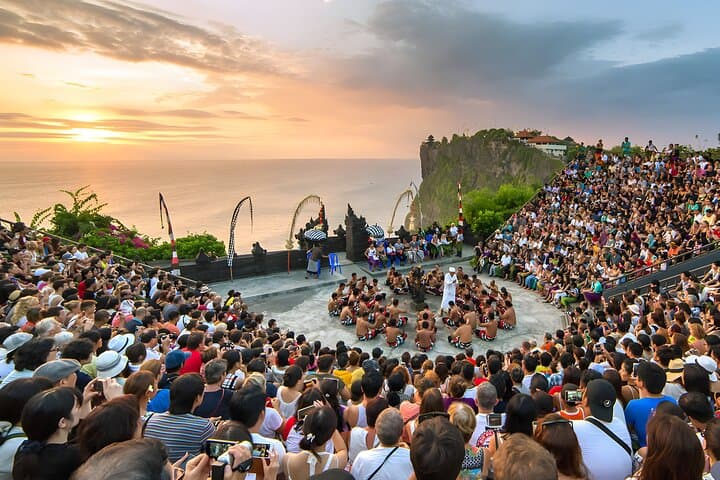
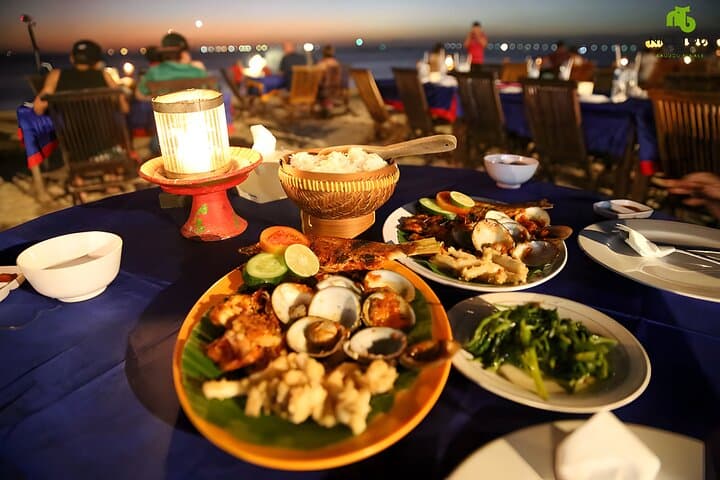
Uluwatu is one of Bali’s six sea temples, a coastal anchor in a chain of ritual sites designed to mark the island’s spiritual edges. Geologically the headland is limestone carved by wind and tide; culturally the temple stages daily ceremonies and the theatrical Kecak dance, a 20th‑century public evolution of older trance chants that uses the Ramayana as its narrative backbone. Jimbaran Bay, a short drive away, has long been a fishing hub—its beach restaurants grill catches over coconut coals as the sun falls.
Expect a practical evening: temple entry, a one‑hour open‑air Kecak performance that begins before sunset, then a seafood dinner on Jimbaran’s sands. Timing matters—traffic from southern Bali can add 30–60 minutes, and the best views require arriving before the crowd. Dress modestly for the temple, keep cameras ready for quick low‑light shots, and secure belongings from curious macaques.
Bring sunscreen, a light jacket for coastal breezes, and insect repellent for the dinner stretch. This loop—cliff, dance, bay—packs Balinese ritual, geology, and gastronomy into a single, manageable evening that’s low on exertion and high on sensory payoff.
easy.
6–7 hours.
Minimal fitness required; suitable for all activity levels though there is some walking and steps at the temple
Yes; most operators include hotel or villa pick up and drop‑off within the southern Bali corridor—confirm your pickup point when booking.
This tour typically includes Uluwatu entrance and Kecak performance tickets, but check your booking confirmation to verify inclusions.
The tour is low‑impact and suitable for most ages, though there are steps at Uluwatu and uneven surfaces; infants under 2 are often free but verify with the operator.
The dry season (April–October) generally offers clearer skies and more reliable sunsets; the wet season brings brief storms that can obscure views.
Pura Luhur Uluwatu is one of Bali’s major sea temples, established as a coastal guardian; the public Kecak performance evolved in the 1930s from sacred trance chants into a staged retelling of the Ramayana.
Erosion and visitor pressure affect the cliff edge and temple precinct—respect path closures, avoid feeding wildlife, and support local vendors who follow sustainable seafood practices.
Bali Day Tour operates guided outdoor trips and adventures with an emphasis on safety, stewardship, and memorable experiences.
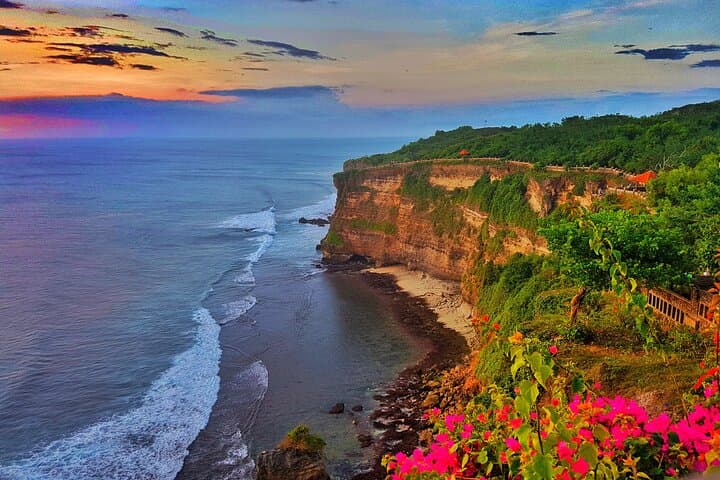
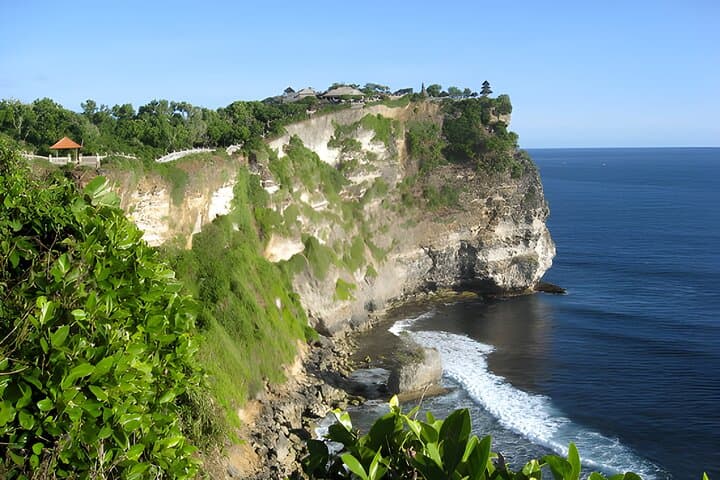
You step out of the waiting air‑conditioned car and the cliff grabs your attention—the Indian Ocean pushing light across jagged rock 70 meters below, waves daring the base of the temple. The path to Pura Luhur Uluwatu curves past flagstones and frangipani trees; sea spray and incense mix in the air while long‑tailed macaques patrol the balustrades as if guarding the horizon.
You step out of the waiting air‑conditioned car and the cliff grabs your attention—the Indian Ocean pushing light across jagged rock 70 meters below, waves daring the base of the temple. The path to Pura Luhur Uluwatu curves past flagstones and frangipani trees; sea spray and incense mix in the air while long‑tailed macaques patrol the balustrades as if guarding the horizon.
Uluwatu is one of Bali’s six sea temples, a coastal anchor in a chain of ritual sites designed to mark the island’s spiritual edges. Geologically the headland is limestone carved by wind and tide; culturally the temple stages daily ceremonies and the theatrical Kecak dance, a 20th‑century public evolution of older trance chants that uses the Ramayana as its narrative backbone. Jimbaran Bay, a short drive away, has long been a fishing hub—its beach restaurants grill catches over coconut coals as the sun falls.
Expect a practical evening: temple entry, a one‑hour open‑air Kecak performance that begins before sunset, then a seafood dinner on Jimbaran’s sands. Timing matters—traffic from southern Bali can add 30–60 minutes, and the best views require arriving before the crowd. Dress modestly for the temple, keep cameras ready for quick low‑light shots, and secure belongings from curious macaques.
Bring sunscreen, a light jacket for coastal breezes, and insect repellent for the dinner stretch. This loop—cliff, dance, bay—packs Balinese ritual, geology, and gastronomy into a single, manageable evening that’s low on exertion and high on sensory payoff.