THE ADVENTURE COLLECTIVE® · Independent discovery and booking for outdoor travel

Watch the Kecak dance as the sun sinks from Uluwatu’s cliffside amphitheater. This open-air performance blends Balinese chant, Ramayana drama and torchlit ritual—plan to arrive early for views and seating.
Watch the Kecak dance as the sun sinks from Uluwatu’s cliffside amphitheater. This open-air performance blends Balinese chant, Ramayana drama and torchlit ritual—plan to arrive early for views and seating.
A low roar of ocean and the last yellow edge of sun set the stage as you approach Uluwatu Temple’s cliffside amphitheater. The rock underfoot smells faintly of salt and dust; far below, waves strike the reef with a patient insistence. As the sky deepens, dozens of male performers take their places and the Kecak’s interlocking ‘chak’ rises like a living drum, pulling attention from the horizon to the circle of fire and motion.
Verified experiences and guided adventures in the surrounding area.
Operated by PBRB · Uluwatu, Bali
A low roar of ocean and the last yellow edge of sun set the stage as you approach Uluwatu Temple’s cliffside amphitheater. The rock underfoot smells faintly of salt and dust; far below, waves strike the reef with a patient insistence. As the sky deepens, dozens of male performers take their places and the Kecak’s interlocking ‘chak’ rises like a living drum, pulling attention from the horizon to the circle of fire and motion.
Uluwatu itself is an ancient sea temple—Pura Luhur Uluwatu—situated on limestone cliffs carved by the Indian Ocean. The temple and the Kecak performance are tied into Hindu Ramayana stories brought to Bali centuries ago, while the cliff and reef speak to ongoing geological uplift and coastal erosion that shape this coastline.
The show combines vocal percussion, choreographed combat, and torchlight drama; it’s a cultural performance rather than a staged theatrical replica. Expect limited staging, open-air acoustics, and a narrative told through gesture and chant more than spoken dialogue.
Practical guidance: arrive 30–45 minutes early to secure seats and catch the temple views before sunset; bring a light layer—the cliff gets breezy after dusk. Wear shoes that handle stairs and uneven stone; insect repellent is recommended. Respect temple rules: modest dress, no disruptive flash photography during key scenes, and follow staff instructions. Mobile or paper tickets are accepted and infants sit on laps. If rain is forecast the show may be canceled and refunded if you cancel at least 24 hours prior.
The Uluwatu Kecak is short, intense, and best appreciated with both ears and eyes open—arrive prepared and let the chant pull you into the cliffside twilight.
easy.
2 hours.
Minimal fitness required; should be able to walk short distances and climb stairs
Shows are timed for sunset and last about 90–120 minutes; exact start varies with sunset time, so check local timings and arrive early.
Modest clothing is requested—cover shoulders and knees when entering temple precincts; sarongs are sometimes provided or required in certain areas.
Photography is allowed, but avoid flash during dramatic scenes and follow staff instructions—flash can disrupt performers and other guests.
The amphitheater and temple sit on cliffs with steps and uneven paths; access can be challenging—contact venue in advance for assistance options.
Pura Luhur Uluwatu is one of Bali’s key sea temples, historically positioned to guard the island’s southwestern sea approaches and long associated with local ritual performances.
The cliffside ecology is sensitive—stay on marked paths, avoid feeding wildlife, and carry out any trash to reduce erosion and pollution impacts.
PBRB operates guided outdoor trips and adventures with an emphasis on safety, stewardship, and memorable experiences.
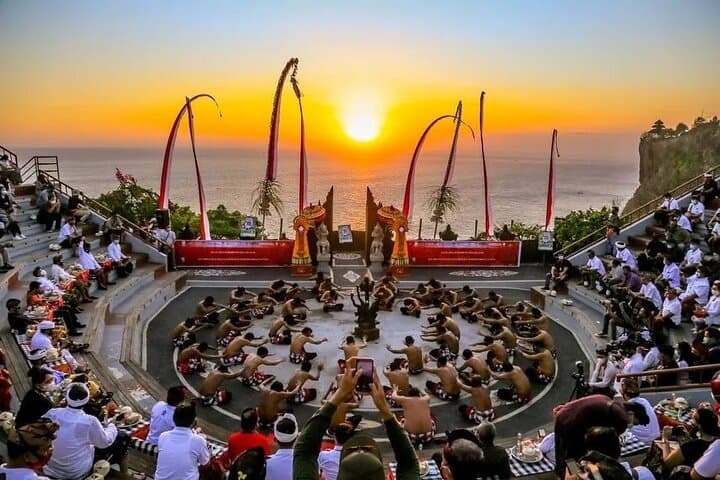


A low roar of ocean and the last yellow edge of sun set the stage as you approach Uluwatu Temple’s cliffside amphitheater. The rock underfoot smells faintly of salt and dust; far below, waves strike the reef with a patient insistence. As the sky deepens, dozens of male performers take their places and the Kecak’s interlocking ‘chak’ rises like a living drum, pulling attention from the horizon to the circle of fire and motion.
A low roar of ocean and the last yellow edge of sun set the stage as you approach Uluwatu Temple’s cliffside amphitheater. The rock underfoot smells faintly of salt and dust; far below, waves strike the reef with a patient insistence. As the sky deepens, dozens of male performers take their places and the Kecak’s interlocking ‘chak’ rises like a living drum, pulling attention from the horizon to the circle of fire and motion.
Uluwatu itself is an ancient sea temple—Pura Luhur Uluwatu—situated on limestone cliffs carved by the Indian Ocean. The temple and the Kecak performance are tied into Hindu Ramayana stories brought to Bali centuries ago, while the cliff and reef speak to ongoing geological uplift and coastal erosion that shape this coastline.
The show combines vocal percussion, choreographed combat, and torchlight drama; it’s a cultural performance rather than a staged theatrical replica. Expect limited staging, open-air acoustics, and a narrative told through gesture and chant more than spoken dialogue.
Practical guidance: arrive 30–45 minutes early to secure seats and catch the temple views before sunset; bring a light layer—the cliff gets breezy after dusk. Wear shoes that handle stairs and uneven stone; insect repellent is recommended. Respect temple rules: modest dress, no disruptive flash photography during key scenes, and follow staff instructions. Mobile or paper tickets are accepted and infants sit on laps. If rain is forecast the show may be canceled and refunded if you cancel at least 24 hours prior.
The Uluwatu Kecak is short, intense, and best appreciated with both ears and eyes open—arrive prepared and let the chant pull you into the cliffside twilight.