THE ADVENTURE COLLECTIVE® · Independent discovery and booking for outdoor travel

Start before sunrise at Uluru and circle the entire 10.5 km base with an experienced Anangu guide. This morning walk combines geology, rock art and the chance to see Kantju Gorge flowing after rain.
Start before sunrise at Uluru and circle the entire 10.5 km base with an experienced Anangu guide. This morning walk combines geology, rock art and the chance to see Kantju Gorge flowing after rain.
Before the sun clears the horizon the coach pulls into the long shadow of Uluru and the desert exhales. A light breakfast and hot tea settle the nerves; steam rises while the rock holds its cool red face. As you step off the bus the scale of the monolith becomes immediate — a 10.5 km loop that moves you through porches of shade, sandy flats and sculpted rock ledges.
Verified experiences and guided adventures in the surrounding area.
Operated by AAT Kings · Yulara, Northern Territory
Before the sun clears the horizon the coach pulls into the long shadow of Uluru and the desert exhales. A light breakfast and hot tea settle the nerves; steam rises while the rock holds its cool red face. As you step off the bus the scale of the monolith becomes immediate — a 10.5 km loop that moves you through porches of shade, sandy flats and sculpted rock ledges.
This is both geology and living culture. Uluru is a sandstone inselberg shaped over roughly 550 million years, its iron-rich surface oxidised to that deep ochre. For the Anangu, the rock is a map of Tjukurpa: creation stories anchored to specific features along the base. Your guide points out rock art panels, the story of Kuniya and Liru, and the small, sacred sites where tradition continues. After rain the Kantju Gorge can carry a waterfall — water temporarily daring the desert to remember itself.
Expect well-marked, uneven terrain rather than steep climbing; the walk is more endurance than technical challenge. Bring 2–3 L of water, sun protection and sturdy footwear; early starts mean layers that shed as the morning warms. Photography is allowed in most places but follow signage and your guide — some spots are restricted out of cultural respect.
Logistics are simple: hotel pickup from Yulara, an experienced local guide and commentary, and an air-conditioned coach for transfers. The route rewards steady attention: small rock art panels, lizard tracks, and sudden wide views where the plain presses back against the rock. Walk with respect, and Uluru will return the favor with moments that are quietly unforgettable.
moderate.
4–5 hours.
Moderate fitness needed — steady pace over 10.5 km with uneven ground; able to walk several hours with short breaks.
The guide-led loop covers 10.5 km and the tour runs about 4–5 hours including stops, commentary and coach transfers.
No — climbing Uluru is permanently closed out of respect for Anangu cultural requests; the base walk focuses on cultural sites and stories instead.
Children can join but the tour notes infants must sit on an adult’s lap during transfers; families should assess stamina for a multi-hour walk.
The tour operates in most conditions, and after rain Kantju Gorge can flow — guides will adapt the itinerary and some sections may be limited for safety.
Uluru is a geological feature formed over roughly 550 million years and has been a cultural landscape for the Anangu for tens of thousands of years.
Visitors are expected to stay on marked paths and follow guide instructions to protect fragile rock art and culturally sensitive sites; water use and waste are tightly managed around Yulara.
AAT Kings operates guided outdoor trips and adventures with an emphasis on safety, stewardship, and memorable experiences.
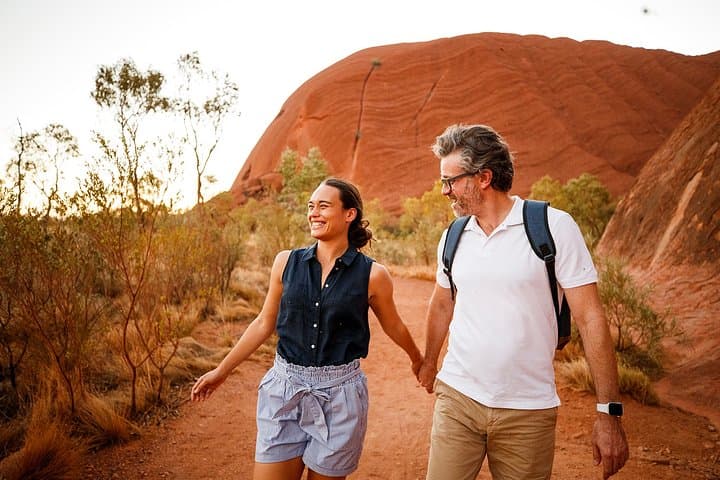
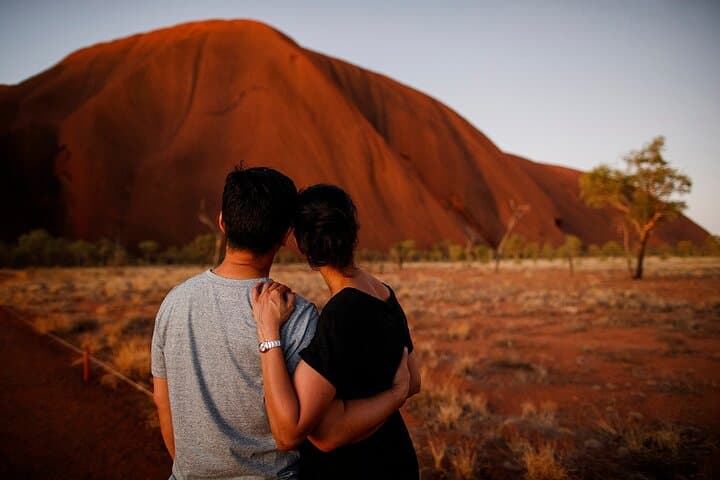
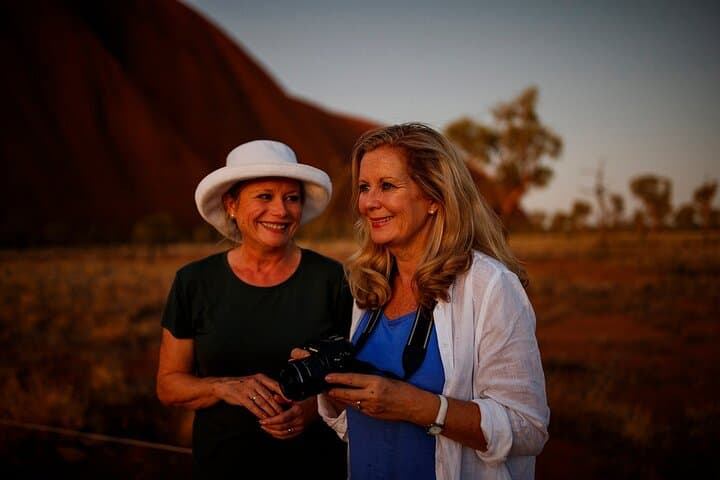
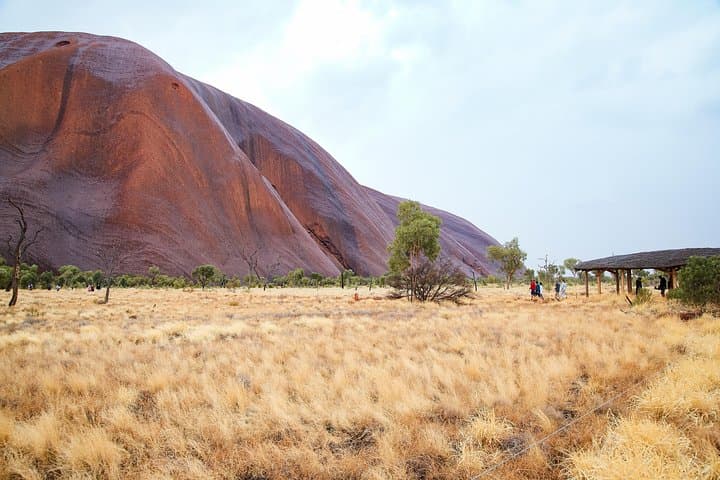
Before the sun clears the horizon the coach pulls into the long shadow of Uluru and the desert exhales. A light breakfast and hot tea settle the nerves; steam rises while the rock holds its cool red face. As you step off the bus the scale of the monolith becomes immediate — a 10.5 km loop that moves you through porches of shade, sandy flats and sculpted rock ledges.
Before the sun clears the horizon the coach pulls into the long shadow of Uluru and the desert exhales. A light breakfast and hot tea settle the nerves; steam rises while the rock holds its cool red face. As you step off the bus the scale of the monolith becomes immediate — a 10.5 km loop that moves you through porches of shade, sandy flats and sculpted rock ledges.
This is both geology and living culture. Uluru is a sandstone inselberg shaped over roughly 550 million years, its iron-rich surface oxidised to that deep ochre. For the Anangu, the rock is a map of Tjukurpa: creation stories anchored to specific features along the base. Your guide points out rock art panels, the story of Kuniya and Liru, and the small, sacred sites where tradition continues. After rain the Kantju Gorge can carry a waterfall — water temporarily daring the desert to remember itself.
Expect well-marked, uneven terrain rather than steep climbing; the walk is more endurance than technical challenge. Bring 2–3 L of water, sun protection and sturdy footwear; early starts mean layers that shed as the morning warms. Photography is allowed in most places but follow signage and your guide — some spots are restricted out of cultural respect.
Logistics are simple: hotel pickup from Yulara, an experienced local guide and commentary, and an air-conditioned coach for transfers. The route rewards steady attention: small rock art panels, lizard tracks, and sudden wide views where the plain presses back against the rock. Walk with respect, and Uluru will return the favor with moments that are quietly unforgettable.