THE ADVENTURE COLLECTIVE® · Independent discovery and booking for outdoor travel

Spend a night under the Red Centre sky and walk the base of Uluru before an early-morning hike among the domes of Kata Tjuta. This 1‑day, 1‑night outback trip blends guided cultural interpretation, short rugged walks, and authentic bush camping.
Spend a night under the Red Centre sky and walk the base of Uluru before an early-morning hike among the domes of Kata Tjuta. This 1‑day, 1‑night outback trip blends guided cultural interpretation, short rugged walks, and authentic bush camping.
You step off the minibus into a silence that feels deliberate—the kind of silence that makes conversation edge toward reverence. The rock is there before you fully register it, rising from the flat ochre like something that belonged to a different planet. Uluru holds heat and history in equal measure: its skin blisters orange at sunset and cools to umber beneath a sky that opens into endless stars.
Verified experiences and guided adventures in the surrounding area.
Operated by Autopia Tours · Yulara, Northern Territory
You step off the minibus into a silence that feels deliberate—the kind of silence that makes conversation edge toward reverence. The rock is there before you fully register it, rising from the flat ochre like something that belonged to a different planet. Uluru holds heat and history in equal measure: its skin blisters orange at sunset and cools to umber beneath a sky that opens into endless stars.
This one-night outback experience compresses the Red Centre’s essentials into 48 hours: an interpretive visit to the Cultural Centre, a base walk to Mutitjulu waterhole with rock-art viewing, a sunset dinner beside Uluru, and an early-morning transfer to Kata Tjuta for a hike through Walpa Gorge or parts of the Valley of the Winds.
Geologically, Uluru and Kata Tjuta are cousins of deep time. Uluru is a coarse-grained arkose sandstone tilted and revealed by eons of erosion; Kata Tjuta’s domes are conglomerate—boulders cemented into walls that bend light in different ways at dawn. The Indigenous Anangu people have stewarded these places for millennia. Joint management and the park’s UNESCO inscription reflect both natural value and living cultural significance: guides share creation stories and explain why certain sites are restricted. Note: climbing Uluru is permanently closed—respect for Anangu law and conservation is central to the visit.
On the practical side, expect uneven, rocky walking surfaces and heat that intensifies quickly. The itinerary includes guided walks ranging from 2–8 km over two days; fitness at a moderate-to-high level is recommended. Camping is communal but comfortable: permanent twin safari tents or traditional swags under canvas are provided at the coach campground, with shared facilities.
Tips for timing: arrive with daylight on your first day to make the most of the Cultural Centre and an afternoon base walk. Sunrise at Kata Tjuta rewards early starts—light fractures the domes into sculpted ridges, and the Valley of the Winds shows why parts are rated grade 4.
Practical packing matters more here than in an urban hotel. Hydration, sun protection, and sturdy footwear are non-negotiable; layers will handle dramatic temperature swings between day and night. Because the tour ventures into remote country, dietary needs and medical conditions should be declared at booking. Baggage limits are strict (1 x 15 kg + 1 x 5 kg day bag). The reward for planning is simple: close-up encounters with rock art, desert wildlife like red kangaroos and thorny devils, and a night under stars that have guided people long before roads reached this place.
challenging.
1–2 days.
Moderate-to-high fitness; comfortable walking on uneven terrain for several hours and handling short steep sections
No — climbing Uluru has been permanently closed as a mark of respect to the Anangu owners and for conservation reasons.
No — the Uluru Kata Tjuta National Park pass is included in the tour price.
A moderate-to-high level of fitness is required; walks range from 2–8 km over uneven terrain and may include steep sections.
Yes — dinner, breakfast, and lunch on the following day are provided; permanent tents or swags are supplied, with communal bathroom facilities.
Children aged 8–17 can join but must be accompanied by a parent or guardian; the trip is not suitable for children 7 and under.
Advise the operator at booking—remote conditions limit alternatives, and medical conditions must be disclosed so guides can plan safely.
The park is jointly managed with the Anangu people; Uluru was listed as a UNESCO World Heritage site in 1987 for its natural and cultural values.
Visitors must stick to marked trails, carry out waste, and respect cultural closures; water is scarce—plan accordingly.
Autopia Tours operates guided outdoor trips and adventures with an emphasis on safety, stewardship, and memorable experiences.


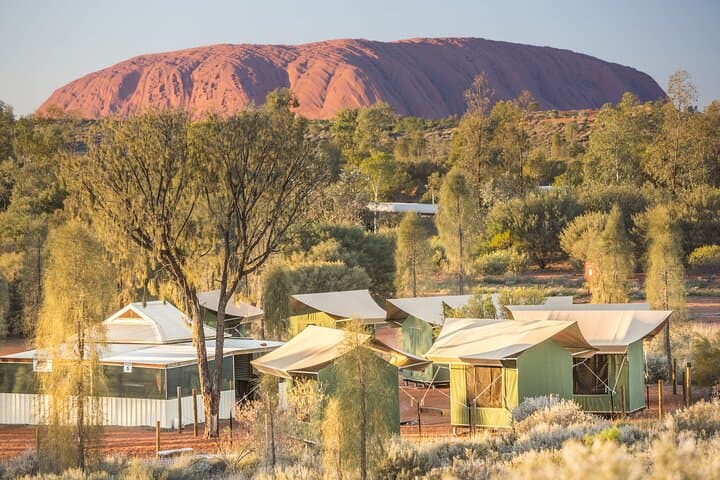

You step off the minibus into a silence that feels deliberate—the kind of silence that makes conversation edge toward reverence. The rock is there before you fully register it, rising from the flat ochre like something that belonged to a different planet. Uluru holds heat and history in equal measure: its skin blisters orange at sunset and cools to umber beneath a sky that opens into endless stars.
You step off the minibus into a silence that feels deliberate—the kind of silence that makes conversation edge toward reverence. The rock is there before you fully register it, rising from the flat ochre like something that belonged to a different planet. Uluru holds heat and history in equal measure: its skin blisters orange at sunset and cools to umber beneath a sky that opens into endless stars.
This one-night outback experience compresses the Red Centre’s essentials into 48 hours: an interpretive visit to the Cultural Centre, a base walk to Mutitjulu waterhole with rock-art viewing, a sunset dinner beside Uluru, and an early-morning transfer to Kata Tjuta for a hike through Walpa Gorge or parts of the Valley of the Winds.
Geologically, Uluru and Kata Tjuta are cousins of deep time. Uluru is a coarse-grained arkose sandstone tilted and revealed by eons of erosion; Kata Tjuta’s domes are conglomerate—boulders cemented into walls that bend light in different ways at dawn. The Indigenous Anangu people have stewarded these places for millennia. Joint management and the park’s UNESCO inscription reflect both natural value and living cultural significance: guides share creation stories and explain why certain sites are restricted. Note: climbing Uluru is permanently closed—respect for Anangu law and conservation is central to the visit.
On the practical side, expect uneven, rocky walking surfaces and heat that intensifies quickly. The itinerary includes guided walks ranging from 2–8 km over two days; fitness at a moderate-to-high level is recommended. Camping is communal but comfortable: permanent twin safari tents or traditional swags under canvas are provided at the coach campground, with shared facilities.
Tips for timing: arrive with daylight on your first day to make the most of the Cultural Centre and an afternoon base walk. Sunrise at Kata Tjuta rewards early starts—light fractures the domes into sculpted ridges, and the Valley of the Winds shows why parts are rated grade 4.
Practical packing matters more here than in an urban hotel. Hydration, sun protection, and sturdy footwear are non-negotiable; layers will handle dramatic temperature swings between day and night. Because the tour ventures into remote country, dietary needs and medical conditions should be declared at booking. Baggage limits are strict (1 x 15 kg + 1 x 5 kg day bag). The reward for planning is simple: close-up encounters with rock art, desert wildlife like red kangaroos and thorny devils, and a night under stars that have guided people long before roads reached this place.