THE ADVENTURE COLLECTIVE® · Independent discovery and booking for outdoor travel

Spend six concentrated hours on Koh Samui moving from polished temple plazas to a jungle-cooled waterfall and a village kitchen. This private tour blends iconic sights — Big Buddha, Wat Plai Laem, Hin Ta/Hin Yai — with a market stop and a hands-on dessert class.
Spend six concentrated hours on Koh Samui moving from polished temple plazas to a jungle-cooled waterfall and a village kitchen. This private tour blends iconic sights — Big Buddha, Wat Plai Laem, Hin Ta/Hin Yai — with a market stop and a hands-on dessert class.
The minivan eases off the main road and the island reasserts itself: palms lean like old friends and a warm breeze carries the scent of lemongrass and salt. Within an hour the driver winds toward Wat Phra Yai — the Big Buddha — whose gold face watches the Gulf and dares you to slow down. This six-hour loop around Koh Samui stitches together temples, market life, coastline rock formations and a jungle waterfall, ending with hands-on learning at a village kitchen where sticky rice and coconut transform into dessert.
Verified experiences and guided adventures in the surrounding area.
Operated by TH Destinations · Koh Samui, Surat Thani
The minivan eases off the main road and the island reasserts itself: palms lean like old friends and a warm breeze carries the scent of lemongrass and salt. Within an hour the driver winds toward Wat Phra Yai — the Big Buddha — whose gold face watches the Gulf and dares you to slow down. This six-hour loop around Koh Samui stitches together temples, market life, coastline rock formations and a jungle waterfall, ending with hands-on learning at a village kitchen where sticky rice and coconut transform into dessert.
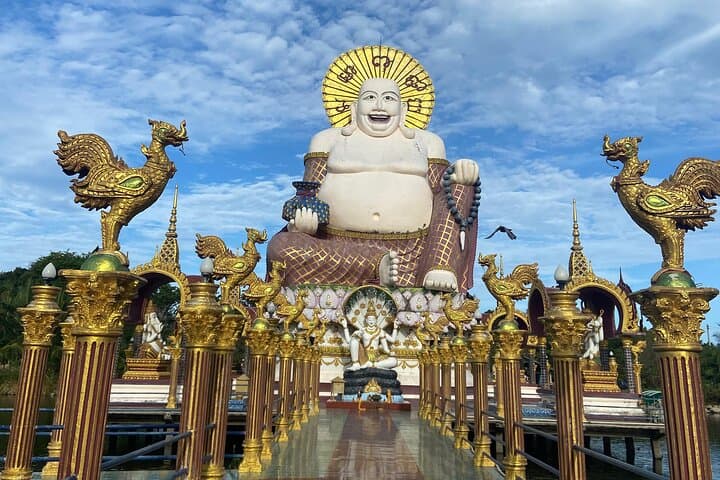
Koh Samui’s attractions feel immediate but layered. The Big Buddha (Wat Phra Yai) is recent by Thai standards — built in the late 20th century — yet it occupies a long tradition of coastal shrines that mark safe passage for fishermen. Nearby Wat Plai Laem adds modern Chinese-Buddhist flourishes: an 18-meter Guanyin with many arms presides over koi ponds, a splash of color and devotion that reflects immigrant trade links between southern Thailand and Chinese communities.
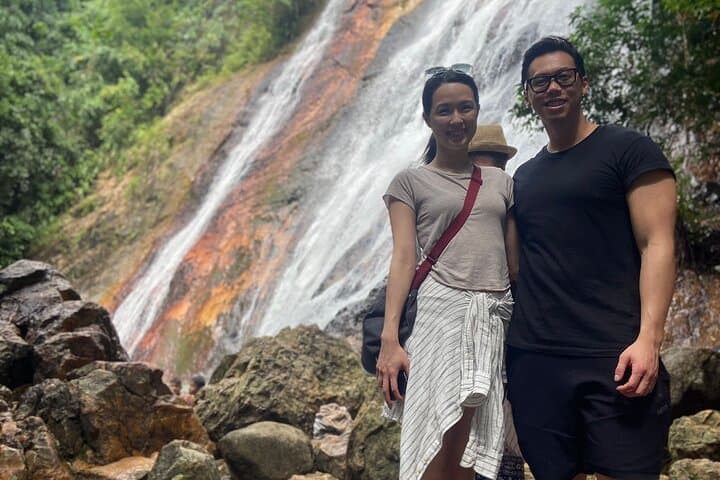
Geology surfaces at Hin Ta and Hin Yai on the island’s south coast: wind and wave have inked curious shapes into granite outcrops that double as a kind of island folklore. Inland, Na Muang 1 Waterfall cuts through older sedimentary rocks; its pool is a welcome shock of cool against humid jungle. Wat Khunaram offers a different kind of pause — the mummified monk, encased behind glass, is both a religious relic and a reminder of local practices around death and memory.
The market in the Muslim village crackles with practical life: knives, produce, grilled fish and fragrant soups. Lunch at Baan Bo Ran turns the abstract into the practical — a traditional Thai meal followed by a dessert class where guides hand you tools, explain technique and let you taste the payoff.
Practicalities: the tour runs about six hours with private transport and hotel pickup across popular coastal towns. Wear breathable clothes that respect temple dress codes (shoulders and knees covered), sturdy sandals for short walks and a swimsuit if you plan to swim at Na Muang. The island sun is insistent — hydrate and reapply sunscreen.
Timing matters: mornings are cooler and temples are quieter; late afternoons bring softer light at coastal viewpoints. The tour is accessible to most travelers and includes water, an air-conditioned vehicle and a prepared lunch; it’s a compact way to balance culture, geology and hands-on food learning in a single morning or afternoon.
For travelers who want more, ask guides about lesser-known island shrines, or extend the stop at Na Muang to explore short jungle trails. On Koh Samui, landscapes don’t simply sit there — they nudge, cool, and sometimes insist you take a moment to look closely.
easy.
6 hours.
Suitable for travelers of average fitness; involves short walks, basic stairs and getting in/out of vehicles.
The tour lasts about six hours and includes private transportation, bottled water, lunch, hotel pickup/drop-off and a dessert cooking class.
Most temple visits do not require an entrance fee, but small donations to shrine upkeep are customary and not included.
Yes — the itinerary and transport are suitable for children and the provider notes infant seats and stroller access.
Yes, Na Muang 1 has a large pool suitable for swimming; bring swimwear and be cautious on wet rocks.
Shoulders and knees should be covered; bring a sarong or light cover-up to comply with dress codes.
Walking is light to moderate: short walks at market areas, temple steps and a brief jungle approach to the waterfall.
Koh Samui’s modern tourism grew in the late 20th century, but many temple sites reflect older fishing and Buddhist practices that guided coastal communities.
Visitors should avoid feeding wildlife, stick to marked paths at Na Muang and minimize single-use plastics to protect freshwater pools and coral habitats.
TH Destinations operates guided outdoor trips and adventures with an emphasis on safety, stewardship, and memorable experiences.
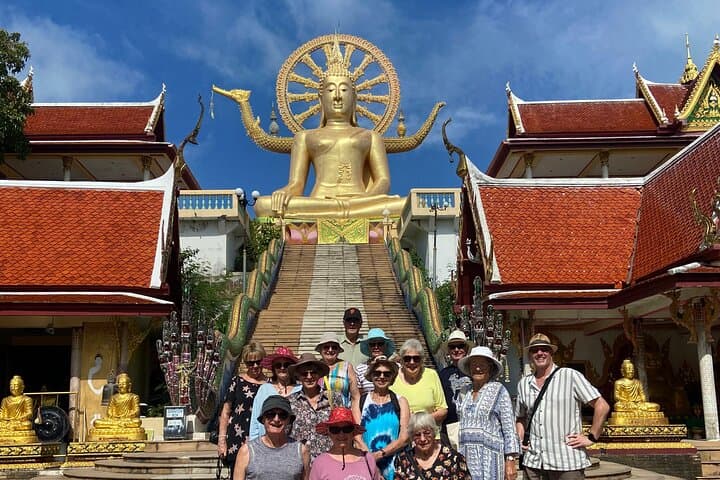
The minivan eases off the main road and the island reasserts itself: palms lean like old friends and a warm breeze carries the scent of lemongrass and salt. Within an hour the driver winds toward Wat Phra Yai — the Big Buddha — whose gold face watches the Gulf and dares you to slow down. This six-hour loop around Koh Samui stitches together temples, market life, coastline rock formations and a jungle waterfall, ending with hands-on learning at a village kitchen where sticky rice and coconut transform into dessert.
The minivan eases off the main road and the island reasserts itself: palms lean like old friends and a warm breeze carries the scent of lemongrass and salt. Within an hour the driver winds toward Wat Phra Yai — the Big Buddha — whose gold face watches the Gulf and dares you to slow down. This six-hour loop around Koh Samui stitches together temples, market life, coastline rock formations and a jungle waterfall, ending with hands-on learning at a village kitchen where sticky rice and coconut transform into dessert.
Koh Samui’s attractions feel immediate but layered. The Big Buddha (Wat Phra Yai) is recent by Thai standards — built in the late 20th century — yet it occupies a long tradition of coastal shrines that mark safe passage for fishermen. Nearby Wat Plai Laem adds modern Chinese-Buddhist flourishes: an 18-meter Guanyin with many arms presides over koi ponds, a splash of color and devotion that reflects immigrant trade links between southern Thailand and Chinese communities.
Geology surfaces at Hin Ta and Hin Yai on the island’s south coast: wind and wave have inked curious shapes into granite outcrops that double as a kind of island folklore. Inland, Na Muang 1 Waterfall cuts through older sedimentary rocks; its pool is a welcome shock of cool against humid jungle. Wat Khunaram offers a different kind of pause — the mummified monk, encased behind glass, is both a religious relic and a reminder of local practices around death and memory.
The market in the Muslim village crackles with practical life: knives, produce, grilled fish and fragrant soups. Lunch at Baan Bo Ran turns the abstract into the practical — a traditional Thai meal followed by a dessert class where guides hand you tools, explain technique and let you taste the payoff.
Practicalities: the tour runs about six hours with private transport and hotel pickup across popular coastal towns. Wear breathable clothes that respect temple dress codes (shoulders and knees covered), sturdy sandals for short walks and a swimsuit if you plan to swim at Na Muang. The island sun is insistent — hydrate and reapply sunscreen.
Timing matters: mornings are cooler and temples are quieter; late afternoons bring softer light at coastal viewpoints. The tour is accessible to most travelers and includes water, an air-conditioned vehicle and a prepared lunch; it’s a compact way to balance culture, geology and hands-on food learning in a single morning or afternoon.
For travelers who want more, ask guides about lesser-known island shrines, or extend the stop at Na Muang to explore short jungle trails. On Koh Samui, landscapes don’t simply sit there — they nudge, cool, and sometimes insist you take a moment to look closely.