THE ADVENTURE COLLECTIVE® · Independent discovery and booking for outdoor travel

A full-day guided circuit through Johannesburg CBD and Soweto that pairs powerful museums with street-level culture. Expect a 7–8 hour mix of vehicle transfers, walking tours, and museum stops that trace South Africa’s recent history.
A full-day guided circuit through Johannesburg CBD and Soweto that pairs powerful museums with street-level culture. Expect a 7–8 hour mix of vehicle transfers, walking tours, and museum stops that trace South Africa’s recent history.
You step out of an air-conditioned minivan into the sharp morning light of Johannesburg CBD, the city’s streets already moving—vendors calling, minibuses threading traffic, and the stone facades of former gold-era buildings holding the warm weight of history.
Verified experiences and guided adventures in the surrounding area.
Operated by Bucomuteba Tours and Travels · Johannesburg, Gauteng
You step out of an air-conditioned minivan into the sharp morning light of Johannesburg CBD, the city’s streets already moving—vendors calling, minibuses threading traffic, and the stone facades of former gold-era buildings holding the warm weight of history.
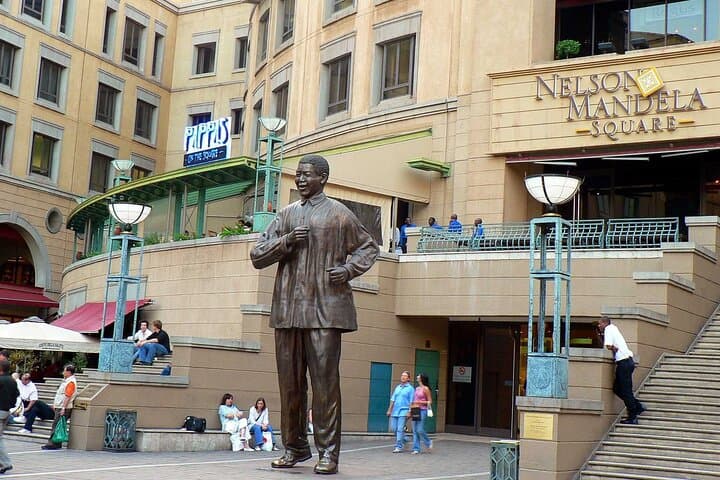
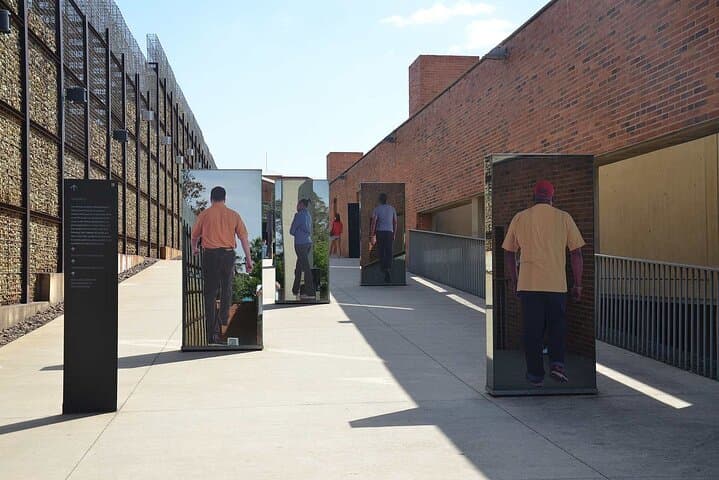
The day moves with deliberate contrasts: a walk through Soweto’s Vilakazi Street where Nelson Mandela and Desmond Tutu once lived; the quiet, solemn galleries of the Hector Pieterson Museum that bring the 1976 student uprisings into present tense; and the layered brickwork and barred windows of Constitutional Hill, where a former prison now houses the Constitutional Court.
Geology and urban form are part of the story here—Johannesburg grew on the Witwatersrand ridge after a late-19th-century gold rush, which shaped neighborhoods, transport, and dense settlement patterns. Culture surfaces in informal settlements and township cafés, where township jazz and braaied smells tell as much as any exhibit.
Practical guidance anchors the experience: expect 7–8 hours including seated transfers and several short walks, some on uneven pavements and compacted paths. Bring sun protection, reusable water, and a modest dress code for sacred or official sites. Photography is welcome but respect museum rules and private homes during the township walk.
Timing matters—mornings are cooler and less congested, while afternoons are best for the Apartheid Museum’s immersive exhibits. This is a tour designed to educate and provoke thought as much as to show; let the city’s voices lead and plan for a full day of emotional and intellectual engagement.
moderate.
7–8 hours.
Comfortable standing and walking for several short stretches; basic urban mobility required
Most departures offer central meeting points or hotel pickup depending on booking—confirm your pickup point when you book.
Younger children can join, but some museum content and the walking may be emotionally heavy; the tour requires a moderate level of fitness.
Key entrance fees (Hector Pieterson Museum, Constitutional Hill, Apartheid Museum) are included in the listed inclusions—confirm at booking.
Guided township walks are conducted with local guides and are generally safe; follow your guide’s directions, stay with the group, and avoid photographing private residences without permission.
Johannesburg began as an 1886 gold rush settlement; Soweto later became a focal point of the anti-apartheid movement with sites like Hector Pieterson memorializing 1976 student protests.
Urban tourism can stress heritage sites and neighborhoods—support local businesses, respect signage, and avoid littering to reduce impact.
Bucomuteba Tours and Travels operates guided outdoor trips and adventures with an emphasis on safety, stewardship, and memorable experiences.

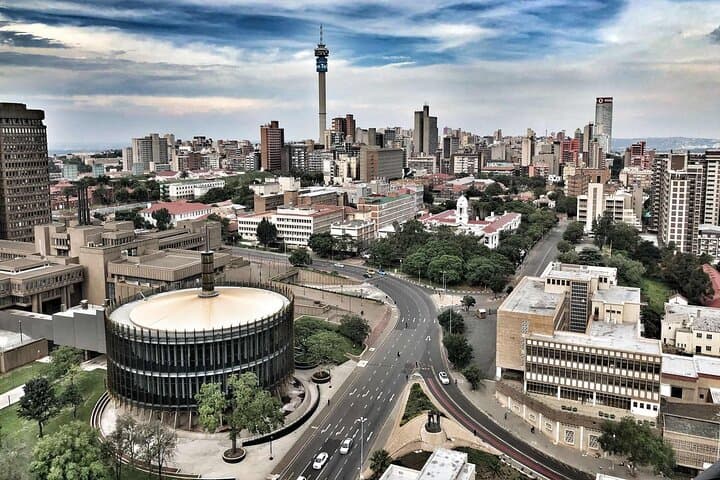
You step out of an air-conditioned minivan into the sharp morning light of Johannesburg CBD, the city’s streets already moving—vendors calling, minibuses threading traffic, and the stone facades of former gold-era buildings holding the warm weight of history.
You step out of an air-conditioned minivan into the sharp morning light of Johannesburg CBD, the city’s streets already moving—vendors calling, minibuses threading traffic, and the stone facades of former gold-era buildings holding the warm weight of history.
The day moves with deliberate contrasts: a walk through Soweto’s Vilakazi Street where Nelson Mandela and Desmond Tutu once lived; the quiet, solemn galleries of the Hector Pieterson Museum that bring the 1976 student uprisings into present tense; and the layered brickwork and barred windows of Constitutional Hill, where a former prison now houses the Constitutional Court.
Geology and urban form are part of the story here—Johannesburg grew on the Witwatersrand ridge after a late-19th-century gold rush, which shaped neighborhoods, transport, and dense settlement patterns. Culture surfaces in informal settlements and township cafés, where township jazz and braaied smells tell as much as any exhibit.
Practical guidance anchors the experience: expect 7–8 hours including seated transfers and several short walks, some on uneven pavements and compacted paths. Bring sun protection, reusable water, and a modest dress code for sacred or official sites. Photography is welcome but respect museum rules and private homes during the township walk.
Timing matters—mornings are cooler and less congested, while afternoons are best for the Apartheid Museum’s immersive exhibits. This is a tour designed to educate and provoke thought as much as to show; let the city’s voices lead and plan for a full day of emotional and intellectual engagement.