THE ADVENTURE COLLECTIVE® · Independent discovery and booking for outdoor travel

Spend a crisp morning on Great Slave Lake: jig fish inside warm tents or a cabin, help with a traditional net pull, and eat freshly fried local fish on the ice. This Yellowknife day trip pairs practical instruction with a true northern winter experience.
Spend a crisp morning on Great Slave Lake: jig fish inside warm tents or a cabin, help with a traditional net pull, and eat freshly fried local fish on the ice. This Yellowknife day trip pairs practical instruction with a true northern winter experience.
The morning air tastes like metal and cedar as you step from the transfer vehicle onto the frozen expanse of Great Slave Lake. A row of warm tents and a low, wood-sided cabin sit against the white horizon; steam rises where fish are being fried on the ice and the wind keeps score.
Verified experiences and guided adventures in the surrounding area.
Operated by Destination NWT Ltd. · Yellowknife, Northwest Territories
The morning air tastes like metal and cedar as you step from the transfer vehicle onto the frozen expanse of Great Slave Lake. A row of warm tents and a low, wood-sided cabin sit against the white horizon; steam rises where fish are being fried on the ice and the wind keeps score.
Great Slave Lake is one of North America’s largest glacial basins, carved by ice sheets and fed by cold northern rivers. The Dene and other Indigenous communities have fished these waters for generations; modern guides blend that living tradition with pragmatic safety and gear. Geologically the lake’s scale means open, flat ice with sudden shelves and pressure ridges—features guides know well.
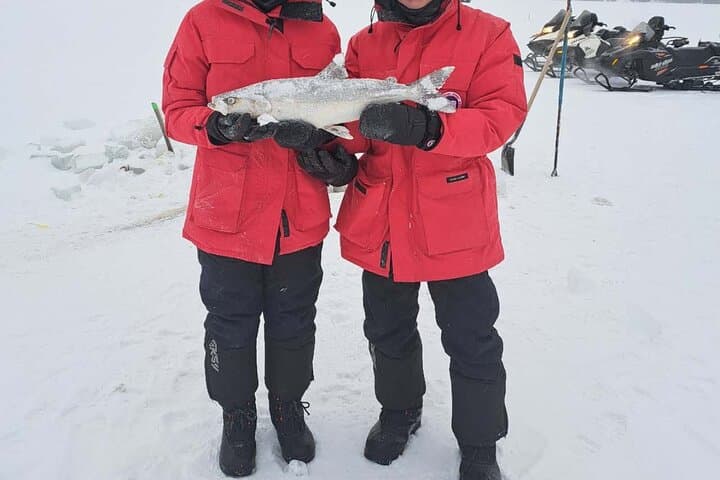
On this 3–4 hour outing, you’ll learn jigging techniques, join a supervised net pull when conditions permit, and sit down to a simple lunch of freshly caught Great Slave Lake fish, potato salad, and a roll cooked on the ice. Between bites try a short snowshoe loop or the classic hot-water mist trick that turns steam into tiny diamonds in the air.
Practical edge: dress in insulated layers, keep electronics warm against the body, and follow the guide’s instructions about where to step—ice changes with currents and near inlets. Rental boots are available, and warm tents/cabin provide a reliable refuge. Expect minimal walking but cold exposure; bring hand warmers and a dry set of clothes for the return. If you want fewer people, book early—slots are limited and the season depends on safe ice thickness from late December to late March.
easy.
3–4 hours.
Suitable for most fitness levels—minimal hiking required but ability to stand and move on uneven ice recommended.
No—this trip is suitable for beginners; guides provide instruction on jigging and supervised net pulls.
Tours can be canceled for unsafe ice or severe weather; cancel at least 24 hours before departure for a full refund per operator policy.
Some operators offer winter boot rentals onsite, but bringing your own well-broken-in insulated boots is recommended.
Children can usually participate if accompanied by adults; check with the operator about age limits and supervision requirements.
The Dene and other First Nations have long fished Great Slave Lake; modern commercial and guided fishing grew with Yellowknife’s mid-20th-century expansion.
Operators follow local guidelines for sustainable catch and release practices and minimize engine and fuel use on the ice; respect waste rules and fish-handling guidance.
Destination NWT Ltd. operates guided outdoor trips and adventures with an emphasis on safety, stewardship, and memorable experiences.
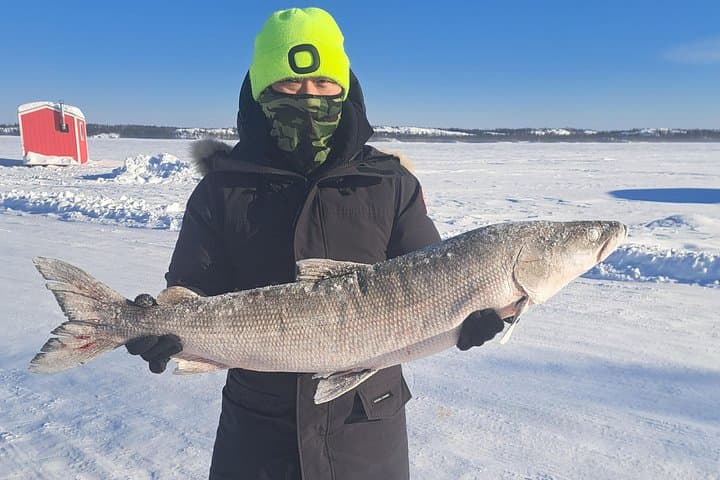
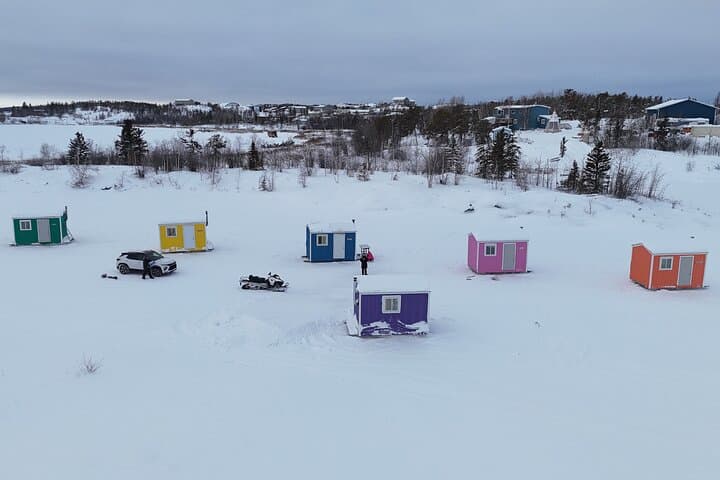
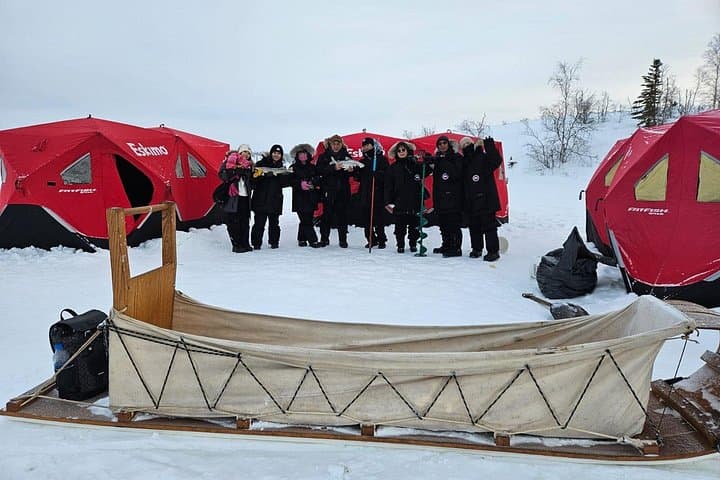
The morning air tastes like metal and cedar as you step from the transfer vehicle onto the frozen expanse of Great Slave Lake. A row of warm tents and a low, wood-sided cabin sit against the white horizon; steam rises where fish are being fried on the ice and the wind keeps score.
The morning air tastes like metal and cedar as you step from the transfer vehicle onto the frozen expanse of Great Slave Lake. A row of warm tents and a low, wood-sided cabin sit against the white horizon; steam rises where fish are being fried on the ice and the wind keeps score.
Great Slave Lake is one of North America’s largest glacial basins, carved by ice sheets and fed by cold northern rivers. The Dene and other Indigenous communities have fished these waters for generations; modern guides blend that living tradition with pragmatic safety and gear. Geologically the lake’s scale means open, flat ice with sudden shelves and pressure ridges—features guides know well.
On this 3–4 hour outing, you’ll learn jigging techniques, join a supervised net pull when conditions permit, and sit down to a simple lunch of freshly caught Great Slave Lake fish, potato salad, and a roll cooked on the ice. Between bites try a short snowshoe loop or the classic hot-water mist trick that turns steam into tiny diamonds in the air.
Practical edge: dress in insulated layers, keep electronics warm against the body, and follow the guide’s instructions about where to step—ice changes with currents and near inlets. Rental boots are available, and warm tents/cabin provide a reliable refuge. Expect minimal walking but cold exposure; bring hand warmers and a dry set of clothes for the return. If you want fewer people, book early—slots are limited and the season depends on safe ice thickness from late December to late March.