THE ADVENTURE COLLECTIVE® · Independent discovery and booking for outdoor travel

Two days of focused exploration across Rapa Nui’s most iconic sites — from the quarry at Rano Raraku to the ceremonial ridge of Orongo. This private tour pairs archaeology, coastal panoramas, and island stories into an efficient, interpretive package.
Two days of focused exploration across Rapa Nui’s most iconic sites — from the quarry at Rano Raraku to the ceremonial ridge of Orongo. This private tour pairs archaeology, coastal panoramas, and island stories into an efficient, interpretive package.
You step off the van and the wind speaks first — a dry, salty breath that pushes across low volcanic ridges while stone faces stare out toward the Pacific. Over two days this private tour threads the island’s major sites into a compact narrative: quarry, ahu, crater, and ceremonial village.
Verified experiences and guided adventures in the surrounding area.
Operated by Easter Island Travel · Hanga Roa, Región de Valparaíso
You step off the van and the wind speaks first — a dry, salty breath that pushes across low volcanic ridges while stone faces stare out toward the Pacific. Over two days this private tour threads the island’s major sites into a compact narrative: quarry, ahu, crater, and ceremonial village.
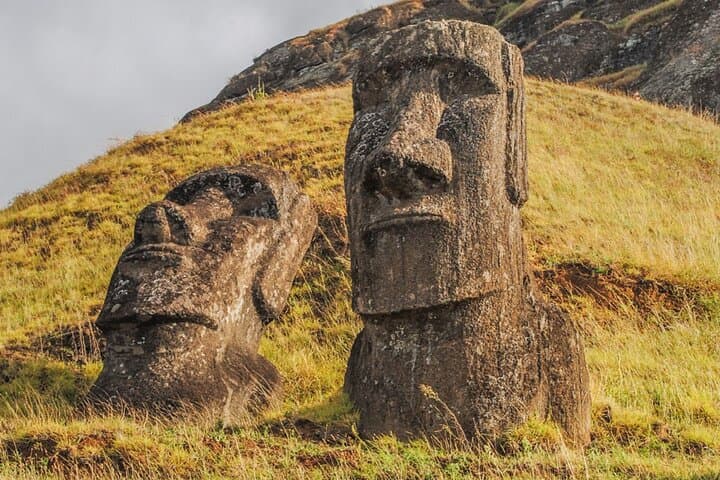
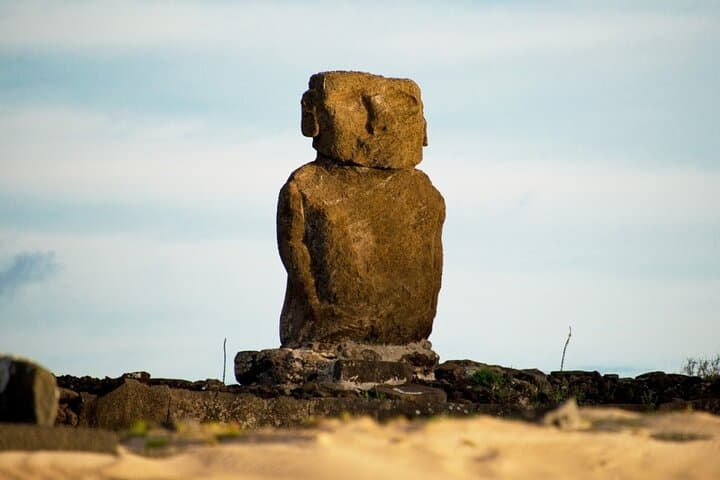
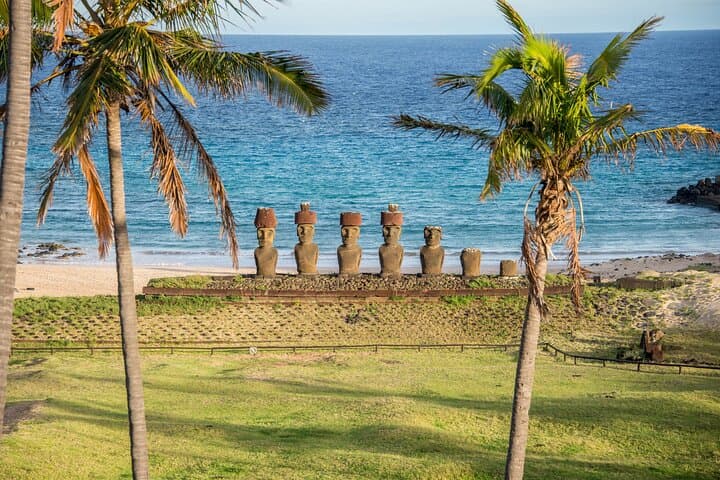
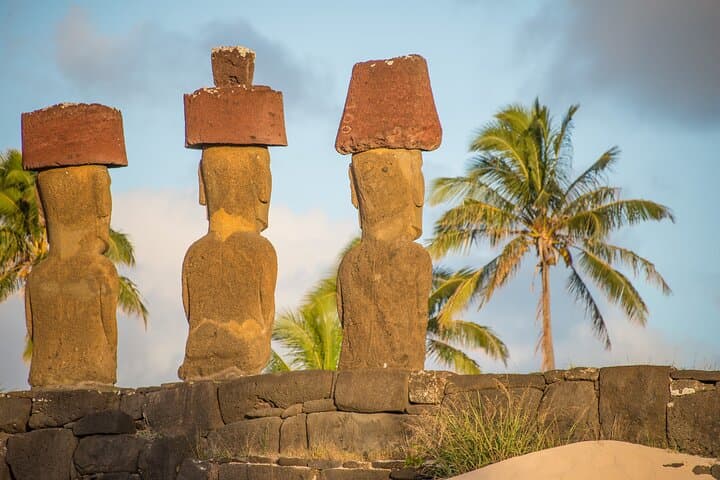
Rapa Nui’s story is visible in its geology and workmanship. Rano Raraku’s cinder slopes reveal where moai were carved from volcanic tuff; Ahu Tongariki’s line of 15 restored moai faces the sea like a coastal guard. Orongo sits on the rim of Rano Kau, a crater once holding freshwater and the stage for the birdman competition — a cultural chapter that reshaped island politics.
Locals blend Polynesian tradition and more recent Chilean influence; Hanga Roa is the place to hear living legends of Hotu Matu’a and to sample ceviche and local seafood.
Practically, expect many short walks on uneven lava and compacted dirt, plus viewpoints with steep drop-offs. Bring sun protection and a light rain layer — weather can flip quickly. Allow time for photos at Anakena and the quarry, but give priority to staying on marked paths to protect fragile archaeology.
The tour is private and guided, with hotel pickup and bottled water included, so it’s ideal for travelers wanting concentrated context without long hikes. Plan for early starts to catch soft light and lighter crowds, and leave space in your schedule to return to Anakena if you want to swim: the island’s rhythm rewards a second look.
easy.
2 days (approx. 8–10 hours per day).
Suitable for most travelers; expect several short walks on uneven ground and brief climbs to viewpoints.
Yes — most archaeological sites are within Rapa Nui National Park and require an entry permit; your guide typically handles logistics or advises you how to purchase one.
No — the itinerary is designed for general mobility with short walks at each stop; however, some uneven ground and steps are common.
Possibly, but the schedule prioritizes archaeological stops; you can request extra time or return independently to swim at Anakena beach.
Some locations have limited accessibility; the tour lists wheelchair accessibility but expect uneven terrain at many ahu and crater viewpoints.
Rapa Nui was settled by East Polynesians (legendary leader Hotu Matu’a) and developed a distinctive megalithic culture centered on moai carving at Rano Raraku, later altered by social change and European contact.
Rapa Nui’s archaeological sites are fragile; visitors should follow marked paths, avoid touching moai, and support local conservation efforts and park fees that fund site protection.
Easter Island Travel operates guided outdoor trips and adventures with an emphasis on safety, stewardship, and memorable experiences.
You step off the van and the wind speaks first — a dry, salty breath that pushes across low volcanic ridges while stone faces stare out toward the Pacific. Over two days this private tour threads the island’s major sites into a compact narrative: quarry, ahu, crater, and ceremonial village.
You step off the van and the wind speaks first — a dry, salty breath that pushes across low volcanic ridges while stone faces stare out toward the Pacific. Over two days this private tour threads the island’s major sites into a compact narrative: quarry, ahu, crater, and ceremonial village.
Rapa Nui’s story is visible in its geology and workmanship. Rano Raraku’s cinder slopes reveal where moai were carved from volcanic tuff; Ahu Tongariki’s line of 15 restored moai faces the sea like a coastal guard. Orongo sits on the rim of Rano Kau, a crater once holding freshwater and the stage for the birdman competition — a cultural chapter that reshaped island politics.
Locals blend Polynesian tradition and more recent Chilean influence; Hanga Roa is the place to hear living legends of Hotu Matu’a and to sample ceviche and local seafood.
Practically, expect many short walks on uneven lava and compacted dirt, plus viewpoints with steep drop-offs. Bring sun protection and a light rain layer — weather can flip quickly. Allow time for photos at Anakena and the quarry, but give priority to staying on marked paths to protect fragile archaeology.
The tour is private and guided, with hotel pickup and bottled water included, so it’s ideal for travelers wanting concentrated context without long hikes. Plan for early starts to catch soft light and lighter crowds, and leave space in your schedule to return to Anakena if you want to swim: the island’s rhythm rewards a second look.