THE ADVENTURE COLLECTIVE® · Independent discovery and booking for outdoor travel

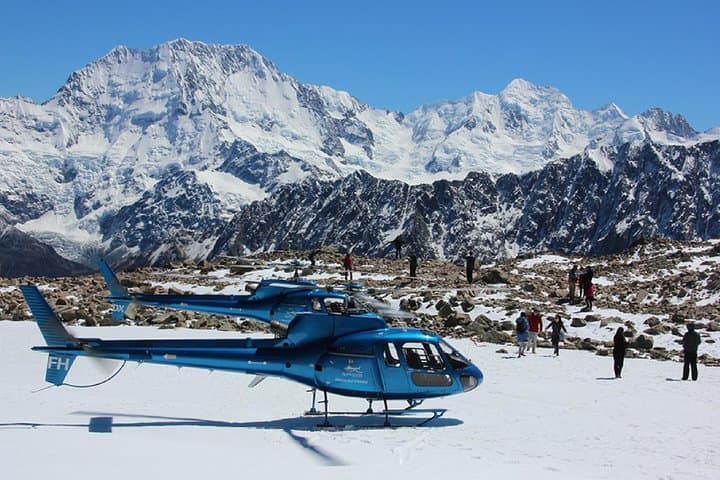
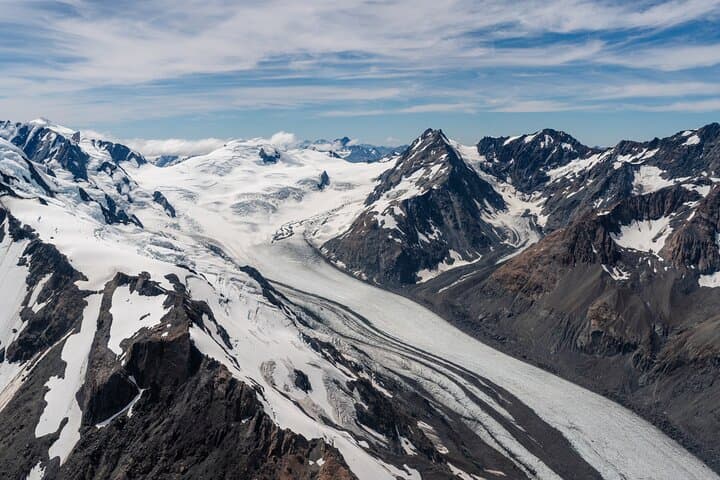
A 45-minute helicopter flight from Franz Josef that flies over Franz Josef, Fox and Tasman Glaciers with a 10–15 minute snow landing for photos. Expect dramatic aerial views, quick landings on stable snowfields, and weather-dependent scheduling.
A 45-minute helicopter flight from Franz Josef that flies over Franz Josef, Fox and Tasman Glaciers with a 10–15 minute snow landing for photos. Expect dramatic aerial views, quick landings on stable snowfields, and weather-dependent scheduling.
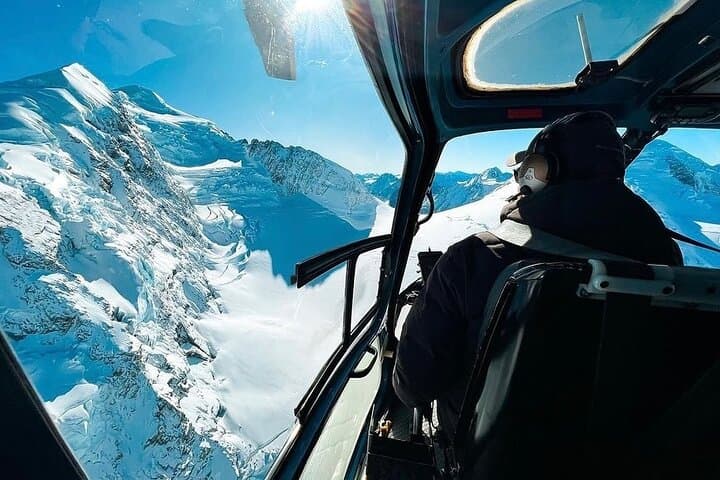
The helicopter rises over wet rainforest, rotors cutting a cold Pacific wind as the Southern Alps unroll in front of you. Ice fields glint like weathered mirrors; rivers of blue-white snake from mountaintops to lowland valleys. The pilot banks and the three great glaciers—Franz Josef, Fox and Tasman—come into view, each a living glacier with crevassed shoulders and moulins that seem to breathe.
Verified experiences and guided adventures in the surrounding area.
Operated by Glacier Country Helicopters · Franz Josef, West Coast
The helicopter rises over wet rainforest, rotors cutting a cold Pacific wind as the Southern Alps unroll in front of you. Ice fields glint like weathered mirrors; rivers of blue-white snake from mountaintops to lowland valleys. The pilot banks and the three great glaciers—Franz Josef, Fox and Tasman—come into view, each a living glacier with crevassed shoulders and moulins that seem to breathe.
European explorers named these giants in the 19th century, but Māori had long known and navigated the valleys carved by advancing ice. Geologically the glaciers are tongues of the Southern Alps, sculpted by uplift and carving valleys through schist and greywacke. In recent decades they’ve retreated, a visible record of shifting climate and changing weather patterns that now shapes how and where landings are permitted.
Culturally Franz Josef village is a small, service-led community on the West Coast, built around guiding visitors into alpine country. Local pilots combine technical flying with mountain awareness; the 10–15 minute snow landing is planned for stable weather windows and flat, safe snowfields.
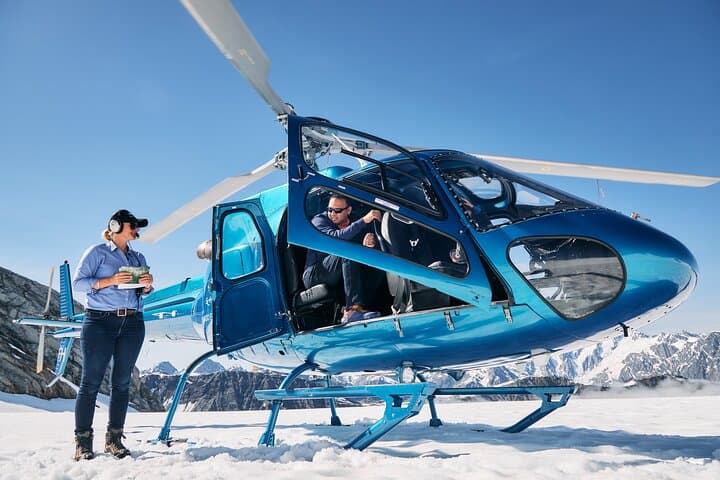
Practical guide: arrive 30 minutes early and allow up to 90 minutes total for check-in and transfers. Expect cold wind on the landing; dress in layers, wear sturdy, water-resistant shoes, and bring a camera with a quick-access strap. Passengers over 120kg may need a comfort seat—weight checks are routine for safety and load balance. Weather can cancel flights; the operator will refund if the flight is grounded. For photographers, a polarizing filter tames glare; for families, note the ladder-style boarding steps and advise mobility-limited guests ahead of booking.
easy.
45–90 minutes.
Suitable for most fitness levels; must be able to climb two high ladder-style steps to board and follow safety briefings.
Flight time over the glaciers is about 45 minutes total; the snow landing lasts roughly 10–15 minutes. Allow additional time for check-in and transfers.
Flights are weather-dependent; you can get a full refund if cancelled at least 24 hours before departure or if grounded due to conditions.
Passengers over 120kg may need a comfort seat and all guests must climb two ladder-style steps; notify the operator of mobility issues at booking so they can advise on helicopter type.
Yes—front seat and executive upgrades or comfort seats can be requested at least 24 hours before the flight (contact operator to confirm availability).
European surveyors named many landmarks in the 1800s, but Māori oral history and place names predate those labels; glaciers shaped local travel and resource use for centuries.
Operators follow landing restrictions to protect fragile snowfields and minimize noise. The glaciers are in measurable retreat—visitors are encouraged to travel with low-impact practices and respect marked areas.
Glacier Country Helicopters operates guided outdoor trips and adventures with an emphasis on safety, stewardship, and memorable experiences.
The helicopter rises over wet rainforest, rotors cutting a cold Pacific wind as the Southern Alps unroll in front of you. Ice fields glint like weathered mirrors; rivers of blue-white snake from mountaintops to lowland valleys. The pilot banks and the three great glaciers—Franz Josef, Fox and Tasman—come into view, each a living glacier with crevassed shoulders and moulins that seem to breathe.
The helicopter rises over wet rainforest, rotors cutting a cold Pacific wind as the Southern Alps unroll in front of you. Ice fields glint like weathered mirrors; rivers of blue-white snake from mountaintops to lowland valleys. The pilot banks and the three great glaciers—Franz Josef, Fox and Tasman—come into view, each a living glacier with crevassed shoulders and moulins that seem to breathe.
European explorers named these giants in the 19th century, but Māori had long known and navigated the valleys carved by advancing ice. Geologically the glaciers are tongues of the Southern Alps, sculpted by uplift and carving valleys through schist and greywacke. In recent decades they’ve retreated, a visible record of shifting climate and changing weather patterns that now shapes how and where landings are permitted.
Culturally Franz Josef village is a small, service-led community on the West Coast, built around guiding visitors into alpine country. Local pilots combine technical flying with mountain awareness; the 10–15 minute snow landing is planned for stable weather windows and flat, safe snowfields.
Practical guide: arrive 30 minutes early and allow up to 90 minutes total for check-in and transfers. Expect cold wind on the landing; dress in layers, wear sturdy, water-resistant shoes, and bring a camera with a quick-access strap. Passengers over 120kg may need a comfort seat—weight checks are routine for safety and load balance. Weather can cancel flights; the operator will refund if the flight is grounded. For photographers, a polarizing filter tames glare; for families, note the ladder-style boarding steps and advise mobility-limited guests ahead of booking.