THE ADVENTURE COLLECTIVE® · Independent discovery and booking for outdoor travel

Watch Angkor Wat catch dawn and move from the reflective calm of the moat into stone galleries where trees press through lintels. This two-day guided run covers sunrise at Angkor Wat, Ta Prohm’s root-choked corridors, Beng Mealea’s jungle-carved ruins and a Tonle Sap floating village.
Watch Angkor Wat catch dawn and move from the reflective calm of the moat into stone galleries where trees press through lintels. This two-day guided run covers sunrise at Angkor Wat, Ta Prohm’s root-choked corridors, Beng Mealea’s jungle-carved ruins and a Tonle Sap floating village.
You arrive before dawn, the moat glassy and cool, as a thin ribbon of light lifts behind Angkor Wat’s five towers. Your guide points out the ready viewpoints; voices murmur in a half-dark of cameras and prayers. The sunrise here doesn’t just change the sky — it wakes a thousand-year-old city carved from sandstone.
Verified experiences and guided adventures in the surrounding area.
Operated by Angkor 𝐓𝐫𝐚𝐯𝐞𝐥 𝐆𝐮𝐢𝐝𝐞 · Siem Reap, Siem Reap Province
You arrive before dawn, the moat glassy and cool, as a thin ribbon of light lifts behind Angkor Wat’s five towers. Your guide points out the ready viewpoints; voices murmur in a half-dark of cameras and prayers. The sunrise here doesn’t just change the sky — it wakes a thousand-year-old city carved from sandstone.
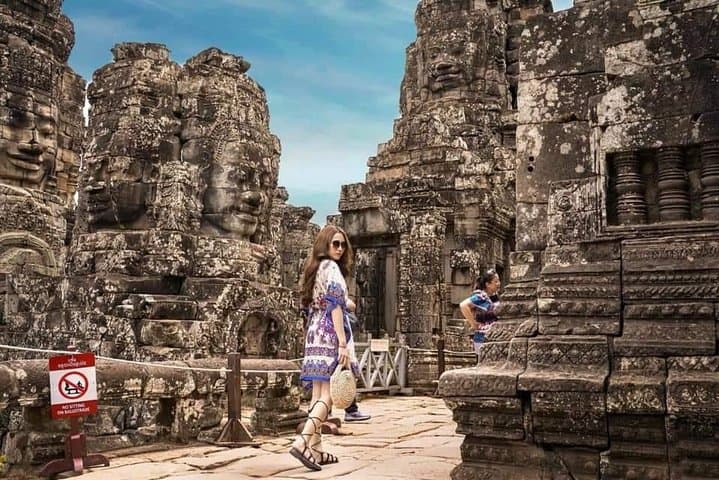
The Angkor complex is the heart of the Khmer Empire (9th–15th centuries). Angkor Wat itself dates to the 12th century and was designed as a cosmological mountain and reservoir system; nearby Ta Prohm still reads like a chapter where trees claim architecture back, roots threading through lintels. On day one this tour heads beyond the main circuit to Beng Mealea — a ‘jungle temple’ whose collapsed galleries give a freer, wilder sense of how these sites weather time. You’ll also boat through Kampong Phluk’s stilt villages on the Tonle Sap, where tides and fishing rhythms shape daily life.
Practical edge: the itinerary starts before 5:00 a.m. to catch the sunrise, so expect early wake-ups, long walking days and uneven stones. Buy an Angkor pass on arrival (1-, 2-, or 3-day options), dress modestly for sacred sites, carry cash (USD widely accepted), and bring a refillable water bottle, sun protection and a light rain layer in wet months. Guides here split historical detail with route-smarts — follow their timing to avoid midday crowds and to see the temples at their most elemental.
moderate.
2 days (full-day activities each day).
Suitable for average fitness; expect several hours of walking on uneven stones and some stairs
No — the tour does not include the Angkor pass; guides will stop at the ticket center so you can buy a 1-, 2- or 3-day pass (passport required, USD commonly used).
Pickup is typically before 5:00 a.m. (the operator lists a 4:40 a.m. meeting time) to reach Angkor Wat for sunrise and to beat the heat and crowds.
Some areas and paths are accessible and the provider lists wheelchair-accessible options, but many temple interiors have steps and uneven walkways—check specific accessibility needs in advance.
USD is widely accepted; carry small denominations for vendors. Tipping guides and drivers is appreciated—consider a small amount per day depending on service.
Angkor was the capital of the Khmer Empire from roughly the 9th to 15th centuries; Angkor Wat was built in the 12th century as a Hindu–and later Buddhist–temple complex.
High visitor numbers stress fragile sandstone and root systems; stick to marked paths, avoid climbing on carvings and support local conservation initiatives and community-run projects.
Angkor 𝐓𝐫𝐚𝐯𝐞𝐥 𝐆𝐮𝐢𝐝𝐞 operates guided outdoor trips and adventures with an emphasis on safety, stewardship, and memorable experiences.
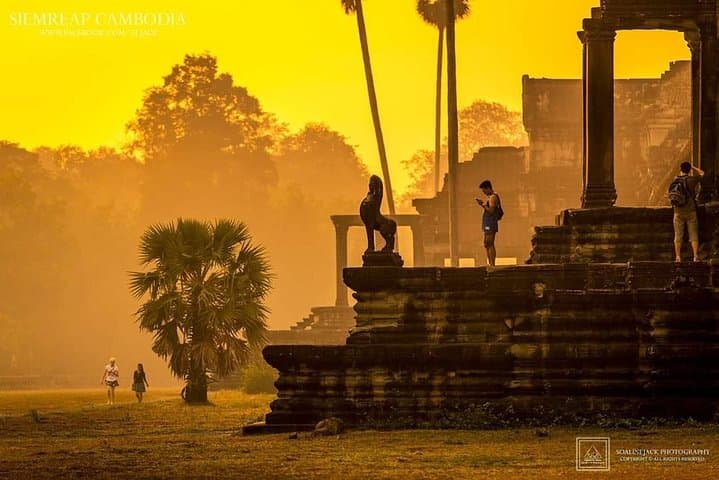
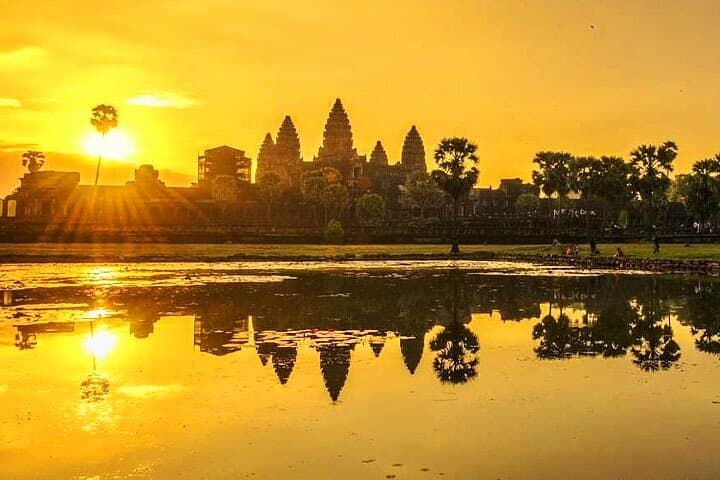
You arrive before dawn, the moat glassy and cool, as a thin ribbon of light lifts behind Angkor Wat’s five towers. Your guide points out the ready viewpoints; voices murmur in a half-dark of cameras and prayers. The sunrise here doesn’t just change the sky — it wakes a thousand-year-old city carved from sandstone.
You arrive before dawn, the moat glassy and cool, as a thin ribbon of light lifts behind Angkor Wat’s five towers. Your guide points out the ready viewpoints; voices murmur in a half-dark of cameras and prayers. The sunrise here doesn’t just change the sky — it wakes a thousand-year-old city carved from sandstone.
The Angkor complex is the heart of the Khmer Empire (9th–15th centuries). Angkor Wat itself dates to the 12th century and was designed as a cosmological mountain and reservoir system; nearby Ta Prohm still reads like a chapter where trees claim architecture back, roots threading through lintels. On day one this tour heads beyond the main circuit to Beng Mealea — a ‘jungle temple’ whose collapsed galleries give a freer, wilder sense of how these sites weather time. You’ll also boat through Kampong Phluk’s stilt villages on the Tonle Sap, where tides and fishing rhythms shape daily life.
Practical edge: the itinerary starts before 5:00 a.m. to catch the sunrise, so expect early wake-ups, long walking days and uneven stones. Buy an Angkor pass on arrival (1-, 2-, or 3-day options), dress modestly for sacred sites, carry cash (USD widely accepted), and bring a refillable water bottle, sun protection and a light rain layer in wet months. Guides here split historical detail with route-smarts — follow their timing to avoid midday crowds and to see the temples at their most elemental.