THE ADVENTURE COLLECTIVE® · Independent discovery and booking for outdoor travel

A day trip from Seoul to Ulsanbawi in Seoraksan National Park: climb stone stairs and exposed granite slabs to reach dramatic coastal views, visit Sinheungsa temple, and finish with Sokcho’s seafood market. Practical, scenic, and achievable for fit beginners.
A day trip from Seoul to Ulsanbawi in Seoraksan National Park: climb stone stairs and exposed granite slabs to reach dramatic coastal views, visit Sinheungsa temple, and finish with Sokcho’s seafood market. Practical, scenic, and achievable for fit beginners.
You step off the minivan into cold, pine-scented air and stare at a spine of granite slicing the skyline — that’s Ulsanbawi, one of Seoraksan’s most recognizable formations. The trail starts in a cathedral of conifers, then opens onto staircases and exposed slabs that demand steady footing and quiet attention.
Verified experiences and guided adventures in the surrounding area.
Operated by Outdoors Korea · Sokcho, Gangwon-do
You step off the minivan into cold, pine-scented air and stare at a spine of granite slicing the skyline — that’s Ulsanbawi, one of Seoraksan’s most recognizable formations. The trail starts in a cathedral of conifers, then opens onto staircases and exposed slabs that demand steady footing and quiet attention.
Seoraksan sits on the eastern edge of the Korean Peninsula, carved by ancient tectonics and glaciation that left sheer cliffs, pointed spires and narrow ridgelines. The park’s human story is visible in the bronze Buddha at Sinheungsa, a reminder of centuries of mountain Buddhism and local pilgrimage. Nearby Sokcho’s fish market reflects a coastal culture that has long fed climbers and travelers.
Expect a mixed day: 4–5 hours on the trail to Ulsanbawi’s summit outcrops, plus 2–3 hours for driving from Seoul each way. Terrain alternates sheltered forest tread, stone steps, and exposed rock with fixed chains in places; elevation gain is moderate to steep in sections. Photos of the Ulsanbawi stacks and distant East Sea are earned by effort — the final scramble rewards with sweeping angles over valleys and jagged peaks.
Practical notes: start early to avoid crowds, wear sturdy boots and layers for changing wind and sun, and carry 2–3 liters of water. Guides commonly combine the hike with a stop at Sinheungsa and Sokcho market, so factor in time for short cultural detours. Respect signage, pack out waste, and be ready for steep stairs — the rock will test your legs and your sense of calm in equal measure.
moderate.
8–11 hours (including transport from Seoul).
Good cardiovascular fitness and comfort with sustained stair-climbing and short scrambles
The hiking portion to Ulsanbawi and back typically takes about 4–5 hours round-trip depending on pace and stops.
Physically fit beginners with experience on stairs and uneven terrain can complete it, but expect steep sections and short scrambles.
A guide isn’t required but a mountain expert adds local history, route insights and handles logistics like park permits and timing.
Yes — most tours include Sinheungsa temple and a visit to Sokcho’s fish market; additional stops like Osaek are possible with extra time.
Seoraksan was designated a national park in the 20th century and holds centuries of mountain Buddhist practice centered on temples like Sinheungsa.
Stick to marked trails to reduce erosion, avoid feeding wildlife, and carry out trash; visitor fees and regulations fund park maintenance and protection.
Outdoors Korea operates guided outdoor trips and adventures with an emphasis on safety, stewardship, and memorable experiences.
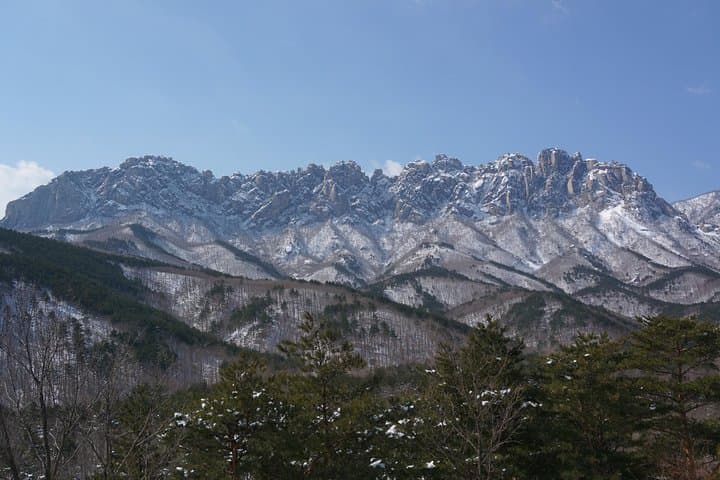


You step off the minivan into cold, pine-scented air and stare at a spine of granite slicing the skyline — that’s Ulsanbawi, one of Seoraksan’s most recognizable formations. The trail starts in a cathedral of conifers, then opens onto staircases and exposed slabs that demand steady footing and quiet attention.
You step off the minivan into cold, pine-scented air and stare at a spine of granite slicing the skyline — that’s Ulsanbawi, one of Seoraksan’s most recognizable formations. The trail starts in a cathedral of conifers, then opens onto staircases and exposed slabs that demand steady footing and quiet attention.
Seoraksan sits on the eastern edge of the Korean Peninsula, carved by ancient tectonics and glaciation that left sheer cliffs, pointed spires and narrow ridgelines. The park’s human story is visible in the bronze Buddha at Sinheungsa, a reminder of centuries of mountain Buddhism and local pilgrimage. Nearby Sokcho’s fish market reflects a coastal culture that has long fed climbers and travelers.
Expect a mixed day: 4–5 hours on the trail to Ulsanbawi’s summit outcrops, plus 2–3 hours for driving from Seoul each way. Terrain alternates sheltered forest tread, stone steps, and exposed rock with fixed chains in places; elevation gain is moderate to steep in sections. Photos of the Ulsanbawi stacks and distant East Sea are earned by effort — the final scramble rewards with sweeping angles over valleys and jagged peaks.
Practical notes: start early to avoid crowds, wear sturdy boots and layers for changing wind and sun, and carry 2–3 liters of water. Guides commonly combine the hike with a stop at Sinheungsa and Sokcho market, so factor in time for short cultural detours. Respect signage, pack out waste, and be ready for steep stairs — the rock will test your legs and your sense of calm in equal measure.