THE ADVENTURE COLLECTIVE® · Independent discovery and booking for outdoor travel

Experience Ulsan’s surprising contrasts on a private full-day tour from Busan: glow-in-the-dark amethyst caverns, a riverine bamboo grove, windswept coastal rock formations, and hands-on pottery at a centuries-old village.
Experience Ulsan’s surprising contrasts on a private full-day tour from Busan: glow-in-the-dark amethyst caverns, a riverine bamboo grove, windswept coastal rock formations, and hands-on pottery at a centuries-old village.
You step out of an air-conditioned car and into a different Korea — cool stone hush from an amethyst cave, a corridor of bamboo that whispers above the Taehwa River, and wind-swept pines clinging to black volcanic rock by the sea.
Verified experiences and guided adventures in the surrounding area.
Operated by Korea Go Tours · Ulsan, Ulsan
You step out of an air-conditioned car and into a different Korea — cool stone hush from an amethyst cave, a corridor of bamboo that whispers above the Taehwa River, and wind-swept pines clinging to black volcanic rock by the sea.
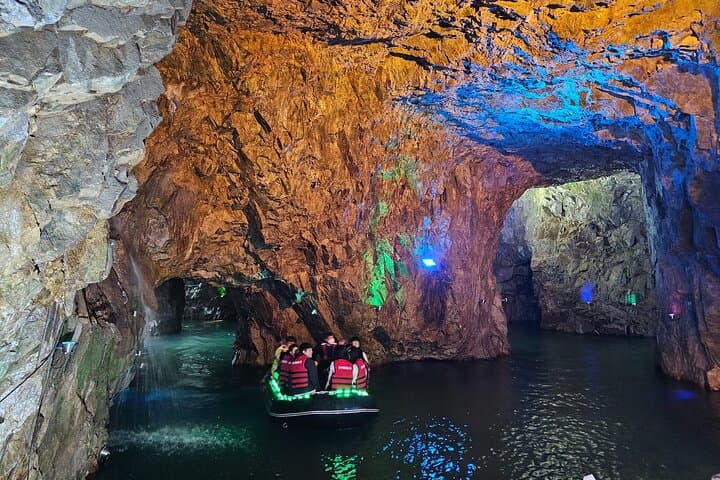
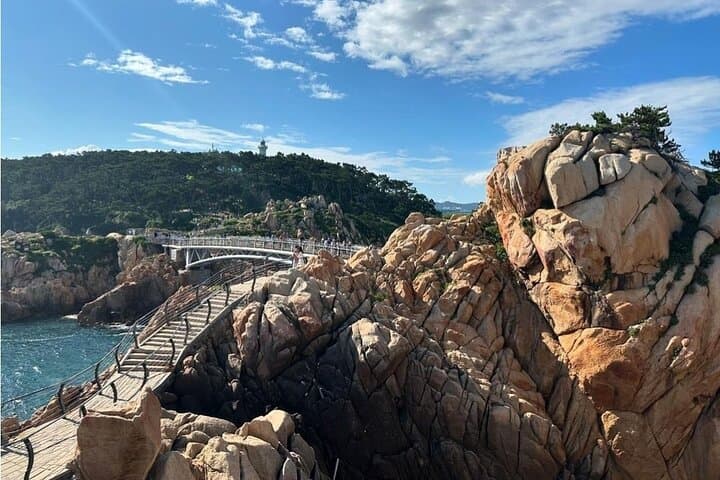
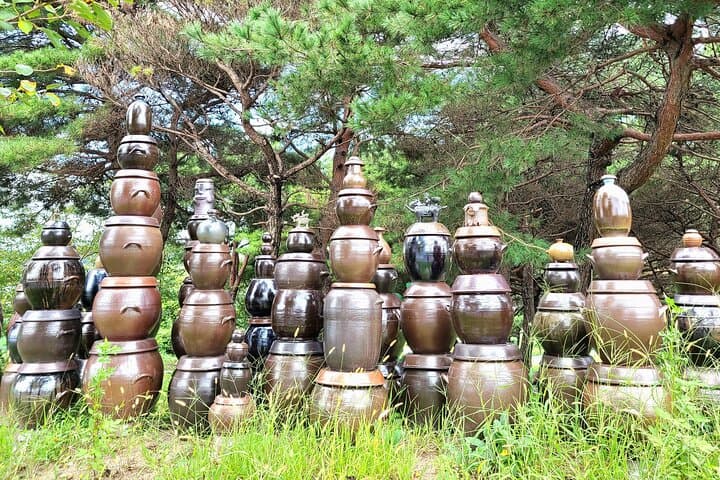
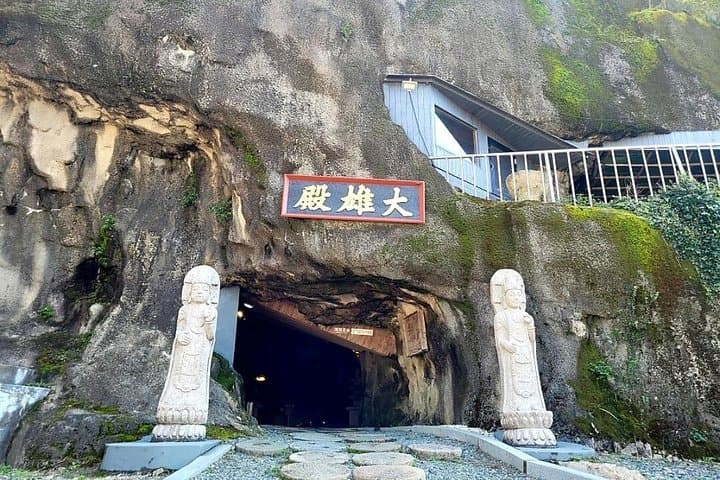
The route stitches industrial Ulsan’s coastal history with older cultural layers. Amethyst Cavern World occupies a former mine; its 2.5 km underground passages hold galleries, a small boat ride, and a consistent 12–16°C climate. Songunsa Temple repurposed mining chambers into East Asia’s largest cave temple, where crystal-lined walls refract quiet light. Taehwagang’s Simnidaesup runs roughly 4.3 km along the river and showcases riparian ecology framed by towering bamboo. Daewangam Park balances folklore and geology — granite outcrops, a metal causeway, and century-old pines set against the East Sea. Oegosan Onggi Village provides a tactile finish: local potters shaping earthenware by hand using techniques sustained for centuries.
Practical guidance: the full loop is a private, 9-hour day with short, flat walks at each stop; expect multiple short transfers by vehicle and time for a sit-down lunch. Wear sturdy walking shoes and a light jacket for the cave’s steady coolness. Summer can be humid; mornings and late afternoons offer better light for photos at Daewangam. Bring cash for small pottery experiences and modest entrance fees. Guides handle navigation and parking, but carry water, a charged phone, and basic layers to stay comfortable through shifting coastal breezes.
easy.
9 hours.
Light fitness needed: short walks (10–20 minutes) at each site with mainly flat terrain; suitable for most travelers.
This is a private 9-hour tour including an air-conditioned vehicle, certified guide, pickup and drop-off, and time at five main sites; admission fees may vary by attraction.
Yes; the cave has calm walkways and a short boat ride suitable for families, but infants should be supervised due to low lighting and damp surfaces.
Bring some Korean won for pottery experiences, souvenirs, and small purchases—cards are accepted at larger sites but smaller vendors may be cash-only.
Guides can arrange lunch stops and accommodate most dietary requests if informed at booking; carry snacks if you have strict dietary requirements.
Ulsan blends its industrial role as a modern port with older Silla-era legends; Daewangam’s folklore connects the coast to Queen Jaui and regional myth, while the amethyst sites reflect local mining history.
Local authorities maintain the Taehwagang bamboo corridor and Daewangam coastal paths to limit erosion and protect native plantings; visitors are asked to stick to paths and avoid removing natural materials.
Korea Go Tours operates guided outdoor trips and adventures with an emphasis on safety, stewardship, and memorable experiences.
You step out of an air-conditioned car and into a different Korea — cool stone hush from an amethyst cave, a corridor of bamboo that whispers above the Taehwa River, and wind-swept pines clinging to black volcanic rock by the sea.
You step out of an air-conditioned car and into a different Korea — cool stone hush from an amethyst cave, a corridor of bamboo that whispers above the Taehwa River, and wind-swept pines clinging to black volcanic rock by the sea.
The route stitches industrial Ulsan’s coastal history with older cultural layers. Amethyst Cavern World occupies a former mine; its 2.5 km underground passages hold galleries, a small boat ride, and a consistent 12–16°C climate. Songunsa Temple repurposed mining chambers into East Asia’s largest cave temple, where crystal-lined walls refract quiet light. Taehwagang’s Simnidaesup runs roughly 4.3 km along the river and showcases riparian ecology framed by towering bamboo. Daewangam Park balances folklore and geology — granite outcrops, a metal causeway, and century-old pines set against the East Sea. Oegosan Onggi Village provides a tactile finish: local potters shaping earthenware by hand using techniques sustained for centuries.
Practical guidance: the full loop is a private, 9-hour day with short, flat walks at each stop; expect multiple short transfers by vehicle and time for a sit-down lunch. Wear sturdy walking shoes and a light jacket for the cave’s steady coolness. Summer can be humid; mornings and late afternoons offer better light for photos at Daewangam. Bring cash for small pottery experiences and modest entrance fees. Guides handle navigation and parking, but carry water, a charged phone, and basic layers to stay comfortable through shifting coastal breezes.