THE ADVENTURE COLLECTIVE® · Independent discovery and booking for outdoor travel

Climb Phnom Oudong to visit royal stupas, a grand relic stupa and sweeping views over rice paddies — a six‑hour outing from Phnom Penh that mixes Cambodian history, meditation and village culture.
Climb Phnom Oudong to visit royal stupas, a grand relic stupa and sweeping views over rice paddies — a six‑hour outing from Phnom Penh that mixes Cambodian history, meditation and village culture.
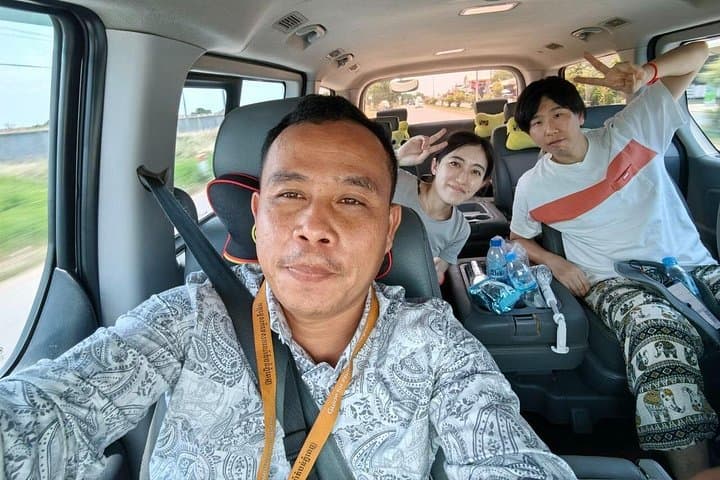
You step off the air-conditioned van where the road meets the hill and the low ridge of Phnom Oudong rises ahead — a sharp green spine above flat rice paddies. The climb from the back of the ridge pushes through tree-shaded terraces; the descent follows the 509-step stairway, a rhythmic measure of the hill's long human use.
Verified experiences and guided adventures in the surrounding area.
Operated by The Killing Field and S21 Genocide Tour · Oudong, Kandal
You step off the air-conditioned van where the road meets the hill and the low ridge of Phnom Oudong rises ahead — a sharp green spine above flat rice paddies. The climb from the back of the ridge pushes through tree-shaded terraces; the descent follows the 509-step stairway, a rhythmic measure of the hill's long human use.
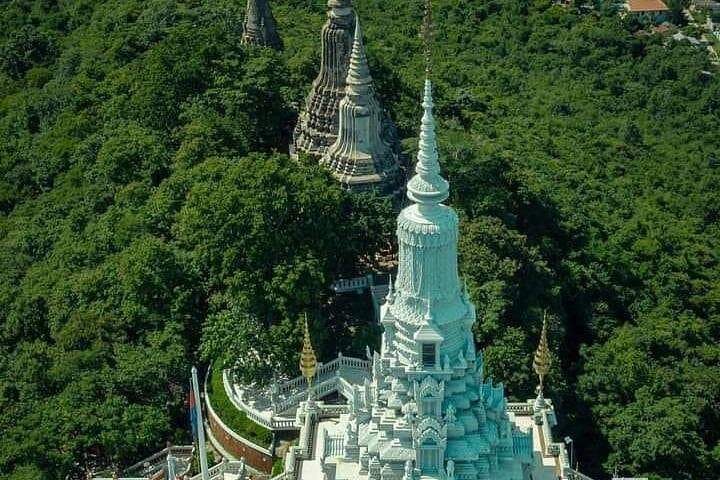
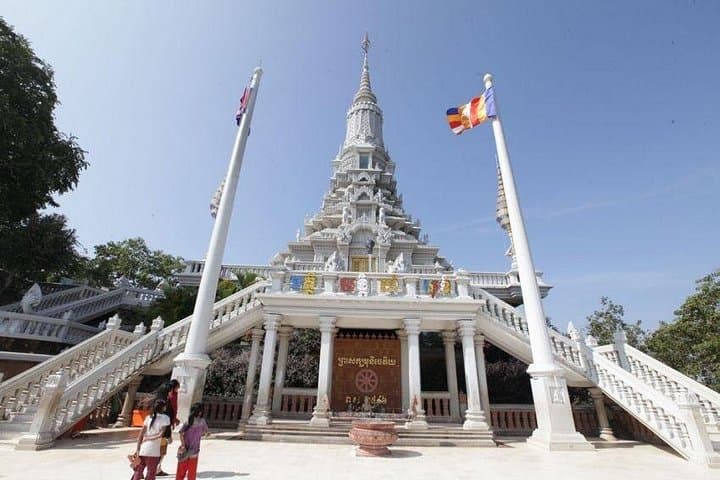
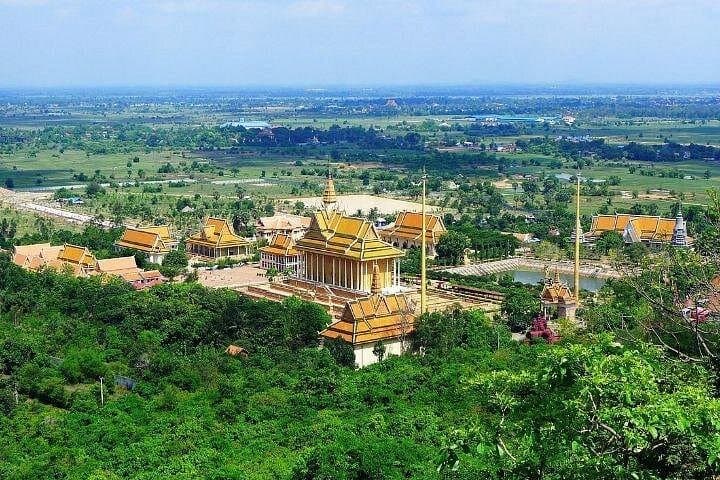
Udong was Cambodia's capital for roughly 250 years before 1866, and the ridge still wears that history in stone: royal stupas, weathered memorials and a grand stupa that houses a Buddha relic. The route threads between recent temple structures and older reliquaries, passing monks and worshippers pausing at small shrines. From the summit the plains spread out — an open patchwork of irrigated fields and distant waters where the Tonle Sap River bends and dares the horizon.
Geologically the hill reads as a modest high point on a broad floodplain, giving a concentrated vantage that’s more about view than altitude. Culture is immediate here: you can join a guided blessing or a short introduction to Vipassana meditation at the Dhurak centre, and encounter playful macaques on the descent.
Practical guidance: allow six hours for transport, time on-site and a village visit afterward. Wear sturdy shoes for the uneven steps, bring sun protection and insect repellent, and carry water — bottled water is usually provided. Respect temple etiquette (cover shoulders and knees, remove shoes inside shrines) and keep a calm distance from monkeys. Morning light is best for photography and cooler climbing conditions.
moderate.
6 hours.
Suitable for travelers in average fitness; expect a sustained climb and a long stair descent so basic cardio and knee stability help.
The standard excursion is about six hours total and typically includes hotel pickup, an English-speaking guide, bottled water, snacks, and admission to the sites visited.
Yes — the descent uses a 509-step stairway; the climb from the back ridge is less formal but involves uneven ground. It’s manageable for most people who can walk moderate distances.
You may encounter macaques on the lower slopes and small birds around the trees; keep a respectful distance and secure loose items from monkeys.
Yes. Tours commonly pick up travelers in Phnom Penh — confirm your pickup point when booking since timing depends on traffic.
Udong (Phnom Oudong) served as Cambodia’s royal capital for roughly 250 years until French advisors encouraged moving the capital to Phnom Penh in 1866; royal stupas on the ridge mark that era.
Visitors should stay on paths and avoid feeding wildlife; local communities rely on respectful tourism and conservation of temple grounds and surrounding rice fields.
The Killing Field and S21 Genocide Tour operates guided outdoor trips and adventures with an emphasis on safety, stewardship, and memorable experiences.
You step off the air-conditioned van where the road meets the hill and the low ridge of Phnom Oudong rises ahead — a sharp green spine above flat rice paddies. The climb from the back of the ridge pushes through tree-shaded terraces; the descent follows the 509-step stairway, a rhythmic measure of the hill's long human use.
You step off the air-conditioned van where the road meets the hill and the low ridge of Phnom Oudong rises ahead — a sharp green spine above flat rice paddies. The climb from the back of the ridge pushes through tree-shaded terraces; the descent follows the 509-step stairway, a rhythmic measure of the hill's long human use.
Udong was Cambodia's capital for roughly 250 years before 1866, and the ridge still wears that history in stone: royal stupas, weathered memorials and a grand stupa that houses a Buddha relic. The route threads between recent temple structures and older reliquaries, passing monks and worshippers pausing at small shrines. From the summit the plains spread out — an open patchwork of irrigated fields and distant waters where the Tonle Sap River bends and dares the horizon.
Geologically the hill reads as a modest high point on a broad floodplain, giving a concentrated vantage that’s more about view than altitude. Culture is immediate here: you can join a guided blessing or a short introduction to Vipassana meditation at the Dhurak centre, and encounter playful macaques on the descent.
Practical guidance: allow six hours for transport, time on-site and a village visit afterward. Wear sturdy shoes for the uneven steps, bring sun protection and insect repellent, and carry water — bottled water is usually provided. Respect temple etiquette (cover shoulders and knees, remove shoes inside shrines) and keep a calm distance from monkeys. Morning light is best for photography and cooler climbing conditions.