THE ADVENTURE COLLECTIVE® · Independent discovery and booking for outdoor travel

Walk four hours into Kandy’s urban forest and exchange city noise for layered bird song and stone-lined trails. This guided hike traces ancient monastic caves, endemic orchids, and a compact but biodiverse canopy — ideal for birders and curious walkers.
Walk four hours into Kandy’s urban forest and exchange city noise for layered bird song and stone-lined trails. This guided hike traces ancient monastic caves, endemic orchids, and a compact but biodiverse canopy — ideal for birders and curious walkers.
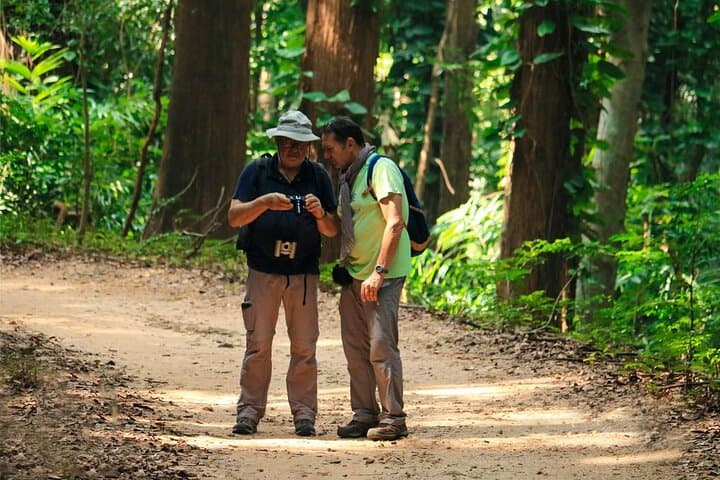
You step off the city street and the air changes — cooler, damp, threaded with bird calls. A stone avenue slopes into green; roots and flagstones lead you beneath a compact canopy that seems to lean in and watch. Morning light filters in columns and the forest answers with distant calls of parrots and kingfishers.
Verified experiences and guided adventures in the surrounding area.
Operated by Lakpura LLC · Kandy, Central Province
You step off the city street and the air changes — cooler, damp, threaded with bird calls. A stone avenue slopes into green; roots and flagstones lead you beneath a compact canopy that seems to lean in and watch. Morning light filters in columns and the forest answers with distant calls of parrots and kingfishers.
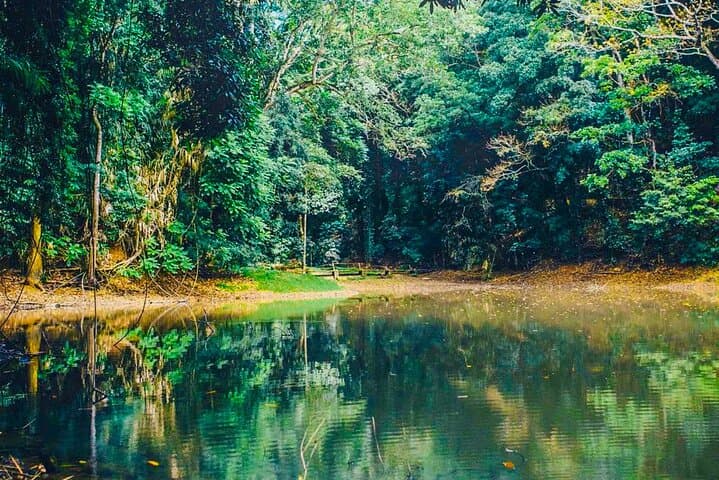
Udawattakele occupies roughly 104 hectares above Kandy Lake, a remnant of the Kandyan Kingdom’s private pleasure gardens and later a religious retreat. Geologically it sits on weathered Precambrian rock, carved into shelves and low ridgelines that channel small streams. Cultural traces are visible: rock-cut caves once inhabited by Buddhist monks, trail walls built from old garden stones, and occasional temple ruins that speak to centuries of local use.
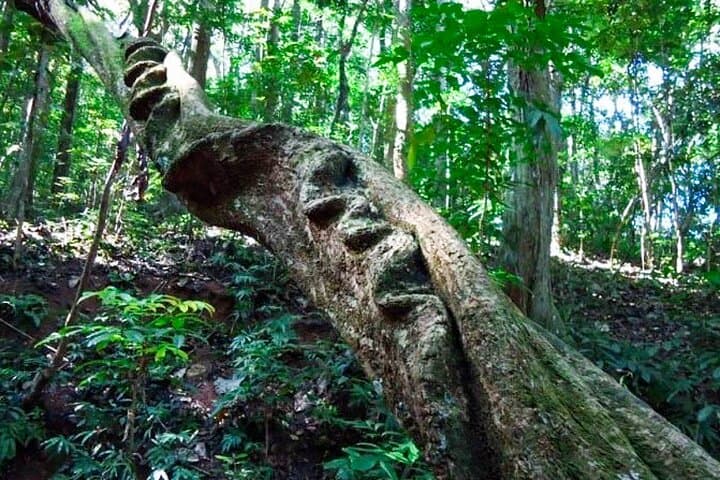
The ecology is compact but rich — lowland evergreen species, orchids tucked in humus pockets, and a high density of endemic birds. The forest moves in close; vines probe the path and fallen trunks quietly return to soil as the ecosystem presses on.
Practical guidance: the standard guided loop runs about four hours with periodic stops; trails are mostly packed earth and stone with some steps and uneven sections. Wear sturdy walking shoes, bring 1–1.5 liters of water, insect repellent and sun protection. A knowledgeable naturalist points out endemic birds like Layard’s parakeet and the brown-capped babbler and can explain local conservation issues.
Aim for an early start to avoid city heat and to catch peak bird activity. Stay on marked paths to protect sensitive plants and archaeological features, and expect a steady, easy walking pace with frequent photo stops.
easy.
4 hours.
Suitable for most fitness levels; expect steady walking with short, uneven sections and occasional steps.
The guided loop is about four hours and rated easy — mostly packed earth and stone with some steps and uneven ground; suitable for most fitness levels.
Entrance to Udawattakele requires a ticket, which is included in the tour price; independent visitors pay the sanctuary’s entrance fee at the gate.
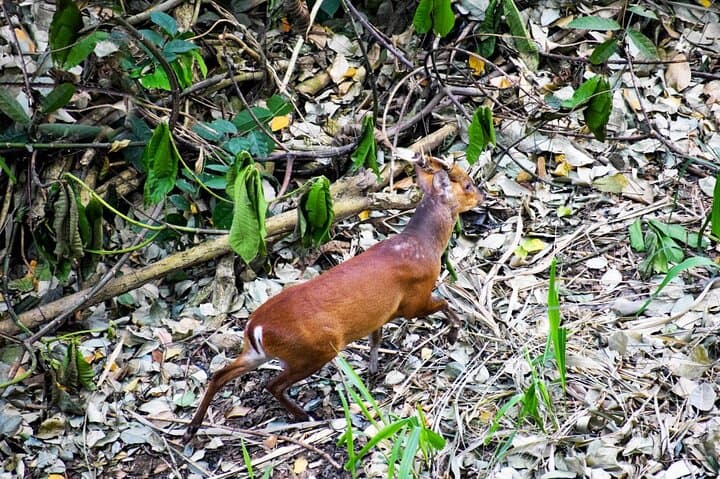
Expect a variety of birds including endemic species like Layard’s parakeet, yellow-fronted barbet, brown-capped babbler and occasional kingfishers, plus small mammals and reptiles.
Yes—many sections are family-friendly, but uneven surfaces and steps may be challenging for those with mobility issues; check with the guide about pauses and pacing.
Udawattakele served as royal pleasure gardens for the Kandyan kings and contains rock-cut caves used by Buddhist monks for centuries.
The reserve faces urban pressure and invasive species; staying on trails and following guide advice helps protect endemic plants and nesting birds.
Lakpura LLC operates guided outdoor trips and adventures with an emphasis on safety, stewardship, and memorable experiences.
You step off the city street and the air changes — cooler, damp, threaded with bird calls. A stone avenue slopes into green; roots and flagstones lead you beneath a compact canopy that seems to lean in and watch. Morning light filters in columns and the forest answers with distant calls of parrots and kingfishers.
You step off the city street and the air changes — cooler, damp, threaded with bird calls. A stone avenue slopes into green; roots and flagstones lead you beneath a compact canopy that seems to lean in and watch. Morning light filters in columns and the forest answers with distant calls of parrots and kingfishers.
Udawattakele occupies roughly 104 hectares above Kandy Lake, a remnant of the Kandyan Kingdom’s private pleasure gardens and later a religious retreat. Geologically it sits on weathered Precambrian rock, carved into shelves and low ridgelines that channel small streams. Cultural traces are visible: rock-cut caves once inhabited by Buddhist monks, trail walls built from old garden stones, and occasional temple ruins that speak to centuries of local use.
The ecology is compact but rich — lowland evergreen species, orchids tucked in humus pockets, and a high density of endemic birds. The forest moves in close; vines probe the path and fallen trunks quietly return to soil as the ecosystem presses on.
Practical guidance: the standard guided loop runs about four hours with periodic stops; trails are mostly packed earth and stone with some steps and uneven sections. Wear sturdy walking shoes, bring 1–1.5 liters of water, insect repellent and sun protection. A knowledgeable naturalist points out endemic birds like Layard’s parakeet and the brown-capped babbler and can explain local conservation issues.
Aim for an early start to avoid city heat and to catch peak bird activity. Stay on marked paths to protect sensitive plants and archaeological features, and expect a steady, easy walking pace with frequent photo stops.