THE ADVENTURE COLLECTIVE® · Independent discovery and booking for outdoor travel

A three-hour shared safari from Ella into Udawalawe National Park offers reliable elephant sightings, close-up birding, and views across a reservoir-fed plain. This afternoon tour balances relaxed driving with focused wildlife watching and local conservation context.
A three-hour shared safari from Ella into Udawalawe National Park offers reliable elephant sightings, close-up birding, and views across a reservoir-fed plain. This afternoon tour balances relaxed driving with focused wildlife watching and local conservation context.
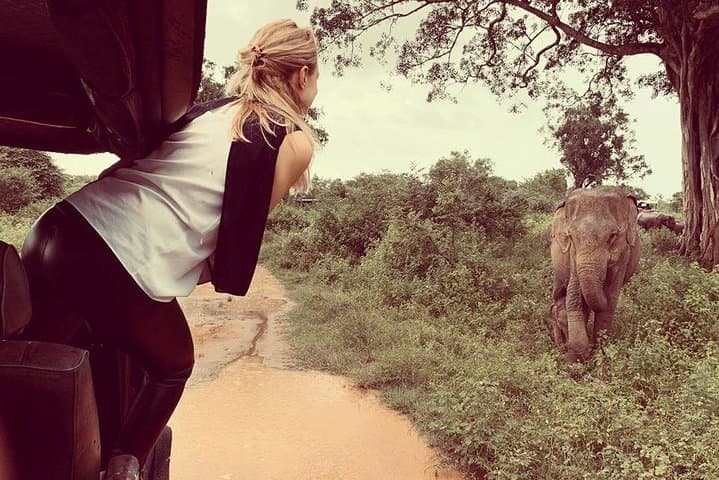
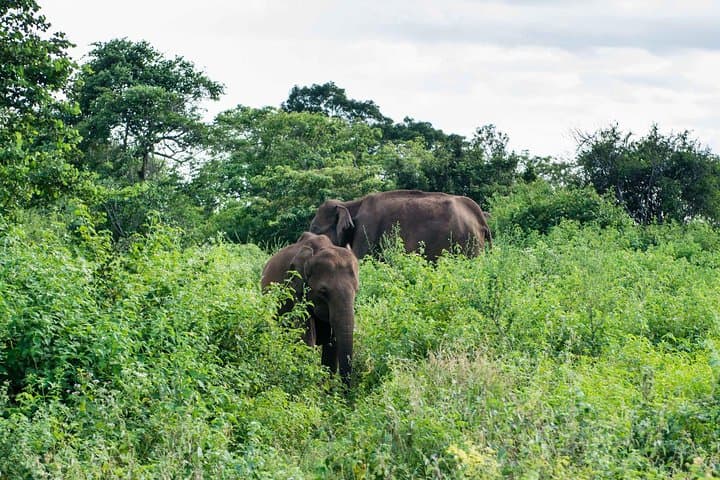
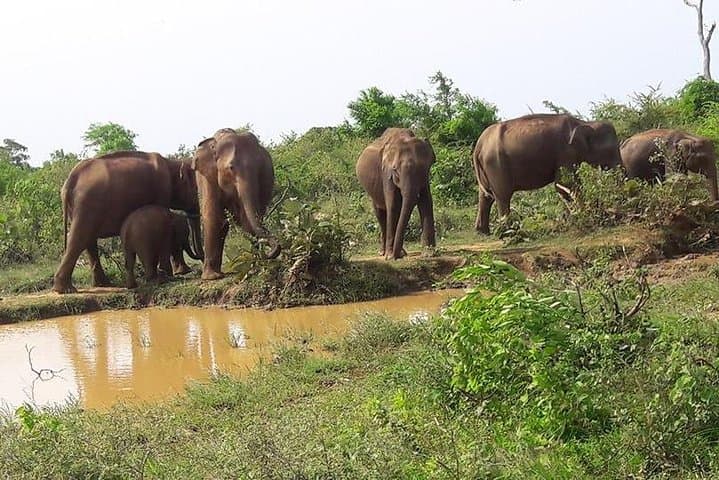
The sun glares off the Udawalawe reservoir as your vehicle threads a dusty approach road and the scrub opens into wide, grassy plains. Dust hangs like a veil; distant trunks and tusks break the horizon. On a shared afternoon safari from Ella, elephants are the headline — entire family groups often feed, splash, and move like a living convoy across the floodplain — but the eye is rewarded with smaller dramas: water monitors sidle along banks, spur fowl scatter, and raptors quarter the open sky.
Verified experiences and guided adventures in the surrounding area.
Operated by Travceylon Leisure · Udawalawe, Sabaragamuwa Province
The sun glares off the Udawalawe reservoir as your vehicle threads a dusty approach road and the scrub opens into wide, grassy plains. Dust hangs like a veil; distant trunks and tusks break the horizon. On a shared afternoon safari from Ella, elephants are the headline — entire family groups often feed, splash, and move like a living convoy across the floodplain — but the eye is rewarded with smaller dramas: water monitors sidle along banks, spur fowl scatter, and raptors quarter the open sky.
Udawalawe was created in the early 1970s to protect the catchment and the resident elephant population that converges on the reservoir. Geologically the park sits on lowland plains cut by seasonal rivers and dotted with rocky outcrops; soils and scrub favor grasses that elephants graze. Culturally, the area supports rural villages and the nearby Elephant Transit Home, where rescued calves are rehabilitated — a reminder of conservation pressures and local stewardship.
Practically, expect a three-hour drive-and-scan rhythm from pickup in Ella, a mix of open 4x4 tracks and occasional shaded glades, and a naturalist guide pointing out both common and endemic birds. Bring binoculars, neutral clothing, and a steady camera. Wildlife sightings are never guaranteed; patience, quiet, and respecting distance improve both your chance and the animals' comfort. Timing your visit outside heavy afternoon rain improves visibility and roads. This safari is low exertion but rich in optics: a chance to watch Sri Lankan elephants live in open country and to learn how communities and conservation intersect on the island’s dry plains.
easy.
Approx. 3 hours.
Low; suitable for most travelers with minimal walking
Yes—most tours include free pickup and drop-off from hotels in Ella; confirm exact pickup time when you book.
Udawalawe is one of the most reliable parks in Sri Lanka for elephant sightings, often in family groups, but sightings can’t be guaranteed—weather and animal movement vary.
Yes; the activity is family-friendly but not recommended for guests with serious heart conditions—check age and health policies when booking.
The Elephant Transit Home is nearby; guided visits are possible but may require separate tickets and scheduling, so coordinate with your operator.
Udawalawe National Park was designated in the early 1970s to protect the catchment of the reservoir and the resident elephant population drawn to its water and grasses.
The park balances tourism and protection—follow guides’ rules, avoid feeding wildlife, and consider supporting local conservation groups that work with rescued elephants.
Travceylon Leisure operates guided outdoor trips and adventures with an emphasis on safety, stewardship, and memorable experiences.

The sun glares off the Udawalawe reservoir as your vehicle threads a dusty approach road and the scrub opens into wide, grassy plains. Dust hangs like a veil; distant trunks and tusks break the horizon. On a shared afternoon safari from Ella, elephants are the headline — entire family groups often feed, splash, and move like a living convoy across the floodplain — but the eye is rewarded with smaller dramas: water monitors sidle along banks, spur fowl scatter, and raptors quarter the open sky.
The sun glares off the Udawalawe reservoir as your vehicle threads a dusty approach road and the scrub opens into wide, grassy plains. Dust hangs like a veil; distant trunks and tusks break the horizon. On a shared afternoon safari from Ella, elephants are the headline — entire family groups often feed, splash, and move like a living convoy across the floodplain — but the eye is rewarded with smaller dramas: water monitors sidle along banks, spur fowl scatter, and raptors quarter the open sky.
Udawalawe was created in the early 1970s to protect the catchment and the resident elephant population that converges on the reservoir. Geologically the park sits on lowland plains cut by seasonal rivers and dotted with rocky outcrops; soils and scrub favor grasses that elephants graze. Culturally, the area supports rural villages and the nearby Elephant Transit Home, where rescued calves are rehabilitated — a reminder of conservation pressures and local stewardship.
Practically, expect a three-hour drive-and-scan rhythm from pickup in Ella, a mix of open 4x4 tracks and occasional shaded glades, and a naturalist guide pointing out both common and endemic birds. Bring binoculars, neutral clothing, and a steady camera. Wildlife sightings are never guaranteed; patience, quiet, and respecting distance improve both your chance and the animals' comfort. Timing your visit outside heavy afternoon rain improves visibility and roads. This safari is low exertion but rich in optics: a chance to watch Sri Lankan elephants live in open country and to learn how communities and conservation intersect on the island’s dry plains.