THE ADVENTURE COLLECTIVE® · Independent discovery and booking for outdoor travel

Spend an early morning traversing dry plains and watery corridors to find Udawalawe’s elephants, then visit the Elephant Transit Home to watch rescued calves being fed. This full-day tour pairs a three-hour game drive with conservation insight and local lunch.
Spend an early morning traversing dry plains and watery corridors to find Udawalawe’s elephants, then visit the Elephant Transit Home to watch rescued calves being fed. This full-day tour pairs a three-hour game drive with conservation insight and local lunch.
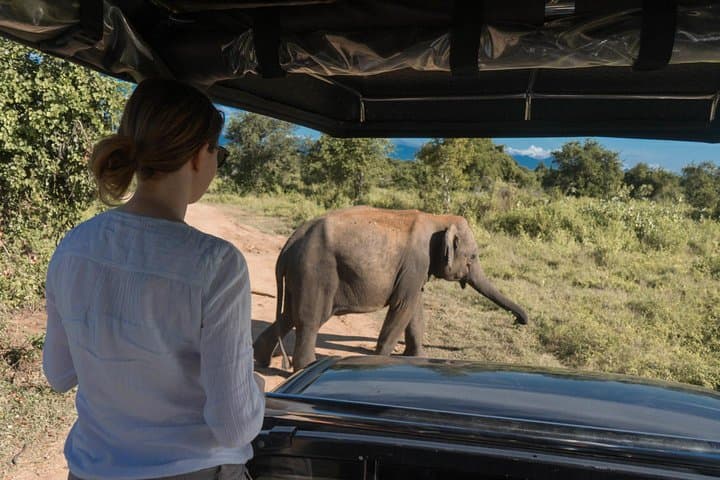
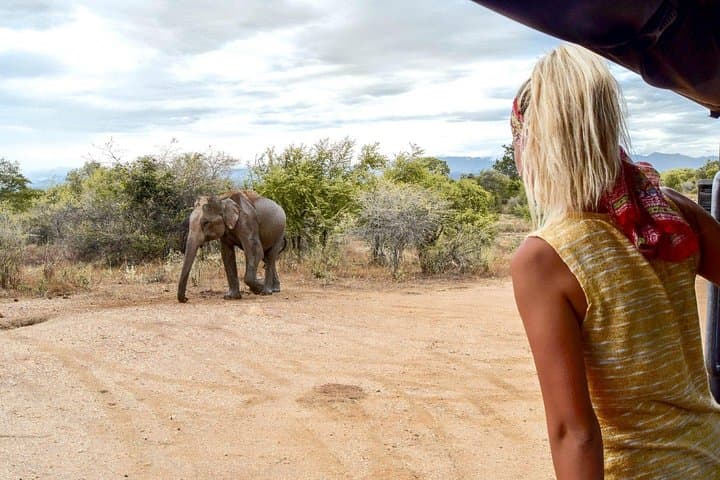
Dawn arrives over dry grass and a broad reservoir; the jeep engines murmur and the bush begins to breathe. On this full-day outing from Hambantota or Tangalle, travelers ride across low scrub and open grassland toward Udawalawe National Park, where herds of Sri Lankan elephants roam the plains and water bodies dare you to watch them cross.
Verified experiences and guided adventures in the surrounding area.
Operated by Beyond Escapes · Udawalawe, Southern Province
Dawn arrives over dry grass and a broad reservoir; the jeep engines murmur and the bush begins to breathe. On this full-day outing from Hambantota or Tangalle, travelers ride across low scrub and open grassland toward Udawalawe National Park, where herds of Sri Lankan elephants roam the plains and water bodies dare you to watch them cross.
Udawalawe was created around the reservoir built in the 1960s; its lakeshore and open habitats now support one of the island’s most reliable elephant populations and a mix of wetland and dry-zone species. The nearby Elephant Transit Home, Asia’s pioneering rehabilitation center, rescues orphaned calves and prepares them to rejoin the wild—feeding time is a window into conservation practice and local attitudes toward these animals.
Geology here is modest: rolling schist and sediment feeding seasonal marshes, with grasslands that glow yellow in the dry season and flatten into reflective pools in the rains. Culturally, the area blends Sinhala village life with the practical economy of wildlife tourism—small roadside restaurants and crafts cluster near park entrances.
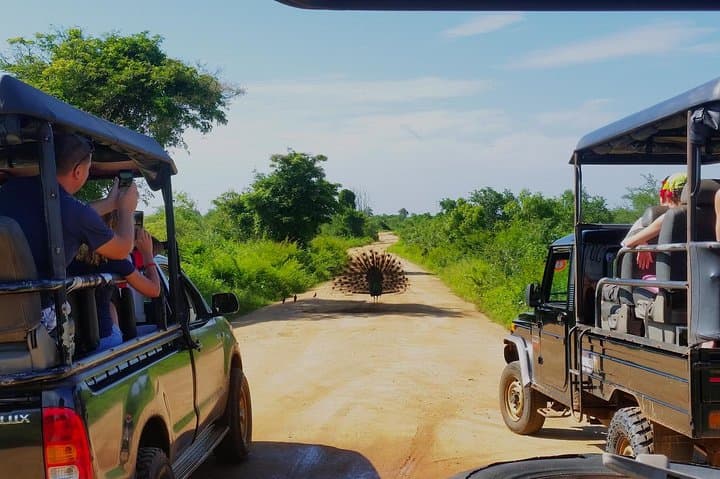
Practical guidance: pickups start around 05:00, expect a 3-hour game drive in an open safari jeep, then a scheduled visit to the Transit Home and lunch. Bring binoculars, sun and insect protection, and a charged camera with a mid-telephoto lens; keep distance from wildlife and follow ranger instructions. Roads and viewing hides are dusty and uneven—dress in neutral tones, hydrate, and plan for a long but accessible day in one of Sri Lanka’s best places to watch wild elephants.
easy.
11 hours (full-day).
Suitable for most fitness levels—requires getting in/out of an open jeep and walking short distances at the Transit Home.
The game drive component is approximately three hours, typically starting around 07:00 after an early pickup.
Interactions are limited; visitors observe feeding times and learn about rehabilitation but direct contact with calves is controlled for animal welfare.
Yes—hotel pickup and drop-off by air-conditioned vehicle and the safari jeep cost are included in the tour price.
Children are permitted but the tour is not recommended for pregnant travelers or those with spinal or serious cardiovascular conditions; follow booking guidelines.
Udawalawe National Park was established around the Udawalawe Reservoir to provide habitat for animals displaced by the dam; the Elephant Transit Home was later founded to rehabilitate orphaned calves.
The Elephant Transit Home focuses on rescue and rewilding while park management balances tourism with habitat protection—visitors are asked to minimize disturbance and avoid plastics.
Beyond Escapes operates guided outdoor trips and adventures with an emphasis on safety, stewardship, and memorable experiences.

Dawn arrives over dry grass and a broad reservoir; the jeep engines murmur and the bush begins to breathe. On this full-day outing from Hambantota or Tangalle, travelers ride across low scrub and open grassland toward Udawalawe National Park, where herds of Sri Lankan elephants roam the plains and water bodies dare you to watch them cross.
Dawn arrives over dry grass and a broad reservoir; the jeep engines murmur and the bush begins to breathe. On this full-day outing from Hambantota or Tangalle, travelers ride across low scrub and open grassland toward Udawalawe National Park, where herds of Sri Lankan elephants roam the plains and water bodies dare you to watch them cross.
Udawalawe was created around the reservoir built in the 1960s; its lakeshore and open habitats now support one of the island’s most reliable elephant populations and a mix of wetland and dry-zone species. The nearby Elephant Transit Home, Asia’s pioneering rehabilitation center, rescues orphaned calves and prepares them to rejoin the wild—feeding time is a window into conservation practice and local attitudes toward these animals.
Geology here is modest: rolling schist and sediment feeding seasonal marshes, with grasslands that glow yellow in the dry season and flatten into reflective pools in the rains. Culturally, the area blends Sinhala village life with the practical economy of wildlife tourism—small roadside restaurants and crafts cluster near park entrances.
Practical guidance: pickups start around 05:00, expect a 3-hour game drive in an open safari jeep, then a scheduled visit to the Transit Home and lunch. Bring binoculars, sun and insect protection, and a charged camera with a mid-telephoto lens; keep distance from wildlife and follow ranger instructions. Roads and viewing hides are dusty and uneven—dress in neutral tones, hydrate, and plan for a long but accessible day in one of Sri Lanka’s best places to watch wild elephants.