THE ADVENTURE COLLECTIVE® · Independent discovery and booking for outdoor travel

A full-day jeep safari from Hambantota to Udawalawe National Park with time at the elephant orphanage. Expect close encounters with elephants, broad river views and practical tips for maximizing sightings.
A full-day jeep safari from Hambantota to Udawalawe National Park with time at the elephant orphanage. Expect close encounters with elephants, broad river views and practical tips for maximizing sightings.
You step from the seaside heat of Hambantota into a jeep that hums along cracked country roads toward wide, grass-flecked plains.
Verified experiences and guided adventures in the surrounding area.
Operated by Shehan Safari · Udawalawe, Sabaragamuwa Province
You step from the seaside heat of Hambantota into a jeep that hums along cracked country roads toward wide, grass-flecked plains.
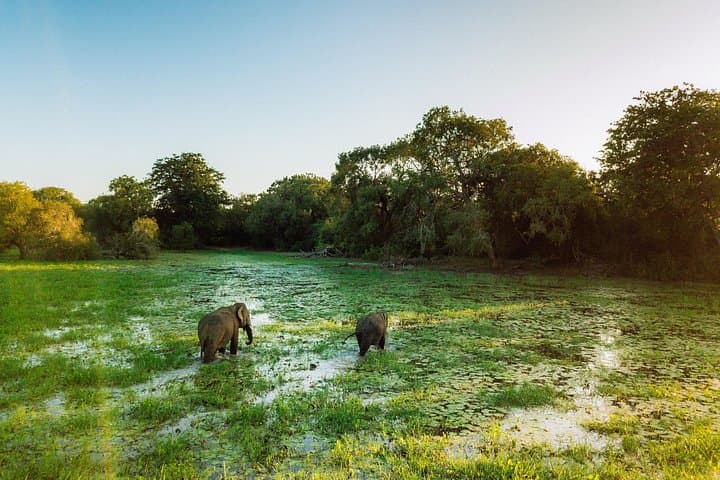
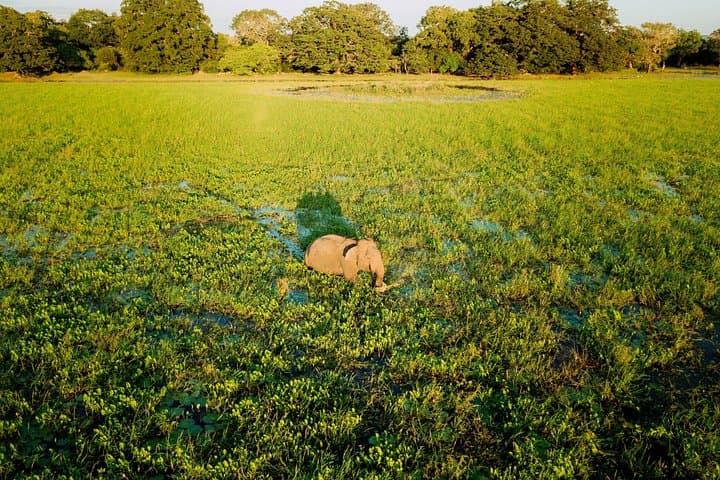
Udawalawe opens like a stage: low scrub and open grassland give way to the rounded backs of elephants moving deliberately toward the reservoir. The Walawe River carves a line through the park and the water dares birds and buffalo alike to come close. Tracks in the red earth tell older stories—of shifting cultivation cleared when the national park was declared in 1972 to protect animals displaced by the Udawalawe Reservoir.
Geology here is gentle: rolling plains, occasional rocky outcrops and the man-made reservoir that created this wildlife refuge. Culturally, the area sits between Sabaragamuwa and Uva provinces, where small farming communities still mark the edges of protected land and the Udawalawe Elephant Transit Home supports orphaned calves with hopes of return to the wild.
Expect a 5–7 hour outing: a guided 4x4 safari through varied habitat followed by a short visit to the elephant orphanage. Wildlife sightings are common—especially elephants and water birds—though predators like leopard remain elusive.
Practical notes: bring sun protection, a good zoom lens or binoculars, and lightweight long sleeves for mid-morning sun. Carry enough water and a small snack; restroom facilities are limited once inside the park. Respect viewing distances, follow your guide’s direction, and keep noise low to increase your chances of close wildlife encounters. Afternoon light favors photography; early morning brings cooler air and more active animals.
easy.
5–7 hours.
Suitable for most fitness levels; involves sitting in a 4x4 with short walks at the orphanage.
Udawalawe has a high density of elephants and sightings are common, though wild animals cannot be guaranteed.
This tour includes a stop at the Udawalawe Elephant Transit Home, but entry fees or donations may be handled locally—confirm with the operator.
Facilities are limited; bring water and snacks and use restrooms before entering the park or at designated stops.
Yes—the tour lists port pickup and drop-off as included in its transport services.
Udawalawe National Park was established in 1972 to provide sanctuary for animals displaced by the creation of the Udawalawe Reservoir and covers about 30,821 hectares.
The Udawalawe Elephant Transit Home rehabilitates orphaned calves for release; visitors are asked to follow guidelines to minimize disturbance and support conservation.
Shehan Safari operates guided outdoor trips and adventures with an emphasis on safety, stewardship, and memorable experiences.


You step from the seaside heat of Hambantota into a jeep that hums along cracked country roads toward wide, grass-flecked plains.
You step from the seaside heat of Hambantota into a jeep that hums along cracked country roads toward wide, grass-flecked plains.
Udawalawe opens like a stage: low scrub and open grassland give way to the rounded backs of elephants moving deliberately toward the reservoir. The Walawe River carves a line through the park and the water dares birds and buffalo alike to come close. Tracks in the red earth tell older stories—of shifting cultivation cleared when the national park was declared in 1972 to protect animals displaced by the Udawalawe Reservoir.
Geology here is gentle: rolling plains, occasional rocky outcrops and the man-made reservoir that created this wildlife refuge. Culturally, the area sits between Sabaragamuwa and Uva provinces, where small farming communities still mark the edges of protected land and the Udawalawe Elephant Transit Home supports orphaned calves with hopes of return to the wild.
Expect a 5–7 hour outing: a guided 4x4 safari through varied habitat followed by a short visit to the elephant orphanage. Wildlife sightings are common—especially elephants and water birds—though predators like leopard remain elusive.
Practical notes: bring sun protection, a good zoom lens or binoculars, and lightweight long sleeves for mid-morning sun. Carry enough water and a small snack; restroom facilities are limited once inside the park. Respect viewing distances, follow your guide’s direction, and keep noise low to increase your chances of close wildlife encounters. Afternoon light favors photography; early morning brings cooler air and more active animals.