THE ADVENTURE COLLECTIVE® · Independent discovery and booking for outdoor travel

Join a full-day 4x4 safari to Udawalawe National Park from Ella and south-coast towns for close elephant sightings, wetland birdlife, and a visit near the Elephant Transit Home. Morning and late-afternoon departures heighten wildlife activity and photographic light.
Join a full-day 4x4 safari to Udawalawe National Park from Ella and south-coast towns for close elephant sightings, wetland birdlife, and a visit near the Elephant Transit Home. Morning and late-afternoon departures heighten wildlife activity and photographic light.
Early light slices across the dry grass as the 4x4 noses onto a red-earth track and the first bulk of elephant hides the horizon; the jeep settles, engines lower, and the park begins to move around you. This day trip gathers travelers from Ella and the south-coast towns — Galle, Mirissa, Hikkaduwa, Matara — and deposits them at Udawalawe National Park for a concentrated wildlife hour on open plains and river edges.
Verified experiences and guided adventures in the surrounding area.
Operated by A Visitor · Udawalawe, Sabaragamuwa Province
Early light slices across the dry grass as the 4x4 noses onto a red-earth track and the first bulk of elephant hides the horizon; the jeep settles, engines lower, and the park begins to move around you. This day trip gathers travelers from Ella and the south-coast towns — Galle, Mirissa, Hikkaduwa, Matara — and deposits them at Udawalawe National Park for a concentrated wildlife hour on open plains and river edges.
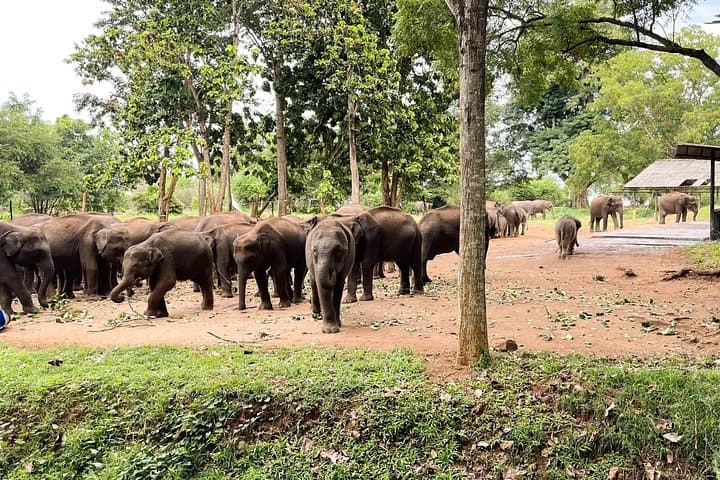
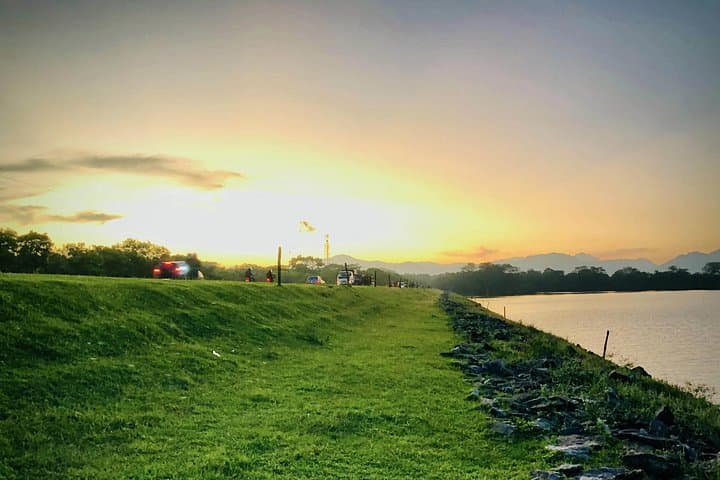
Udawalawe was set aside in the early 1970s to protect habitat around the Udawalawe Reservoir and to provide a refuge for Sri Lanka’s elephants. Geologically the park sits on low, undulating plains carved by seasonal rivers and dotted with scrub, thorny woodland, and grassy clearings that concentrate wildlife in the dry season. Culturally, the surrounding villages are farm and tank-based communities that rely on paddy irrigation and small-scale fishing; the Udawalawe Elephant Transit Home nearby highlights local conservation work for orphaned calves.
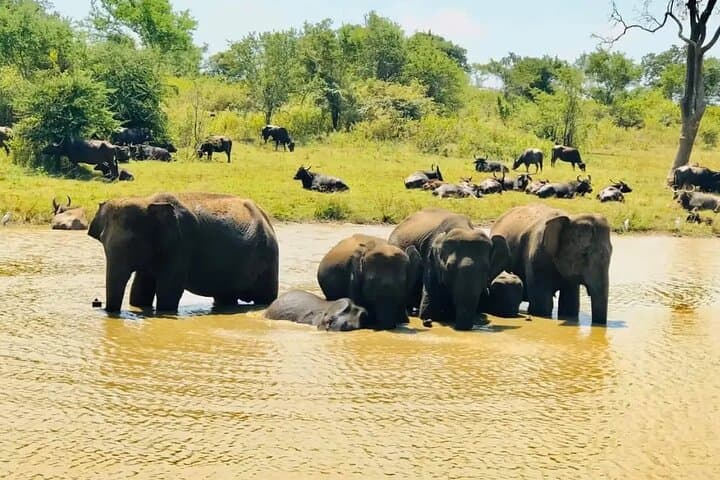
Expect an authentic jeep-safari rhythm: slow glassing from rutted tracks, stops at watering holes, and long views across lowland scrub. Look for elephants, water buffalo, marsh birds, and crocodiles; leopards are possible but rare. Guides explain behavior and point out microhabitats you’d miss alone.
Practically: morning or late-afternoon departures give the best light and animal activity. Bring cash for park entry, a telephoto or binoculars, sun protection, and a light layer for cooler early starts. Respect viewing distance, follow your driver-guide’s instructions, and keep plastics packed — the park’s wildlife depends on it.
moderate.
6–11 hours.
Moderate fitness for transfers and short walking at stops; long vehicle time requires basic mobility.
No—entry fees are typically paid on arrival to the park in local currency; bring cash to cover admission and any camera fees.
Very likely—Udawalawe is known for its resident elephant population, and sightings on a day safari are common, though wild animals cannot be guaranteed.
Families often join safaris, but infants must sit on an adult’s lap; the operator notes the trip isn’t recommended for pregnant travelers or people with serious heart conditions.
Total duration including transfers varies from about 6 to 11 hours depending on pickup point; the safari portion in the park is typically several hours.
Udawalawe National Park was created in the early 1970s to protect wildlife around the Udawalawe Reservoir and as a corridor for elephants between inland and coastal habitats.
Support the Elephant Transit Home and follow park rules—stay on established tracks, avoid littering, and do not feed wildlife to reduce human–animal conflict.
A Visitor operates guided outdoor trips and adventures with an emphasis on safety, stewardship, and memorable experiences.
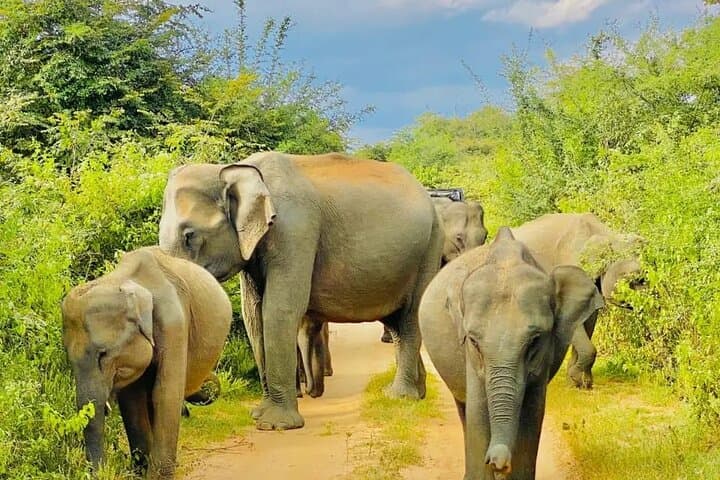
Early light slices across the dry grass as the 4x4 noses onto a red-earth track and the first bulk of elephant hides the horizon; the jeep settles, engines lower, and the park begins to move around you. This day trip gathers travelers from Ella and the south-coast towns — Galle, Mirissa, Hikkaduwa, Matara — and deposits them at Udawalawe National Park for a concentrated wildlife hour on open plains and river edges.
Early light slices across the dry grass as the 4x4 noses onto a red-earth track and the first bulk of elephant hides the horizon; the jeep settles, engines lower, and the park begins to move around you. This day trip gathers travelers from Ella and the south-coast towns — Galle, Mirissa, Hikkaduwa, Matara — and deposits them at Udawalawe National Park for a concentrated wildlife hour on open plains and river edges.
Udawalawe was set aside in the early 1970s to protect habitat around the Udawalawe Reservoir and to provide a refuge for Sri Lanka’s elephants. Geologically the park sits on low, undulating plains carved by seasonal rivers and dotted with scrub, thorny woodland, and grassy clearings that concentrate wildlife in the dry season. Culturally, the surrounding villages are farm and tank-based communities that rely on paddy irrigation and small-scale fishing; the Udawalawe Elephant Transit Home nearby highlights local conservation work for orphaned calves.
Expect an authentic jeep-safari rhythm: slow glassing from rutted tracks, stops at watering holes, and long views across lowland scrub. Look for elephants, water buffalo, marsh birds, and crocodiles; leopards are possible but rare. Guides explain behavior and point out microhabitats you’d miss alone.
Practically: morning or late-afternoon departures give the best light and animal activity. Bring cash for park entry, a telephoto or binoculars, sun protection, and a light layer for cooler early starts. Respect viewing distance, follow your driver-guide’s instructions, and keep plastics packed — the park’s wildlife depends on it.