THE ADVENTURE COLLECTIVE® · Independent discovery and booking for outdoor travel

A private 3-hour jeep safari into Udawalawe National Park offers some of Sri Lanka’s most reliable elephant encounters and rich birding. This guide covers what to expect, practical tips, and seasonal notes to plan your visit.
A private 3-hour jeep safari into Udawalawe National Park offers some of Sri Lanka’s most reliable elephant encounters and rich birding. This guide covers what to expect, practical tips, and seasonal notes to plan your visit.
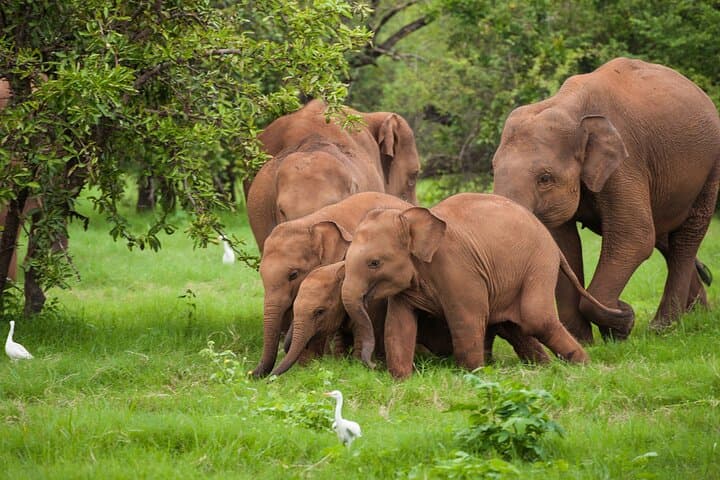
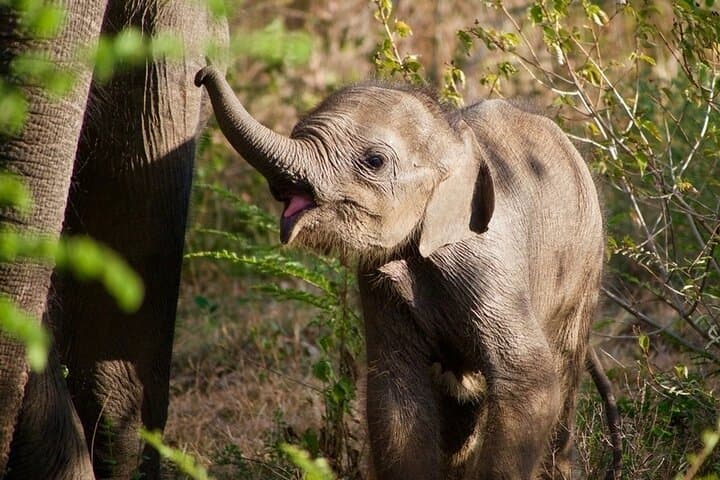
You roll off the dusty track as the jeep slows, the reservoir’s rim reflecting low sun while a distant herd of elephants moves like a deliberate shadow across the plain. The air carries a mix of dust and wet grass; the driver’s silhouette scans the scrub for movement and points out a calf splashing at the water’s edge.
Verified experiences and guided adventures in the surrounding area.
Operated by Travceylon Leisure · Udawalawe, Sabaragamuwa Province
You roll off the dusty track as the jeep slows, the reservoir’s rim reflecting low sun while a distant herd of elephants moves like a deliberate shadow across the plain. The air carries a mix of dust and wet grass; the driver’s silhouette scans the scrub for movement and points out a calf splashing at the water’s edge.
Udawalawe National Park was established in 1972 to protect animals displaced by the creation of the Udawalawe Reservoir and now covers roughly 30,821 hectares on the boundary of Sabaragamuwa and Uva provinces. The landscape is a hard-edged mix of grassland, scrub and open woodland formed on ancient river terraces, where seasonal water shortages concentrate wildlife and make sightings reliable.
Culture around Udawalawe is rural and agricultural; local communities often work in rice and chena fields, and the nearby Elephant Transit Home provides a conservation-oriented counterpoint to tourism. Birdlife is vivid — egrets, ibises and raptors ride thermals — and the occasional leopard stalks the denser cover.
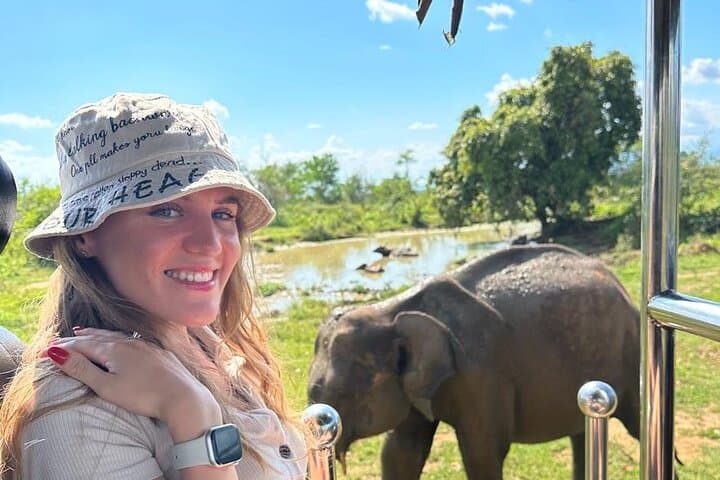
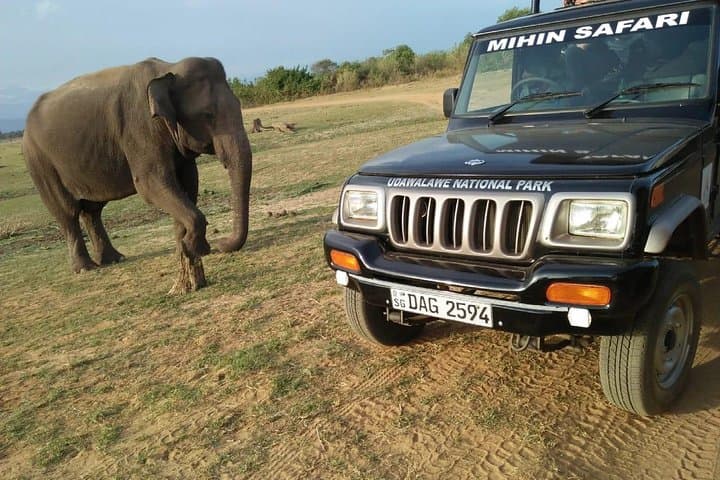
Practically, expect a private 3-hour jeep safari that covers several habitats at low speed; photographers will appreciate early-morning light and glass windows that open for clear shots. Wear closed shoes with good grip, lightweight layers, sun protection and bring binoculars and a camera with a long lens. Vehicles can be bumpy — secure loose items.
Guides and trackers are standard on private rides and will advise on safe viewing distances, times when elephants congregate, and how to minimize disturbance. Bring water, respect wildlife space, and you’ll likely leave with close elephant encounters and a sharper eye for Sri Lanka’s dry-zone birds.
easy.
3 hours.
Suitable for most fitness levels; requires ability to get in/out of a jeep and sit for extended periods.
Very likely—Udawalawe is renowned for regular elephant sightings, often in herds near waterholes throughout the year.
Yes; private safaris accommodate children but follow guide instructions regarding distance from animals and remain in the vehicle for safety.
Most private safaris include pickup/drop-off from locations within a short radius of the park gate—confirm the pickup point when booking.
No—drones are typically prohibited in national parks to avoid disturbing animals and for visitor safety; check regulations before travel.
The park was created in 1972 to protect wildlife displaced by the Udawalawe Reservoir and to conserve the reservoir’s catchment.
Respect buffer distances and avoid feeding animals; revenues support local conservation and the nearby Elephant Transit Home’s rehabilitation efforts.
Travceylon Leisure operates guided outdoor trips and adventures with an emphasis on safety, stewardship, and memorable experiences.
You roll off the dusty track as the jeep slows, the reservoir’s rim reflecting low sun while a distant herd of elephants moves like a deliberate shadow across the plain. The air carries a mix of dust and wet grass; the driver’s silhouette scans the scrub for movement and points out a calf splashing at the water’s edge.
You roll off the dusty track as the jeep slows, the reservoir’s rim reflecting low sun while a distant herd of elephants moves like a deliberate shadow across the plain. The air carries a mix of dust and wet grass; the driver’s silhouette scans the scrub for movement and points out a calf splashing at the water’s edge.
Udawalawe National Park was established in 1972 to protect animals displaced by the creation of the Udawalawe Reservoir and now covers roughly 30,821 hectares on the boundary of Sabaragamuwa and Uva provinces. The landscape is a hard-edged mix of grassland, scrub and open woodland formed on ancient river terraces, where seasonal water shortages concentrate wildlife and make sightings reliable.
Culture around Udawalawe is rural and agricultural; local communities often work in rice and chena fields, and the nearby Elephant Transit Home provides a conservation-oriented counterpoint to tourism. Birdlife is vivid — egrets, ibises and raptors ride thermals — and the occasional leopard stalks the denser cover.
Practically, expect a private 3-hour jeep safari that covers several habitats at low speed; photographers will appreciate early-morning light and glass windows that open for clear shots. Wear closed shoes with good grip, lightweight layers, sun protection and bring binoculars and a camera with a long lens. Vehicles can be bumpy — secure loose items.
Guides and trackers are standard on private rides and will advise on safe viewing distances, times when elephants congregate, and how to minimize disturbance. Bring water, respect wildlife space, and you’ll likely leave with close elephant encounters and a sharper eye for Sri Lanka’s dry-zone birds.