THE ADVENTURE COLLECTIVE® · Independent discovery and booking for outdoor travel

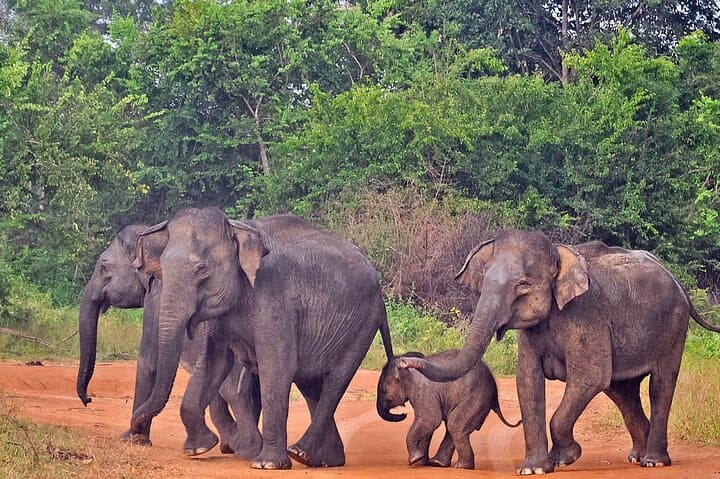
Head inland from Talpe for a day among the elephants of Udawalawe National Park. Expect grassland safaris, close elephant encounters, and prolific birdlife on this half‑ to full‑day wildlife loop.
Head inland from Talpe for a day among the elephants of Udawalawe National Park. Expect grassland safaris, close elephant encounters, and prolific birdlife on this half‑ to full‑day wildlife loop.
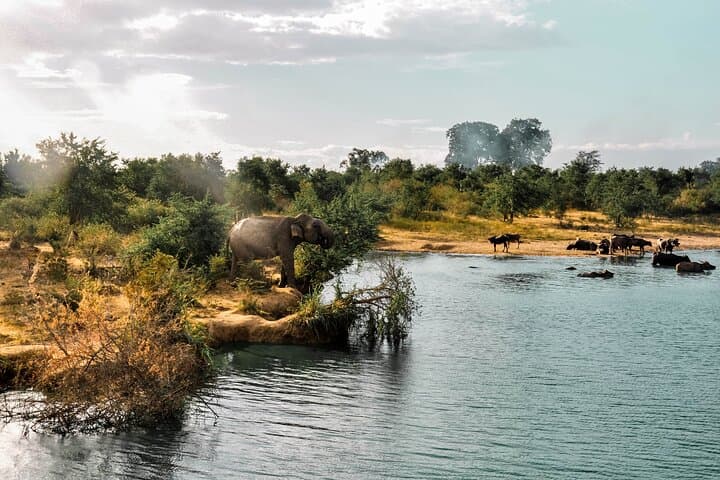
You feel the jeep ease off the paved road and the air change — ocean breeze replaced by dry grass and the muted hum of insects. Tall grass parts like a crowd to reveal a lone elephant feeding at a waterhole; its ears flick like sails. This is Udawalawe: wide plains carved by the Walawe River, punctuated by marshes, rocky outcrops and serried lines of jungle where wildlife stages its daily business.
Verified experiences and guided adventures in the surrounding area.
Operated by Lakpura LLC · Udawalawe, Sabaragamuwa Province
You feel the jeep ease off the paved road and the air change — ocean breeze replaced by dry grass and the muted hum of insects. Tall grass parts like a crowd to reveal a lone elephant feeding at a waterhole; its ears flick like sails. This is Udawalawe: wide plains carved by the Walawe River, punctuated by marshes, rocky outcrops and serried lines of jungle where wildlife stages its daily business.
Set up in 1972 to protect migrating elephants, Udawalawe sprawls across the Sabaragamuwa–Uva border. Geologically it's a lowland mosaic: ancient gneiss and schist drop into river valleys, leaving shallow plateaus and seasonal marshes that hold water through Sri Lanka’s monsoons. The local culture is rural and agricultural — village life, temple shrines and roadside tea stalls follow the highway that visitors cross on the way in.
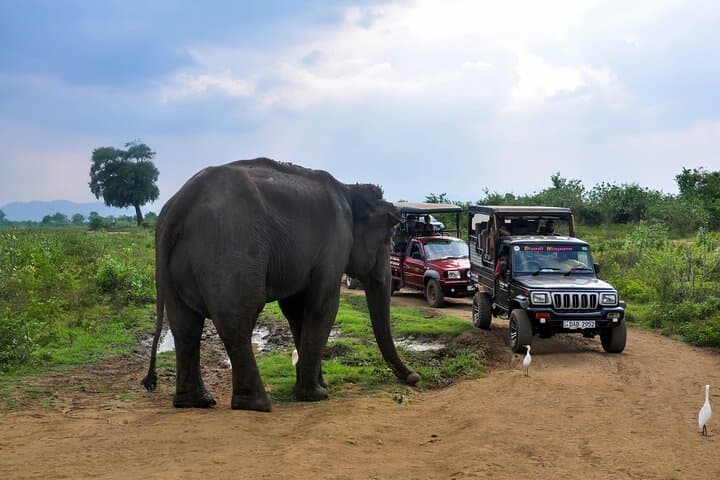
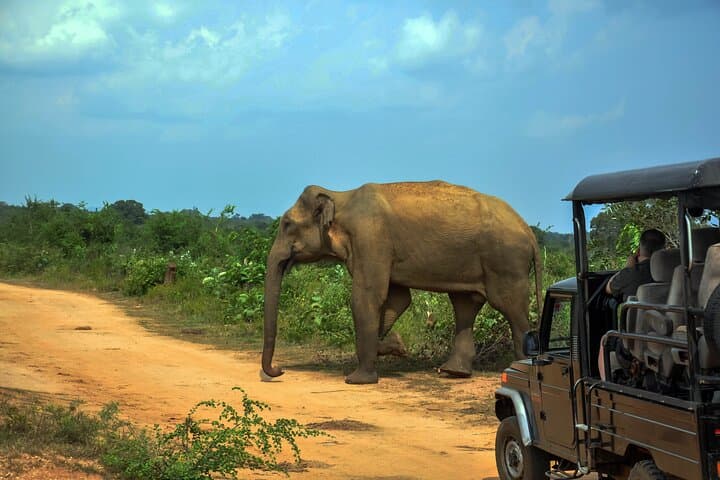
On a typical 3-hour jeep loop you’ll track elephants, water buffalo and sambar deer, while over 180 bird species — from painted storks to raptors — scan the skies. Butterflies cluster on damp sand; crocodiles lie like sentries along the river’s edge. Guides double as trackers, reading dung and broken branches to find movement ahead.
Practical note: leave early for cooler light and better activity, bring binoculars and mosquito repellent, and expect dusty roads. Travel from Talpe adds transit time; the full excursion can be a long day. Hydrate, wear sun‑protective layers and keep camera gear accessible — sightings are often sudden and close. Respect the animals: remain silent, avoid flash photography and let the landscape set the tempo of your day.
moderate.
6–9 hours.
Suitable for travelers with average fitness — mostly seated jeep time but expect bumpy roads and a long day.
The vehicle spends about 3 hours inside Udawalawe National Park for game viewing; total door‑to‑door time from Talpe is longer due to transit.
This tour description lists a 3‑hour jeep safari included; confirm with the operator whether park permit fees are covered in your booking.
Elephants are common but wild — sightings are frequent though never guaranteed; guides use local knowledge to maximize chances.
The tour is physically easy but not recommended for pregnant travelers; children are welcome but require supervision on and off the vehicle.
Udawalawe was designated a national park in 1972 to secure migration corridors for elephants displaced by reservoirs and development.
Visitor income supports park management and local guides; follow park rules to minimize disturbance and avoid feeding or approaching wildlife.
Lakpura LLC operates guided outdoor trips and adventures with an emphasis on safety, stewardship, and memorable experiences.
You feel the jeep ease off the paved road and the air change — ocean breeze replaced by dry grass and the muted hum of insects. Tall grass parts like a crowd to reveal a lone elephant feeding at a waterhole; its ears flick like sails. This is Udawalawe: wide plains carved by the Walawe River, punctuated by marshes, rocky outcrops and serried lines of jungle where wildlife stages its daily business.
You feel the jeep ease off the paved road and the air change — ocean breeze replaced by dry grass and the muted hum of insects. Tall grass parts like a crowd to reveal a lone elephant feeding at a waterhole; its ears flick like sails. This is Udawalawe: wide plains carved by the Walawe River, punctuated by marshes, rocky outcrops and serried lines of jungle where wildlife stages its daily business.
Set up in 1972 to protect migrating elephants, Udawalawe sprawls across the Sabaragamuwa–Uva border. Geologically it's a lowland mosaic: ancient gneiss and schist drop into river valleys, leaving shallow plateaus and seasonal marshes that hold water through Sri Lanka’s monsoons. The local culture is rural and agricultural — village life, temple shrines and roadside tea stalls follow the highway that visitors cross on the way in.
On a typical 3-hour jeep loop you’ll track elephants, water buffalo and sambar deer, while over 180 bird species — from painted storks to raptors — scan the skies. Butterflies cluster on damp sand; crocodiles lie like sentries along the river’s edge. Guides double as trackers, reading dung and broken branches to find movement ahead.
Practical note: leave early for cooler light and better activity, bring binoculars and mosquito repellent, and expect dusty roads. Travel from Talpe adds transit time; the full excursion can be a long day. Hydrate, wear sun‑protective layers and keep camera gear accessible — sightings are often sudden and close. Respect the animals: remain silent, avoid flash photography and let the landscape set the tempo of your day.