THE ADVENTURE COLLECTIVE® · Independent discovery and booking for outdoor travel

Head into the dry-zone plains of Udawalawe to watch elephant herds cross grasslands and drink at the reservoir. Choose from short 3-hour drives to full-day safaris with birding stops and seasoned driver-guides.
Head into the dry-zone plains of Udawalawe to watch elephant herds cross grasslands and drink at the reservoir. Choose from short 3-hour drives to full-day safaris with birding stops and seasoned driver-guides.
The jeep jolts off the paved road and into an open plain where dust hangs like a curtain and the reservoir beyond catches morning light. A herd of elephants moves with slow certainty across the scrub; calves test the grass while bulls linger at the water’s edge. The driver eases the vehicle closer, and the park’s scale—the rolling grasslands, low hills and the broad sweep of Udawalawe Reservoir—becomes the day’s compass.
Verified experiences and guided adventures in the surrounding area.
Operated by Maika Safari Tours · Udawalawe, Sabaragamuwa Province
The jeep jolts off the paved road and into an open plain where dust hangs like a curtain and the reservoir beyond catches morning light. A herd of elephants moves with slow certainty across the scrub; calves test the grass while bulls linger at the water’s edge. The driver eases the vehicle closer, and the park’s scale—the rolling grasslands, low hills and the broad sweep of Udawalawe Reservoir—becomes the day’s compass.
Established in the early 1970s around the dammed Walawe River, Udawalawe National Park was created to protect displaced wildlife and to preserve an essential corridor for elephant herds. Geologically, the park sits on weathered metamorphic rock with lateritic soils that feed dry-zone grasses and thorny scrub; seasonal rains shift the landscape from parched to green. Local villages around the park practice rice and vegetable cultivation, and elephants remain both a conservation priority and a cultural presence.
On safari you’ll trade hiking boots for a rugged 4x4—scoped views, not trails, shape the experience. Morning and late afternoon drives maximize sightings as animals move to drink; full-day trips add wetlands and birding stops. Practical tips: dress in muted colors, bring binoculars and a telephoto lens, and keep a safe distance from bulls near water.
Logistics are straightforward: private pickup in the Udawalawe area, experienced driver-guides, and flexible 3-hour to full-day options. Weather and seasonal movement affect visibility—plan early hours for the clearest light and highest chance of elephant encounters. This is a safari where patient observation and a steady lens yield the best memories.
easy.
1–6 hours.
Light physical demands; mainly sitting with occasional short exits for viewpoints
Early morning and late afternoon are best—animals are most active around water sources during cooler hours.
No sightings can be guaranteed; however, Udawalawe has reliably large elephant populations and experienced guides who know likely locations.
Yes—infants must sit on an adult’s lap; the tour is family-friendly but keep children supervised around animals.
Safari vehicles allow easy entry for many riders, but terrain within the park is uneven; check with the operator about specific accessibility needs.
The park was designated in the early 1970s around the Udawalawe Reservoir to protect displaced wildlife and preserve migration routes.
Conservation efforts focus on mitigating human–elephant conflict, protecting corridors, and managing tourism impact to reduce disturbance to animals.
Maika Safari Tours operates guided outdoor trips and adventures with an emphasis on safety, stewardship, and memorable experiences.
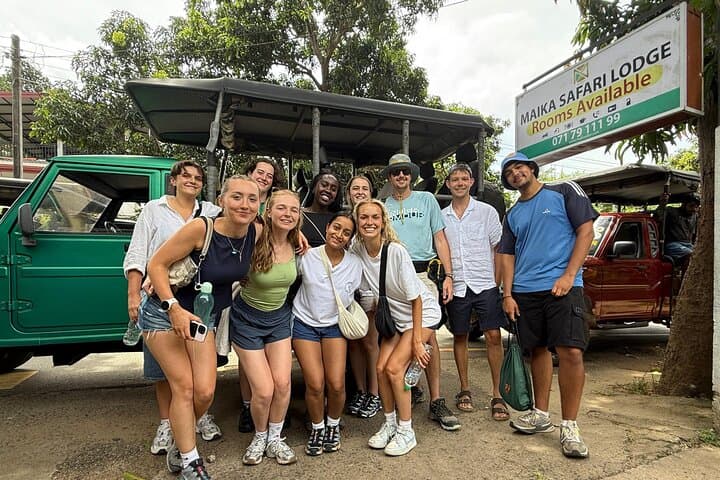



The jeep jolts off the paved road and into an open plain where dust hangs like a curtain and the reservoir beyond catches morning light. A herd of elephants moves with slow certainty across the scrub; calves test the grass while bulls linger at the water’s edge. The driver eases the vehicle closer, and the park’s scale—the rolling grasslands, low hills and the broad sweep of Udawalawe Reservoir—becomes the day’s compass.
The jeep jolts off the paved road and into an open plain where dust hangs like a curtain and the reservoir beyond catches morning light. A herd of elephants moves with slow certainty across the scrub; calves test the grass while bulls linger at the water’s edge. The driver eases the vehicle closer, and the park’s scale—the rolling grasslands, low hills and the broad sweep of Udawalawe Reservoir—becomes the day’s compass.
Established in the early 1970s around the dammed Walawe River, Udawalawe National Park was created to protect displaced wildlife and to preserve an essential corridor for elephant herds. Geologically, the park sits on weathered metamorphic rock with lateritic soils that feed dry-zone grasses and thorny scrub; seasonal rains shift the landscape from parched to green. Local villages around the park practice rice and vegetable cultivation, and elephants remain both a conservation priority and a cultural presence.
On safari you’ll trade hiking boots for a rugged 4x4—scoped views, not trails, shape the experience. Morning and late afternoon drives maximize sightings as animals move to drink; full-day trips add wetlands and birding stops. Practical tips: dress in muted colors, bring binoculars and a telephoto lens, and keep a safe distance from bulls near water.
Logistics are straightforward: private pickup in the Udawalawe area, experienced driver-guides, and flexible 3-hour to full-day options. Weather and seasonal movement affect visibility—plan early hours for the clearest light and highest chance of elephant encounters. This is a safari where patient observation and a steady lens yield the best memories.