THE ADVENTURE COLLECTIVE® · Independent discovery and booking for outdoor travel

Head into Udawalawe’s open plains for a private 4x4 safari focused on elephants and endemic birds. This practical guide explains what to expect, when to go, and how to prepare for a half-day naturalist-led game drive.
Head into Udawalawe’s open plains for a private 4x4 safari focused on elephants and endemic birds. This practical guide explains what to expect, when to go, and how to prepare for a half-day naturalist-led game drive.
The 4x4 rocks forward as the morning light cuts across dry grass and scattered thorn trees; the engine hum becomes a steady heartbeat while a herd of elephants moves like a slow tide across the plain, tossing dust with their trunks.
Verified experiences and guided adventures in the surrounding area.
Operated by SriLanka Best Safari Udawalawe National Park · Udawalawe, Sabaragamuwa Province
The 4x4 rocks forward as the morning light cuts across dry grass and scattered thorn trees; the engine hum becomes a steady heartbeat while a herd of elephants moves like a slow tide across the plain, tossing dust with their trunks.
Udawalawe National Park, created in 1972 around the reservoir formed by the Udawalawe Dam, sits where dry plains meet low hills of mixed alluvium and ancient metamorphic rock. The landscape is spare but alive: grasslands open to view, patches of forest harboring langurs and macaques, and the reservoir that draws waterbirds and buffalo. Local villages around Embilipitiya and Udawalawe town have histories rooted in irrigation and rice farming, and the park itself plays a modern role in Sri Lanka’s elephant conservation and ecotourism.
On a private safari with a naturalist, expect focused tracking—guides read spoor and behavior to locate elephants, water buffalo, and smaller carnivores. Birdsong punctuates long pauses as the guide points out endemic species. The experience is observational: vehicles remain on tracks and animals set the pace.
Practical guidance: take a half-day (about four hours) morning or late-afternoon slot when animals are most active, bring binoculars and sun protection, and keep cameras ready but respect distance. Wear neutral colors and quiet footwear; limit noise and avoid sudden movements. Hydrate and plan transport—many operators include pickup within a short radius of the gate. With a private jeep and an experienced tracker, you get tailored time at hotspots and the best chance to watch elephants in family groups without crowds.
easy.
4 hours.
Suitable for most fitness levels; involves short periods standing in a vehicle and some gentle stepping in/out of a jeep.
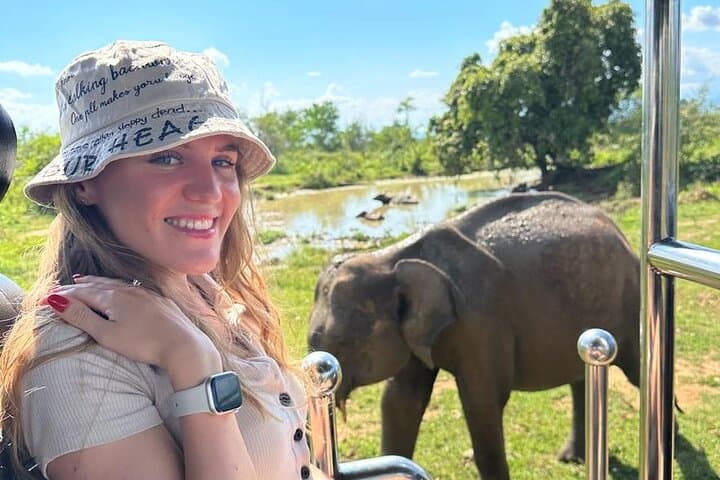
Asian elephants are the park’s signature species; you can also expect water buffalo, sambar and axis deer, macaques, and a variety of water and dry-zone birds.
Many private safari operators include pickup/drop-off from locations within a short radius of the park gate—confirm radius and pickup point when booking.
Early morning or late afternoon are ideal—cooler temperatures increase animal activity and light is better for photography.
Yes—vehicles are stable and safaris are low-impact, but not recommended for those with serious back or heart conditions; infants must sit on laps per operator policy.
Udawalawe National Park was established in 1972 to protect wildlife around a new reservoir and to provide habitat connectivity for elephants displaced by the dam project.
The park is central to Sri Lanka’s elephant conservation efforts; visitors should follow guide instructions to minimize disturbance and avoid feeding or approaching wildlife.
SriLanka Best Safari Udawalawe National Park operates guided outdoor trips and adventures with an emphasis on safety, stewardship, and memorable experiences.
The 4x4 rocks forward as the morning light cuts across dry grass and scattered thorn trees; the engine hum becomes a steady heartbeat while a herd of elephants moves like a slow tide across the plain, tossing dust with their trunks.
The 4x4 rocks forward as the morning light cuts across dry grass and scattered thorn trees; the engine hum becomes a steady heartbeat while a herd of elephants moves like a slow tide across the plain, tossing dust with their trunks.
Udawalawe National Park, created in 1972 around the reservoir formed by the Udawalawe Dam, sits where dry plains meet low hills of mixed alluvium and ancient metamorphic rock. The landscape is spare but alive: grasslands open to view, patches of forest harboring langurs and macaques, and the reservoir that draws waterbirds and buffalo. Local villages around Embilipitiya and Udawalawe town have histories rooted in irrigation and rice farming, and the park itself plays a modern role in Sri Lanka’s elephant conservation and ecotourism.
On a private safari with a naturalist, expect focused tracking—guides read spoor and behavior to locate elephants, water buffalo, and smaller carnivores. Birdsong punctuates long pauses as the guide points out endemic species. The experience is observational: vehicles remain on tracks and animals set the pace.
Practical guidance: take a half-day (about four hours) morning or late-afternoon slot when animals are most active, bring binoculars and sun protection, and keep cameras ready but respect distance. Wear neutral colors and quiet footwear; limit noise and avoid sudden movements. Hydrate and plan transport—many operators include pickup within a short radius of the gate. With a private jeep and an experienced tracker, you get tailored time at hotspots and the best chance to watch elephants in family groups without crowds.