THE ADVENTURE COLLECTIVE® · Independent discovery and booking for outdoor travel

A private 3–4 hour game drive into Udawalawe National Park puts you close to large herds of Asian elephants, waterholes, and lowland wildlife. Read on for what to expect, when to go, and practical tips for a successful safari.
A private 3–4 hour game drive into Udawalawe National Park puts you close to large herds of Asian elephants, waterholes, and lowland wildlife. Read on for what to expect, when to go, and practical tips for a successful safari.
The sun rises over dry grass and the reservoir’s rim; light pushes across the plains and the first elephants of the day appear like slow ships moving through gold. On a private game drive through Udawalawe, the landscape feels alive — water holes dare you forward and the scrub pushes back with a chorus of birds and distant calls.
Verified experiences and guided adventures in the surrounding area.
Operated by Scout Wild Safari Udawalawe · Udawalawe, Sabaragamuwa Province
The sun rises over dry grass and the reservoir’s rim; light pushes across the plains and the first elephants of the day appear like slow ships moving through gold. On a private game drive through Udawalawe, the landscape feels alive — water holes dare you forward and the scrub pushes back with a chorus of birds and distant calls.
Udawalawe was created in the 1970s around a reservoir built to support agriculture and now supports one of Sri Lanka’s densest Asian elephant populations. The park’s geology is undulating lowland plains with laterite soils, seasonal marshes and the Udawalawe Reservoir acting as the wildlife magnet. Local culture around the park blends rural rice and chena cultivation with small villages whose lives follow the monsoon calendar.
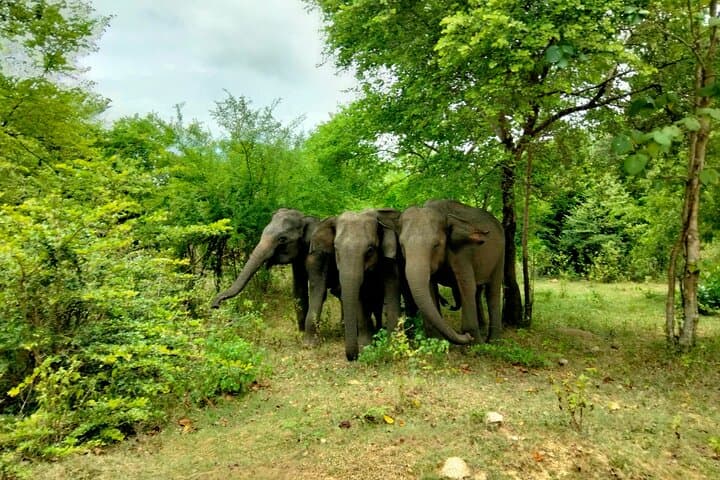
What you’ll see is straightforward: family herds of Asian elephants grazing or bathing, water buffalo at the reservoir edge, macaques and small carnivores slipping through the grass. Guides interpret tracks, social behavior, and the park’s role in regional conservation.
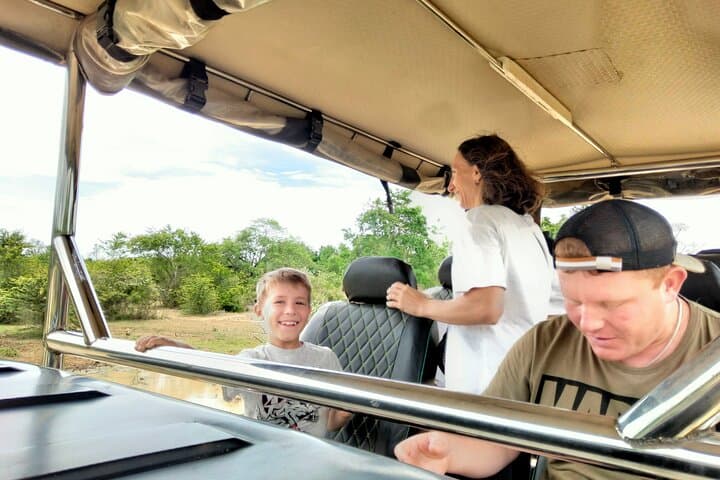
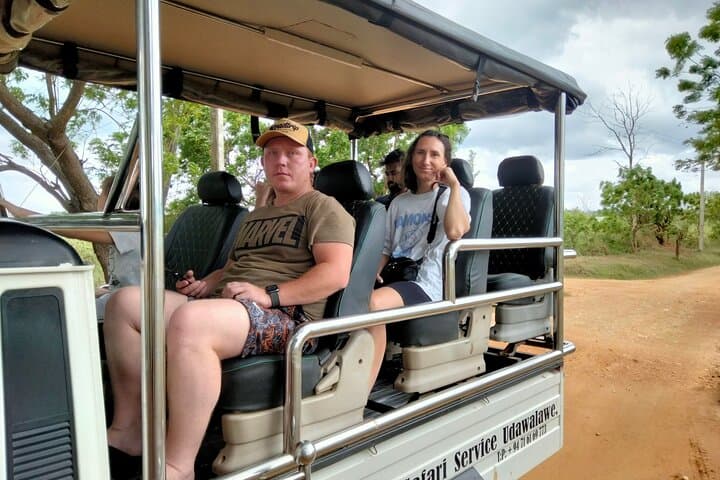
Practical guidance: tours run as morning or late-afternoon drives (3–4 hours), on rough dirt tracks in open or covered safari jeeps. Wear neutral, lightweight layers, bring sun protection and binoculars, and expect bumpy roads. Morning drives often yield calm feeding and crossing behavior; evenings gather animals at water. Vehicles keep distance and follow park rules — your guide will handle permits and entry timing. This private option includes pickup, drop-off and bottled water, making it accessible for families and photographers. With basic planning, a half-day here delivers close wildlife viewing and a clear feel for Sri Lanka’s wild lowlands.
easy.
3–4 hours.
Minimal walking required; suitable for most fitness levels though uneven vehicle access may challenge mobility issues
Tours are typically 3–4 hours; this operator offers private morning or evening drives focused on optimal viewing windows.
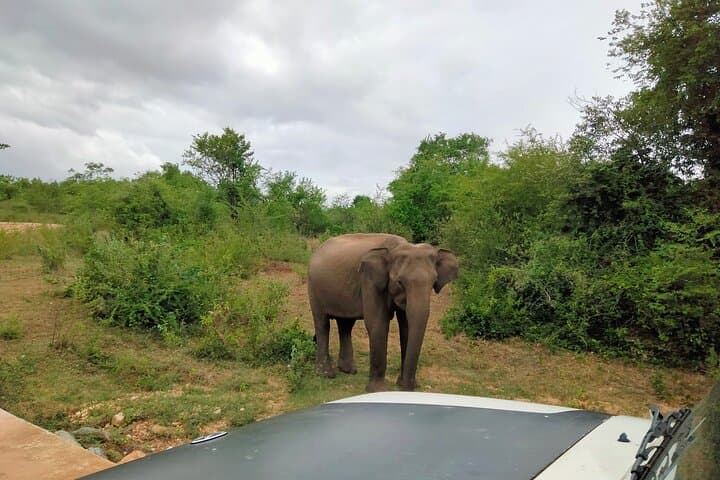
Udawalawe has a high likelihood of elephant sightings — herds commonly appear near the reservoir — but wildlife is never guaranteed.
Yes; this private tour includes hotel pickup and drop-off for properties close to Udawalawe National Park and bottled water.
Yes; infants must sit on laps according to the operator’s policy and the tour is suitable for all fitness levels.
Udawalawe formed after construction of a reservoir in the 1960s–70s to support irrigation; the park was later designated to protect wildlife drawn to its waters.
The park plays a key role in regional elephant conservation and human–wildlife conflict mitigation; visitors can support local guides and community-run accommodation to keep tourism benefits local.
Scout Wild Safari Udawalawe operates guided outdoor trips and adventures with an emphasis on safety, stewardship, and memorable experiences.
The sun rises over dry grass and the reservoir’s rim; light pushes across the plains and the first elephants of the day appear like slow ships moving through gold. On a private game drive through Udawalawe, the landscape feels alive — water holes dare you forward and the scrub pushes back with a chorus of birds and distant calls.
The sun rises over dry grass and the reservoir’s rim; light pushes across the plains and the first elephants of the day appear like slow ships moving through gold. On a private game drive through Udawalawe, the landscape feels alive — water holes dare you forward and the scrub pushes back with a chorus of birds and distant calls.
Udawalawe was created in the 1970s around a reservoir built to support agriculture and now supports one of Sri Lanka’s densest Asian elephant populations. The park’s geology is undulating lowland plains with laterite soils, seasonal marshes and the Udawalawe Reservoir acting as the wildlife magnet. Local culture around the park blends rural rice and chena cultivation with small villages whose lives follow the monsoon calendar.
What you’ll see is straightforward: family herds of Asian elephants grazing or bathing, water buffalo at the reservoir edge, macaques and small carnivores slipping through the grass. Guides interpret tracks, social behavior, and the park’s role in regional conservation.
Practical guidance: tours run as morning or late-afternoon drives (3–4 hours), on rough dirt tracks in open or covered safari jeeps. Wear neutral, lightweight layers, bring sun protection and binoculars, and expect bumpy roads. Morning drives often yield calm feeding and crossing behavior; evenings gather animals at water. Vehicles keep distance and follow park rules — your guide will handle permits and entry timing. This private option includes pickup, drop-off and bottled water, making it accessible for families and photographers. With basic planning, a half-day here delivers close wildlife viewing and a clear feel for Sri Lanka’s wild lowlands.