THE ADVENTURE COLLECTIVE® · Independent discovery and booking for outdoor travel

A half-day safari from Galle or Mirissa into Udawalawe offers reliable elephant encounters and rich birdlife. This tour includes park entrance, a guided jeep, refreshments and a local lunch.
A half-day safari from Galle or Mirissa into Udawalawe offers reliable elephant encounters and rich birdlife. This tour includes park entrance, a guided jeep, refreshments and a local lunch.
You step from an air-conditioned transfer into hot, dust-scented light; the jeep tires crunch on dry soil as the plains of Udawalawe open. Grasslands roll toward a glinting reservoir and waterholes where elephants gather like weathered islands—mothers calling, calves testing trunks. The landscape moves around you: scrub, marsh, and distant ridges that frame the park.
Verified experiences and guided adventures in the surrounding area.
Operated by Overa Tours · Udawalawe, Sabaragamuwa Province
You step from an air-conditioned transfer into hot, dust-scented light; the jeep tires crunch on dry soil as the plains of Udawalawe open. Grasslands roll toward a glinting reservoir and waterholes where elephants gather like weathered islands—mothers calling, calves testing trunks. The landscape moves around you: scrub, marsh, and distant ridges that frame the park.
Udawalawe was established to protect elephants displaced by the Udawalawe Reservoir and today supports a resident herd often counted in the hundreds. Geologically, the park sits on lowland sedimentary plains cut by seasonal streams; those water sources are why wildlife concentrates here. Local communities around Udawalawe and nearby Galle have long worked the land for rice and coconut, and village eateries near the park serve simple rice-and-curry lunches after morning safaris.
Expect a focused wildlife run: a guided jeep safari of roughly three hours inside park limits, led by a driver-tracker who reads tracks and waterholes. Morning drives are best for birds and active herds; the heat in midday slows animals and raises dust. Bring binoculars, wear sun protection, and be ready to be patient—wild elephants set the pace.
Practicalities: most tours include hotel pickup in Galle or Mirissa, entrance fees, bottled water, and lunch at a local restaurant. Cameras with zoom lenses will capture distant bulls; keep windows partially closed to limit dust. For visitors who value ethical wildlife viewing, follow guides’ distances, avoid flash, and support operators who observe park rules.
moderate.
8–12 hours.
Light physical fitness; able to sit in a jeep for several hours and step on/off uneven ground.
The guided jeep time inside the park is typically about three hours, though total door-to-door time from Galle or Mirissa can be much longer due to transfers.
Yes—this tour covers park entrance, the safari jeep, bottled water, refreshments, and lunch at a local restaurant.
Udawalawe has a resident elephant population and sightings are frequent, but wild animals are unpredictable and viewing distance varies.
Infants must sit on laps; the tour is not recommended for pregnant travelers or those with serious back or heart issues due to bumpy rides.
Udawalawe National Park was created in the 1970s to provide habitat for elephants displaced by the construction of the Udawalawe Reservoir.
The park concentrates wildlife around scarce water sources—respecting buffer distances and supporting licensed guides helps reduce disturbance and fund conservation.
Overa Tours operates guided outdoor trips and adventures with an emphasis on safety, stewardship, and memorable experiences.
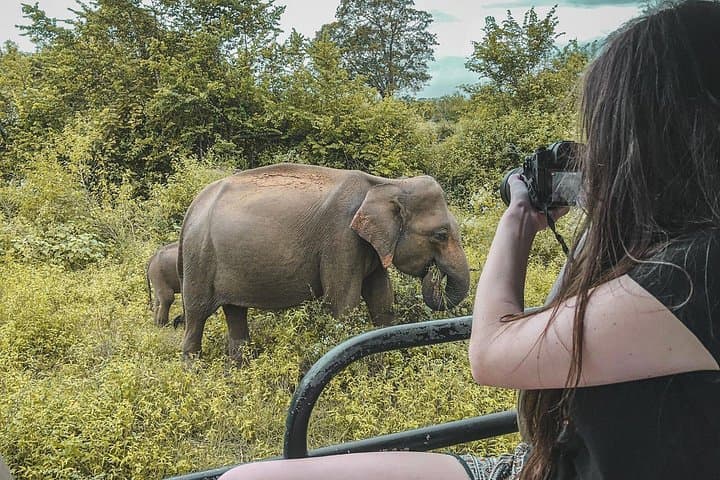


You step from an air-conditioned transfer into hot, dust-scented light; the jeep tires crunch on dry soil as the plains of Udawalawe open. Grasslands roll toward a glinting reservoir and waterholes where elephants gather like weathered islands—mothers calling, calves testing trunks. The landscape moves around you: scrub, marsh, and distant ridges that frame the park.
You step from an air-conditioned transfer into hot, dust-scented light; the jeep tires crunch on dry soil as the plains of Udawalawe open. Grasslands roll toward a glinting reservoir and waterholes where elephants gather like weathered islands—mothers calling, calves testing trunks. The landscape moves around you: scrub, marsh, and distant ridges that frame the park.
Udawalawe was established to protect elephants displaced by the Udawalawe Reservoir and today supports a resident herd often counted in the hundreds. Geologically, the park sits on lowland sedimentary plains cut by seasonal streams; those water sources are why wildlife concentrates here. Local communities around Udawalawe and nearby Galle have long worked the land for rice and coconut, and village eateries near the park serve simple rice-and-curry lunches after morning safaris.
Expect a focused wildlife run: a guided jeep safari of roughly three hours inside park limits, led by a driver-tracker who reads tracks and waterholes. Morning drives are best for birds and active herds; the heat in midday slows animals and raises dust. Bring binoculars, wear sun protection, and be ready to be patient—wild elephants set the pace.
Practicalities: most tours include hotel pickup in Galle or Mirissa, entrance fees, bottled water, and lunch at a local restaurant. Cameras with zoom lenses will capture distant bulls; keep windows partially closed to limit dust. For visitors who value ethical wildlife viewing, follow guides’ distances, avoid flash, and support operators who observe park rules.