THE ADVENTURE COLLECTIVE® · Independent discovery and booking for outdoor travel

A full-day jeep safari from Galle to Udawalawe that pairs a long coastal drive with focused wildlife viewing at one of Sri Lanka’s best elephant parks. Expect 3–4 hours each way, early morning and late-afternoon viewing windows, and the reservoir-and-dam landscape that shaped the park.
A full-day jeep safari from Galle to Udawalawe that pairs a long coastal drive with focused wildlife viewing at one of Sri Lanka’s best elephant parks. Expect 3–4 hours each way, early morning and late-afternoon viewing windows, and the reservoir-and-dam landscape that shaped the park.
You climb into an air-conditioned van before dawn; roadside stalls blur into green paddy and coconut palms while the coast falls behind. By mid-morning the road lifts you into the dry zone—scattered scrub, broad grassland and the flat, reflective surface of Udawalawe Reservoir that gives the park its shape. A 4x4 rattles across sandy tracks; trunks and termite mounds pass like punctuation as the driver scans the horizon.
Verified experiences and guided adventures in the surrounding area.
Operated by OTN Experiences · Udawalawe, Southern Province
You climb into an air-conditioned van before dawn; roadside stalls blur into green paddy and coconut palms while the coast falls behind. By mid-morning the road lifts you into the dry zone—scattered scrub, broad grassland and the flat, reflective surface of Udawalawe Reservoir that gives the park its shape. A 4x4 rattles across sandy tracks; trunks and termite mounds pass like punctuation as the driver scans the horizon.
Udawalawe National Park was created in 1972 to protect animals displaced by the reservoir and dam built in the late 1960s. Geologically this region is low-lying Miocene plain—laterite soils, seasonal streams and a man-made lake that concentrates wildlife. Local villages have long harvested king coconut and rice from the surrounding fields; on a safari you’ll see that human rhythms still skirt the park’s edge.
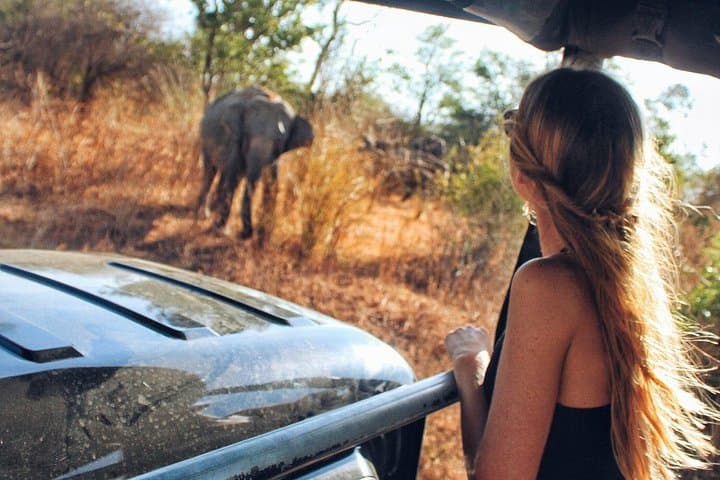
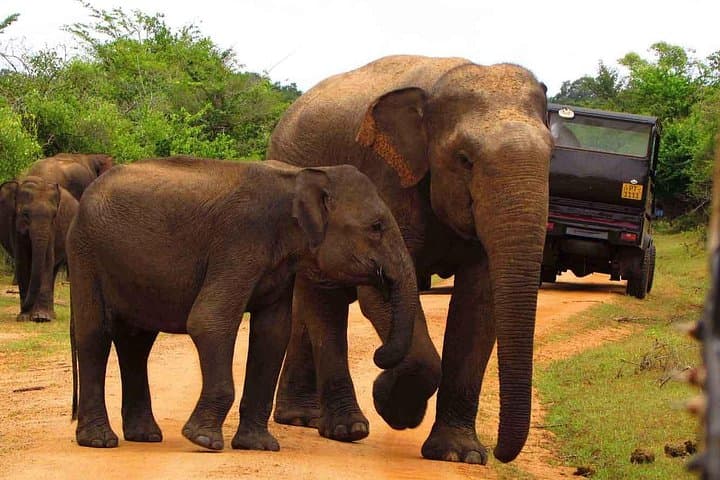
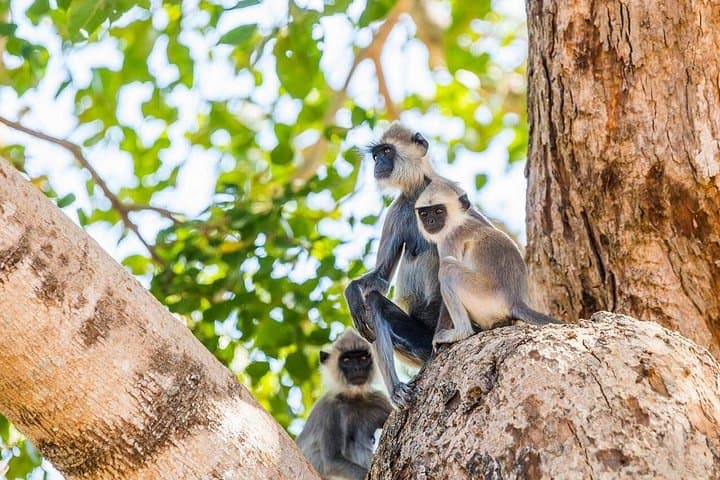
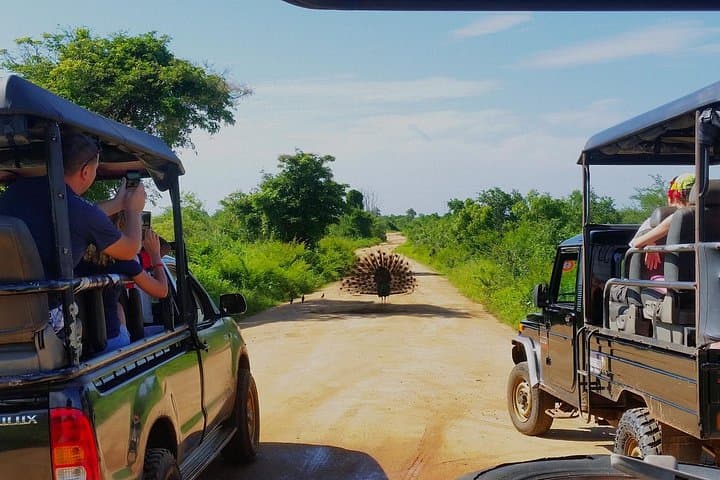
Expect focused wildlife viewing rather than a relaxed walk—elephants often move in family groups across marshy flats, birds ride thermals above the open scrub, and shy mammals peek from dense thorn. Guides work from jeeps to read tracks and timing; the best sightings occur in cooler morning and late-afternoon windows. Practicalities: the round trip from Galle is long (about 3–4 hours each way) so bring water, sun protection, motion-sickness remedies and a charged camera. Wear sturdy shoes for short exits, keep voices low, and never feed animals.
This is a single-day, drive-plus-jeep experience that pairs cultural roadside glimpses with concentrated wildlife viewing—efficient for travelers based in Galle who want a full-day taste of Sri Lanka’s wild side.
moderate.
11–12 hours.
Moderate fitness for long vehicle time and short, uneven boardings in/out of jeeps; not strenuous.
Expect about 3–4 hours each way depending on traffic and pickup locations—plan for a full 11–12 hour day.
Udawalawe has a high probability of elephant sightings, often in family groups, but wildlife sightings cannot be guaranteed.
Bottled water and a king coconut are typically included; bring snacks if you have dietary preferences as the day is long.
Infants must sit on laps; the tour is not recommended for pregnant travelers or those with serious back/heart issues.
The park was established in 1972 after the Udawalawe Reservoir’s construction displaced wildlife; the dam itself dates to the late 1960s and provides irrigation and hydroelectric power.
Visitors must avoid feeding or approaching wildlife; the park supports rehabilitation efforts and encourages leaving no trace to protect waterholes and seasonal grazing areas.
OTN Experiences operates guided outdoor trips and adventures with an emphasis on safety, stewardship, and memorable experiences.
You climb into an air-conditioned van before dawn; roadside stalls blur into green paddy and coconut palms while the coast falls behind. By mid-morning the road lifts you into the dry zone—scattered scrub, broad grassland and the flat, reflective surface of Udawalawe Reservoir that gives the park its shape. A 4x4 rattles across sandy tracks; trunks and termite mounds pass like punctuation as the driver scans the horizon.
You climb into an air-conditioned van before dawn; roadside stalls blur into green paddy and coconut palms while the coast falls behind. By mid-morning the road lifts you into the dry zone—scattered scrub, broad grassland and the flat, reflective surface of Udawalawe Reservoir that gives the park its shape. A 4x4 rattles across sandy tracks; trunks and termite mounds pass like punctuation as the driver scans the horizon.
Udawalawe National Park was created in 1972 to protect animals displaced by the reservoir and dam built in the late 1960s. Geologically this region is low-lying Miocene plain—laterite soils, seasonal streams and a man-made lake that concentrates wildlife. Local villages have long harvested king coconut and rice from the surrounding fields; on a safari you’ll see that human rhythms still skirt the park’s edge.
Expect focused wildlife viewing rather than a relaxed walk—elephants often move in family groups across marshy flats, birds ride thermals above the open scrub, and shy mammals peek from dense thorn. Guides work from jeeps to read tracks and timing; the best sightings occur in cooler morning and late-afternoon windows. Practicalities: the round trip from Galle is long (about 3–4 hours each way) so bring water, sun protection, motion-sickness remedies and a charged camera. Wear sturdy shoes for short exits, keep voices low, and never feed animals.
This is a single-day, drive-plus-jeep experience that pairs cultural roadside glimpses with concentrated wildlife viewing—efficient for travelers based in Galle who want a full-day taste of Sri Lanka’s wild side.