THE ADVENTURE COLLECTIVE® · Independent discovery and booking for outdoor travel

Spend 6–8 hours exploring Ubud’s cultural core: macaque forests, a 9th-century rock temple, artisan woodcarvers, Tegalalang rice terraces and Tegenungan waterfall. This private day tour balances easy walks with regionally rich history and striking volcanic landscapes.
Spend 6–8 hours exploring Ubud’s cultural core: macaque forests, a 9th-century rock temple, artisan woodcarvers, Tegalalang rice terraces and Tegenungan waterfall. This private day tour balances easy walks with regionally rich history and striking volcanic landscapes.
Morning light slips between coconut palms as your private driver eases into Ubud’s compact center — the day unfolds across monkey-inhabited groves, carved rock temples and a river that keeps cutting deeper into Bali’s volcanic soils.
Verified experiences and guided adventures in the surrounding area.
Operated by Ubud baliday tour · Ubud, Bali
Morning light slips between coconut palms as your private driver eases into Ubud’s compact center — the day unfolds across monkey-inhabited groves, carved rock temples and a river that keeps cutting deeper into Bali’s volcanic soils.
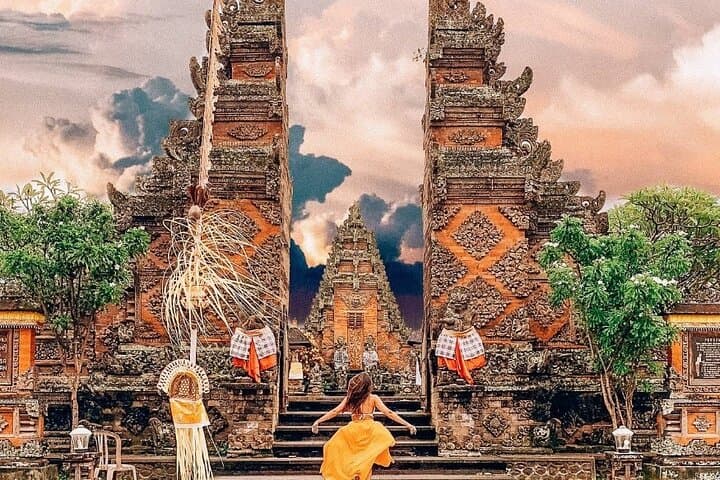
You begin among the macaques and mossy stone gateways of the Sacred Monkey Forest, a living reminder of Ubud’s long relationship with Hindu practice and forest spirits. From there the tour moves to a woodcarver’s workshop where traditional chisel marks echo centuries of artisan craft, then to Goa Gajah (the Elephant Cave), a 9th-century sanctuary carved into bedrock and set above a spring-fed pool.
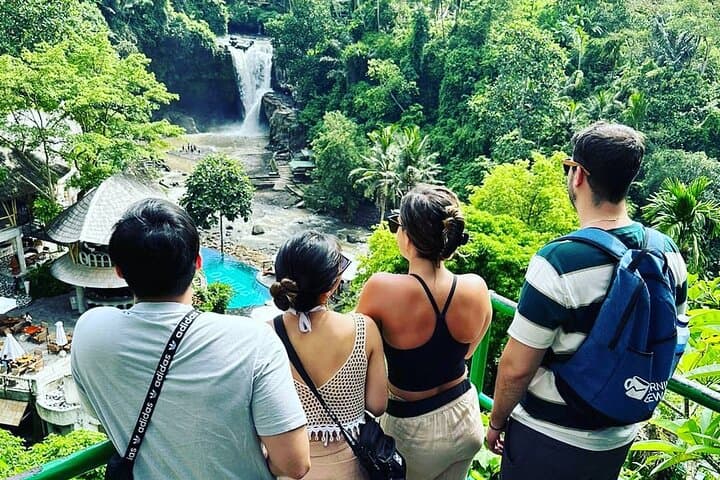
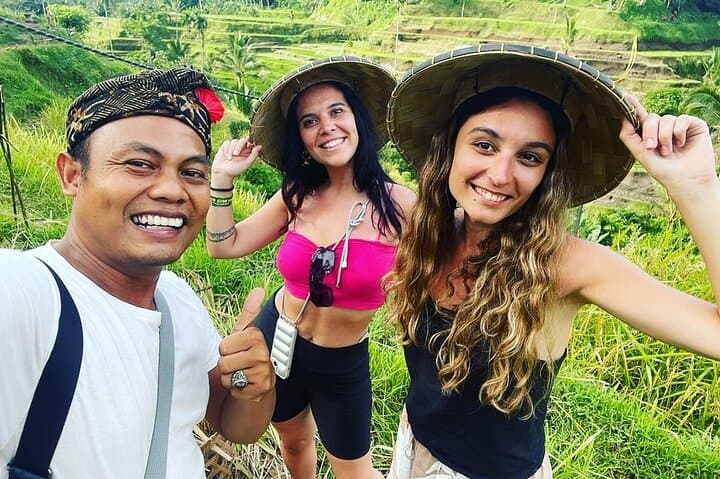
Geology and irrigation shape the day: Tegalalang’s rice terraces display Bali’s cooperative subak system — stepped contours held by volcanic earth and human hands — while Tegenungan waterfall shows how the Wos River slices through basalt to form a lush plunge pool.
Culturally the route highlights living traditions: temple offerings, wood carving, and small-scale farming. Expect narrow village roads, stone steps and brief walks at each stop.
Practical guidance: the tour runs 6–8 hours with several short walks and stair descents; comfortable shoes with grip are essential. Bring sun protection, insect repellent and a refillable bottle — water is available but often sold in plastic bottles. A sarong is provided for temples but having a lightweight one helps. Keep a small amount of cash for market stalls and photographer tips. Don’t feed the monkeys and follow your guide’s directions around temple rites and slippery trails; pace yourself and let the landscape push you forward, not the clock.
easy.
6–8 hours.
Suitable for most fitness levels; involves multiple short walks, stair climbs and short hill descents
Entrance to scheduled attractions listed in the itinerary (Monkey Forest, Goa Gajah, Tegalalang, Tegenungan) is included as indicated; confirm specific inclusions with your operator before departure.
Yes — the tour includes hotel pickup and drop-off within the Ubud/Seminyak area; confirm exact pickup time and location when booking.
Yes; the tour is rated suitable for all fitness levels, but parents should supervise children around monkeys, steep steps and the waterfall.
Keep a safe distance, secure loose items, avoid eye contact or sudden movements, and follow your guide’s instructions to minimize confrontations.
Goa Gajah dates to the 9th century and reflects early Balinese Hindu-Buddhist synthesis; Ubud historically grew as an arts and palace village linked to rice-farming communities.
Tourism concentrates pressure on fragile terraces and temple precincts; stick to designated paths, avoid feeding wildlife and support local artisans to keep cultural practices viable.
Ubud baliday tour operates guided outdoor trips and adventures with an emphasis on safety, stewardship, and memorable experiences.
Morning light slips between coconut palms as your private driver eases into Ubud’s compact center — the day unfolds across monkey-inhabited groves, carved rock temples and a river that keeps cutting deeper into Bali’s volcanic soils.
Morning light slips between coconut palms as your private driver eases into Ubud’s compact center — the day unfolds across monkey-inhabited groves, carved rock temples and a river that keeps cutting deeper into Bali’s volcanic soils.
You begin among the macaques and mossy stone gateways of the Sacred Monkey Forest, a living reminder of Ubud’s long relationship with Hindu practice and forest spirits. From there the tour moves to a woodcarver’s workshop where traditional chisel marks echo centuries of artisan craft, then to Goa Gajah (the Elephant Cave), a 9th-century sanctuary carved into bedrock and set above a spring-fed pool.
Geology and irrigation shape the day: Tegalalang’s rice terraces display Bali’s cooperative subak system — stepped contours held by volcanic earth and human hands — while Tegenungan waterfall shows how the Wos River slices through basalt to form a lush plunge pool.
Culturally the route highlights living traditions: temple offerings, wood carving, and small-scale farming. Expect narrow village roads, stone steps and brief walks at each stop.
Practical guidance: the tour runs 6–8 hours with several short walks and stair descents; comfortable shoes with grip are essential. Bring sun protection, insect repellent and a refillable bottle — water is available but often sold in plastic bottles. A sarong is provided for temples but having a lightweight one helps. Keep a small amount of cash for market stalls and photographer tips. Don’t feed the monkeys and follow your guide’s directions around temple rites and slippery trails; pace yourself and let the landscape push you forward, not the clock.